




Italy’s entry into World War II in June 1940, after declaring war on Britain and France, revealed its threatening mood from the start, as it accused Greece of allegedly offering aid to its rivals. Thus, it escalated its actions and moved strong forces towards the Greek-Albanian border. Faced with this situation, the Greek military leadership strengthened its border formations in anticipation of the imminent Italian invasion. After a series of serious political and military challenges, Fascist Italy declared war on Greece on October 28, 1940, following the refusal of the Greek Government to accept the entry of Italian troops into its territory.
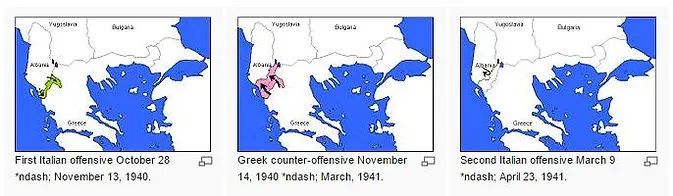
The Greek-Italian conflict, which followed, developed in three periods:
- First Period (October 28 – November 13, 1940)
- Second Period (November 14, 1940 – January 6, 1941)
- Third Period (January 7 – March 26, 1941)
The 3rd Period of the Greco-Italian conflicts includes the offensive operations of the 2nd Army Corps in the direction Kleisoura – Verati with the aim of recapturing Kleisoura, as well as the large-scale Spring Offensive of the Italians, which in the end did not yield any substantial results results for the Italian forces.
In the framework of the Italian Spring Offensive against the Greek forces in Albania, the battle that took place on Hill 731 is included, a battle that determined both the final outcome of the Italian attack and the unparalleled heroism displayed by the Greek fighters during its conduct.
Preparation of opposing forces during the 3rd phase of the Greco-Italian War
The continued advance of the Greek Army on the Greek-Albanian front and successive Greek successes created concerns among the Italian leadership and forced Benito Mussolini to replace the military commander of the Albanian theater of operations, General Ubaldo Soddu, with the Chief of General Army Staff General Ugo Cavallero. Mussolini took the defeat of his army in Albania hard and was eager to win spectacular victories to strengthen his prestige.
At the beginning of January 1941, the front, due to adverse weather conditions (fog, blizzards, bitter cold), stabilized on a line starting from Pogradec and ending north of Khimarra. Faced, therefore, with the impasse that had been created and for reviving the morale of the Italian army, Mussolini intensively prepared his armed forces to deliver a crushing blow against the Greeks. Thus, by the end of February, ten new Italian divisions were transferred to Albania. Dozens of ships landed in Albanian ports with supplies, ammunition, cars and means of fire while Mussolini called, at the same time, all the elite of the fascist party to enlist in the army to man the forces on the Albanian front.

In early March 1941, Mussolini himself arrived in Albania to personally supervise the operations. Knowing Germany’s decision to intervene in Greece, it decided to pre-empt its ally by breaking through the Greek defense line and advancing towards Greek territory. So, he ordered the organization of the biggest operation against the Greeks up to that time called “Primavera”, meaning “Spring”, which was to go down in history as the “Great Spring Offensive” of the Italians.
The Italian preparations had been noticed and the General Headquarters had ordered the 2nd Army Corp to set up defensively between Aoos and Apsos Rivers.
According to the plan drawn up by General Cavallero, the operation would take place on March 9, 1941, in the zone of the 2nd Greek Army Corp, on a front of six kilometers, with the aim of splitting the front from Glava to Bubesi with the aim of opening the valley of Desnitsa River. The main effort was undertaken by the Italian VIII Army Corps, under General Gastone Gambara. The Italian forces, with 4 divisions and 2 battalions of Blackcoats, keeping two others in reserve, would attack the center of the Greek formation, between Trebessina and Boubesi, in the sector, that is, of the 1st Greek Division, which was fighting continuously under the command of Major General Vasilios Vrachnos . Against the Italian forces, the 2nd Greek Army Corp defended itself with six infantry divisions.
The evolution of the Spring Offensive of the Italians and the resistance of the Greek Army
At 06:30 on the morning of March 9, 1941, the signal for the attack was given. There was heavy shelling all along the 2nd Army Corp front. In particular, in the sector of the I Division, where the Italian army directed its main effort to create a breach, there was a barrage of shell explosions by the enemy artillery, the preparation of which lasted two and a half hours. Along with them, formations of Italian aircraft were also operating which continuously bombarded the Greek positions of the front line and the rear. The beam of fire concentrated on Heights 717 and 731, as well as the following successive attacks, brought no substantial effect. But the line of resistance of the Greeks was literally stretched across its entire length. The smoke and dust did not even allow the operation of visual means of communication. With a new effort, the Italians captured Hill 717, but it was recaptured after a Greek counterattack. At 14:00 and at 16:50 two attacks took place against heights 731 and Chiaffe-Lusit with significant losses of the attacking Italian divisions.
On the 10th and 11th of March the Italian forces continued their all-day efforts without substantial (for the Italians) results. On March 11 the offensive effort began at 0430 with equal vigor against Hill 731 and Breguet Rapid. The Italian move was particularly noticed by the anti-tank artillery units lined up in the ravine, forcing the Italian forces to surrender during the midday hours.
On March 12, a night attack by the Italians against Hill 731 took place, this time, which was met with a heavy barrage of fire. By noon on March 13th, the entire front of the I Division was seeing the usual action of artillery and mortar bombardment. At 15:30 there was another attempt by Italian forces to occupy Hill 731 and Breguet Rapit while the operation was covered by the Italian air force. The fight lasted until the afternoon, when the attackers were finally defeated. The same situation continued on March 14, with the Italians trying by all means to capture Hill 731. The bombardment may have taken place throughout the central sector, but the operation was concentrated on this hill, which was the key to the whole location, as it was located 20 kilometers north of Kleisoura, being a territorial springboard for the launch of aggressive energy from South to North.
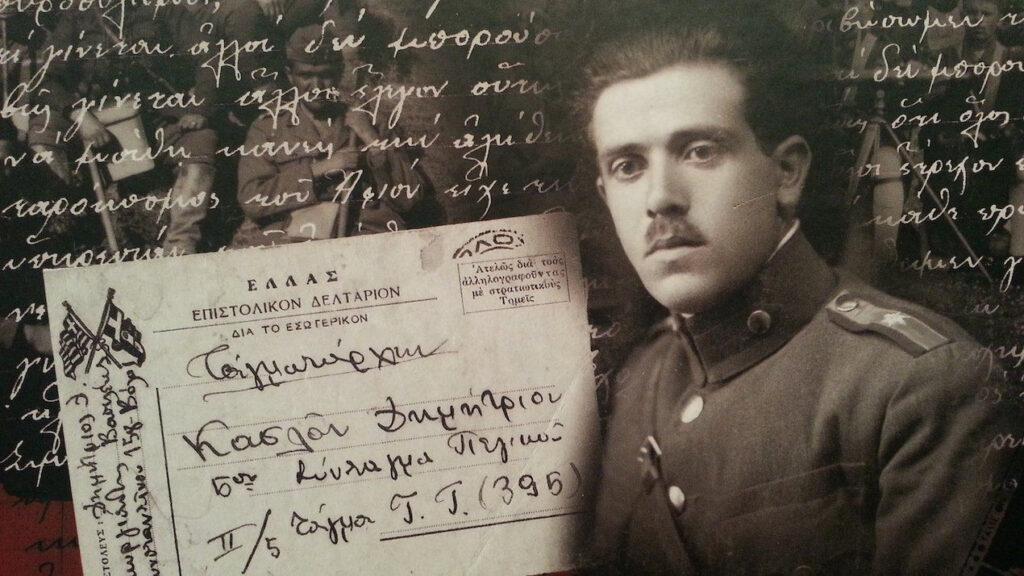
During the Italian attacks and Greek counter-attacks, special moments of heroism and horror were recorded on Hill 731 defended by the men of the 5th Infantry Regiment. The Greek officer who stopped the Italian raiders with planning and bravery, raising the morale of his men, was Major Dimitrios Kaslas, Commander of the 2nd Battalion of the 5th Regiment. The order to his soldiers was clear and dramatic: “On the occupied positions we will defend until the end. No one will move backwards. Only then will the enemy pass through our location, when we all die in our positions.” The Italians advanced in successive waves with the aim of definitely capturing Hill 731, despite their losses. The defending Greek units reacted with an immediate counterattack. The battles that took place were fierce and often from the cluster with bayonets and grenades. The bursts of artillery fire continued and the Italian air force fired everywhere with unabated ferocity. It was the seventh attack of the Italians on Hill 731 and the Greek guns were still triumphant in boosting the morale of the fighting divisions.
Gradual relaxation and cessation of the Italian offensive (March 16-26, 1941)
On March 15 until 13:00 there was calm. Shortly afterwards, the enemy artillery again began to fire against heights 731, Bregu Rapit and intermittently against Chiaffe-Lusit and Maziani. The bombardment continued relentlessly. Another attack was repulsed at 21:00 using grenades and direct counter-attacks. It was the seventh day of the Italian offensive, extremely decisive, as the complete ineffectiveness of their offensive actions finally convinced the Italian leadership that Operation “Primavera” as a plan had also failed miserably. That is why he decided on the gradual suspension of operations. From the 16th to the 18th of March the front of the 2nd Greek Army Corp presented the usual pre-attack activity. After a relative three-day respite, the 19th of March 1941 dawned and by then the Italians had launched no less than 18 attacks. Enemy artillery and mortars intensified their fire. Nothing was able to break the Greek defense. The Italian effort began to wane, to degenerate completely from 25 March 1941 onwards, as on 26 March Yugoslavia joined the Allied camp. Exposed, therefore, the Italians from the east also stopped the attacks. Mussolini, in a pervasive spirit of disappointment, as the Fascist regime failed to maintain its prestige and political position, returned to Rome.
Epilogue
The end of the Greco-Italian war was not the result of a new decisive conflict between the two sides, but of the subsequent German invasion of Greece on 6 April 1941, which definitively thwarted the Italians’ attempt to claim any success against Greece. The repulse of the great Spring Offensive was the first military defeat of the so-called Axis in WWII.
In the war history of both adversaries, Hill 731 was perhaps one of the bloodiest battlefields of the entire World War II. The soldiers called it “Golgotha” (skull place) because during the hostilities the mountain was excavated by the bombings to such an extent that its geological form changed. The price of this battle was the total losses of the Greek forces which amounted to 1,243 dead and 4,016 wounded, while the Italian forces to 11,800 dead and an unknown number of wounded.
The officers and soldiers who defended with vigor and single-mindedness at all levels, Hill 731, as well as the nearby heights, did not just do their duty. By their sacrifice and victory they gave meaning to the concept of “holding ground”, even facing a enemy multiple and better equipped. The extraordinary wear and tear and losses of the Italian units that attacked Hill 731 also justify their decision to erect a general monument to the fallen of the Greco-Italian War in this area. The area was called the “Sacred Zone”, due to the terrible losses suffered by the Italian troops during the attacks to capture it.


