



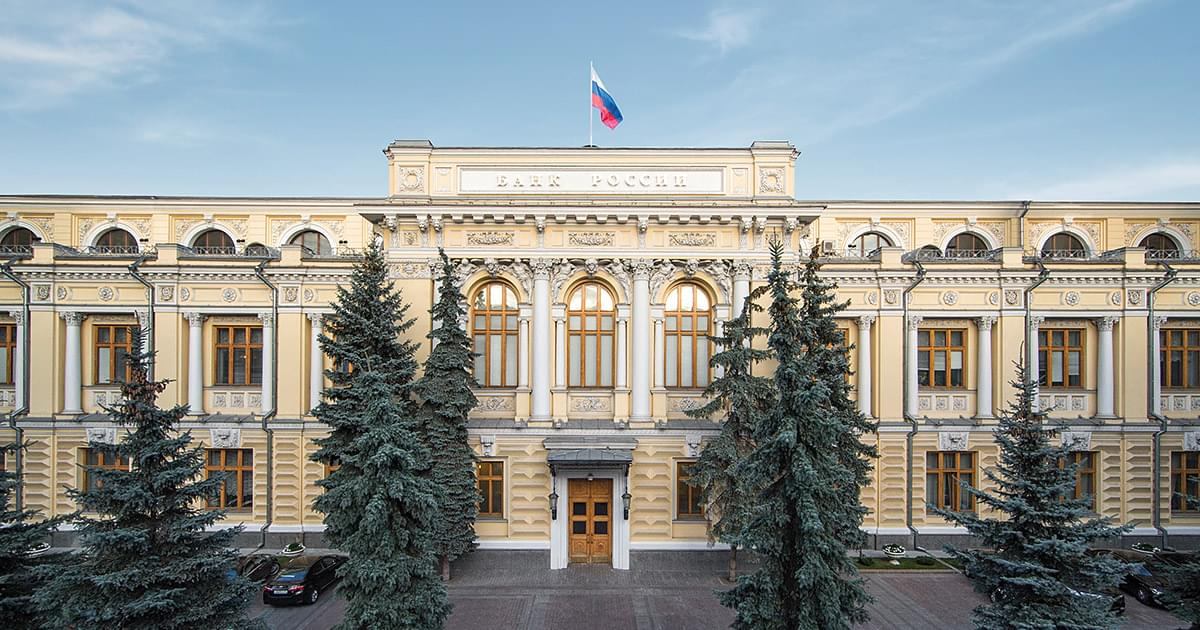
Last week an article by the Russian news agency Interfax reported that the State Fund of Russia plans to acquire gold, silver, platinum, palladium and precious stones. Russia’s decision to add silver to its reserves sets it apart from most other central banks, which have focused heavily on hoarding gold while neglecting silver.
Along with several other bullish factors, Russia’s silver purchases could be a key driver in pushing prices to $50 and beyond. According to Interfax Russia’s State Fund plans to allocate 51.5 billion rubles (or $538.7 million) to precious metals and gems in 2025, with the same amount set for 2026 and 2027.
In recent years, central banks around the world have rapidly diversified their holdings, with gold being the main beneficiary. In 2023, central banks added 1,037 tonnes of gold, slightly less than the 1,082 tonnes they bought in 2022.
Central banks added a net 483 tonnes of gold in the first half of 2024, up 5% from the previous record of 460 tonnes set during the same period in 2023.
Who “sweeps” the precious metals
Amid rising global debt and a rapidly expanding money supply, central banks are wisely diversifying their holdings into hard assets like gold and, now, silver.
As fiat currencies rapidly lose value and government bonds become increasingly risky, these assets offer a safer alternative.
It makes perfect sense for Russia to further diversify its reserves with a variety of precious metals, especially in light of the economic sanctions that have cut the country off from the SWIFT banking system.
There is no word on how much silver Russia’s treasury plans to acquire, but the move is notable as Russia becomes one of the first countries to diversify its holdings into silver.
With gold prices continuing to rise, other nations may also consider adding silver to their stockpiles – a trend that, along with many bullish factors, could push silver to $50 an ounce and potentially much higher
The estimates
The latest news from Russia reinforces technical chart patterns, which suggest that silver could reach $50 and above in the near term.
Silver’s monthly chart reveals a breakout from a massive two-decade triangle pattern. This breakout signals that silver is on the verge of a strong bull market:

At the same time, silver’s log chart, dating back to the 1960s, reveals a cup and handle pattern that suggests silver could reach several hundred dollars per ounce during this bull market. However, a close above the 50 resistance is necessary to confirm this scenario.

The long-term gold to silver ratio chart shows that silver is currently extremely undervalued relative to gold. If the ratio were to return to its historical average of 52.8 since 1915, even without any increase in the price of gold, silver would be worth a solid $50 an ounce.

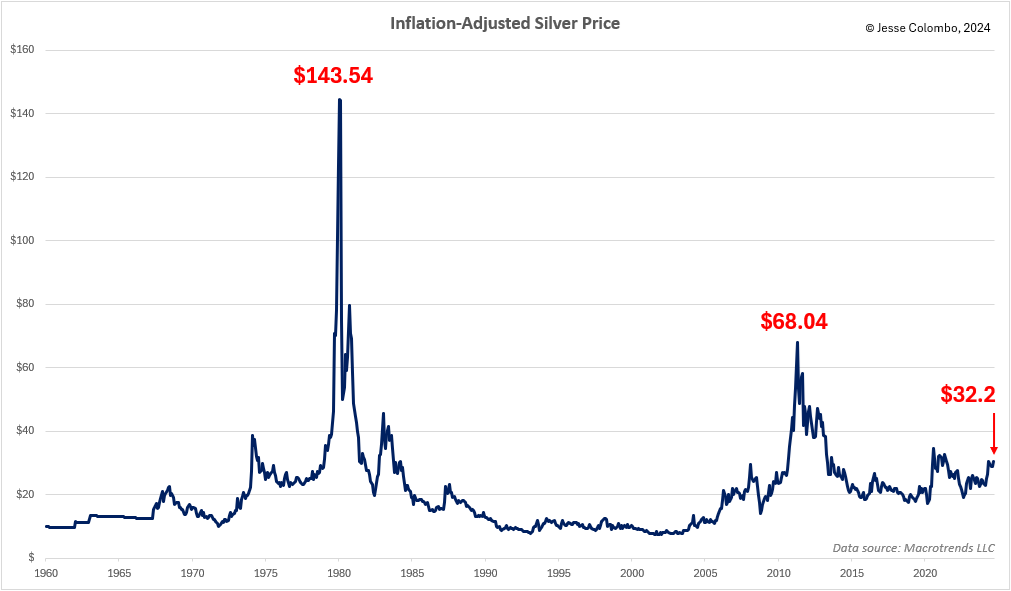
Adjusting the price of silver for inflation further highlights how undervalued it is by historical standards.
During the peak caused by the Hunt brothers in 1980, silver reached an inflation-adjusted price of $143.54. In the bull market of 2011, due to quantitative easing, it reached $68.04.
Currently trading at just $32.20, silver has significant upside if it is to match those previous inflation-adjusted highs.
Turning point
Russia’s recent move to add silver to its government reserves marks a potential turning point for the white metal, setting it apart from other central banks that have focused primarily on gold.
This decision, along with continued bullish trends, is expected to have a significant impact on silver prices. As global economic uncertainty prompts central banks to diversify into hard assets, silver is poised to benefit, especially with technical charts showing signs of strong upside.
With Russia leading the charge and other countries possibly following suit, silver could break past its long-term resistance levels, reaching $50 and possibly climbing even higher.
These developments, combined with historical trends and inflation-adjusted valuations, suggest that silver is very undervalued and has significant upside potential in the coming years.

