




With all eyes on the dangerous conflagration in the Middle East, the war in Ukraine is at a critical juncture. After two years of fierce fighting, Ukrainian forces withdrew from the key eastern city of Vuhledar.
Built on the USSR around a mine, it was considered one of the most fortified positions of the Ukrainians on the front line in Donetsk. It is now under the total control of the Russians.
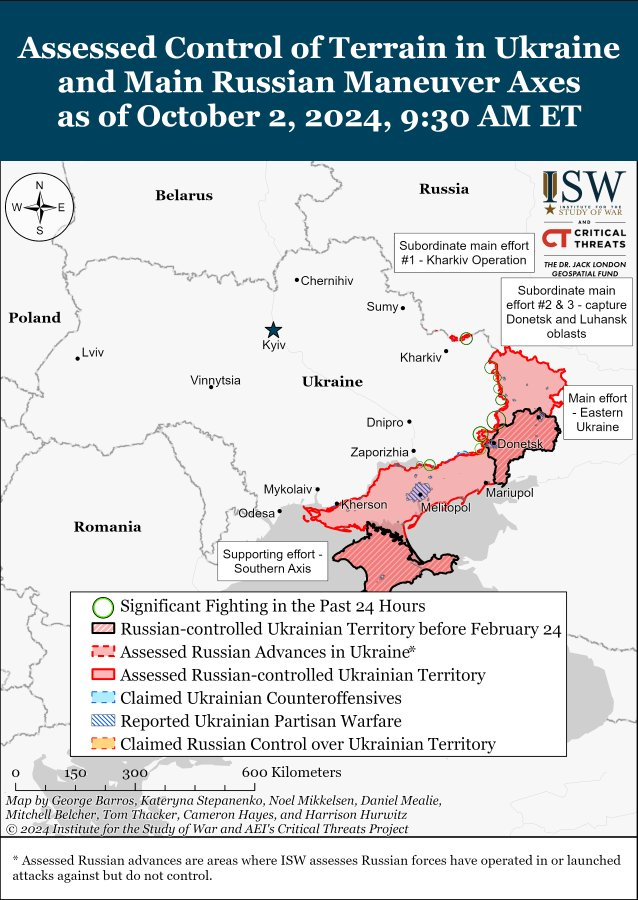
The capture of Vuhledar (“Vuhledar fell: Russian flags were raised everywhere!“) is an important step in the Russian advance and in the development of the war. It is located at the junction of the eastern and southern fronts, at a key point for the supply routes of the warring parties.
For Moscow, it will act as a bridgehead to control all of Donetsk and possibly Zaporizhia—two of the four Ukrainian regions (plus Lugansk and Kherson) that Russia annexed two years ago, as it did in 2014 with Crimea.
It also paves the way for the capture of Pokrovsk, just 40 kilometers to the north: a strategically important city, the loss of which would be another serious blow to Ukrainian defenses.
People are tired of war, and the situation is expected to become even more difficult in the coming icy months, with constant blackouts due to the damaged energy infrastructure in the war-torn country.
The military is struggling to mobilize and train enough troops to hold the line, let alone retake territory.
There is a growing gap between the overall victory many Ukrainians say they want and their willingness or ability to fight for it.
Strategic mistakes, allied reluctance
Not coincidentally, the biggest losses of territory by Kiev forces have occurred since mid-August, amid the surprise Ukrainian invasion of Russia’s Kursk region.
According to the Ukrainian president, Volodymyr Zelensky, it is part of the plan to end the war. But even this plan of his is languishing.
The objective of delaying the new Russian advance in the east has not been achieved. In fact, it is estimated that it has backfired for the Ukrainian forces.
The Kursk operation likely led to the depletion of Ukrainian military personnel and exacerbated shortages of combatants, already one of Kiev’s main difficulties.
The much-publicized “victory plan” presented to the outgoing American president Joe Biden by the President of Ukraine “wrecked”, as the main condition for its success is the use of long-range Western weapons for strikes inside Russian territory.
It would signal a sharp escalation, as Russian President Putin has made clear with nuclear threats.
“Golding the pill” in Kiev, President Biden announced that he would send long-range glide bombs (JSOW) to the newly acquired F-16 fighter jets.
But the scope for further military aid to Ukraine is narrowing as the US needs resources for its “unwavering support” to Israel as the Middle East catches fire.
The messages Zelensky received from his meeting with Democratic presidential candidate Kamala Harris did not leave much room for optimism. They were annihilated in the meeting he had with the Republican former and potential next president of the USA, Donald Trump.
Ukraine faces difficult choices
“Every time in the Middle East we see the cooperation of the international coalition during the violent Iranian attacks,” Volodymyr Zelensky complained again – as he did last April – asking for the umpteenth time to strengthen the Ukrainian air defense.
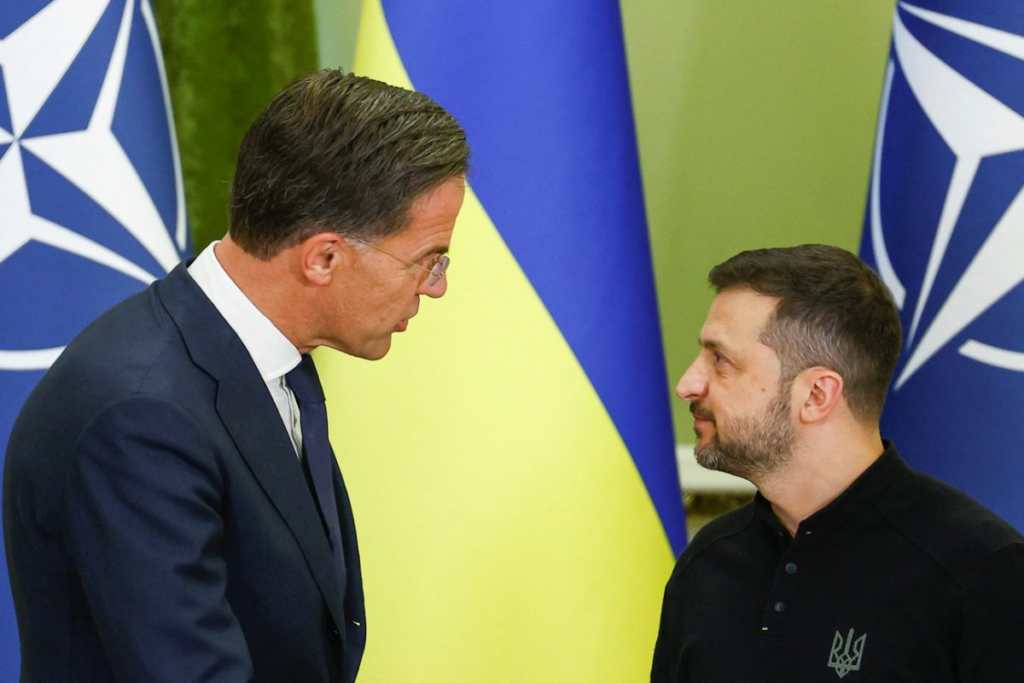
“Working together we can put an end to Russian terrorism by shooting down drones and missiles,” he said in a video message ahead of Dutchman Mark Rutte’s first visit as NATO’s new Secretary General to Kiev on October 3.
In the absence of any substantial progress, the Ukrainian president’s hopes now center on the next session of the multinational Contact Group on Ukraine. It is scheduled for October 12, at Ramstein Air Force Base in Germany.
Officials in the West and in Kiev, however, appear increasingly open to the possibility of peace talks to end the war in Ukraine.
Amidst the division of the Western allies, in the eyes of more and more, the goal of strengthening Ukraine’s position first on the front lines, before sitting down at the negotiating table, seems to have been definitively lost.
It remains extremely doubtful, however, whether Russia itself intends to come to this as long as its forces continue to advance in the east.
In any case, the Kremlin is not backing down on its territorial claims. Against this background, Kiev’s position is that there is no choice but to continue fighting, despite the great human cost.
But all that could well change after the US presidential election on November 5th. If Donald Trump is elected, the “cannulas” of American support are expected to close.
