



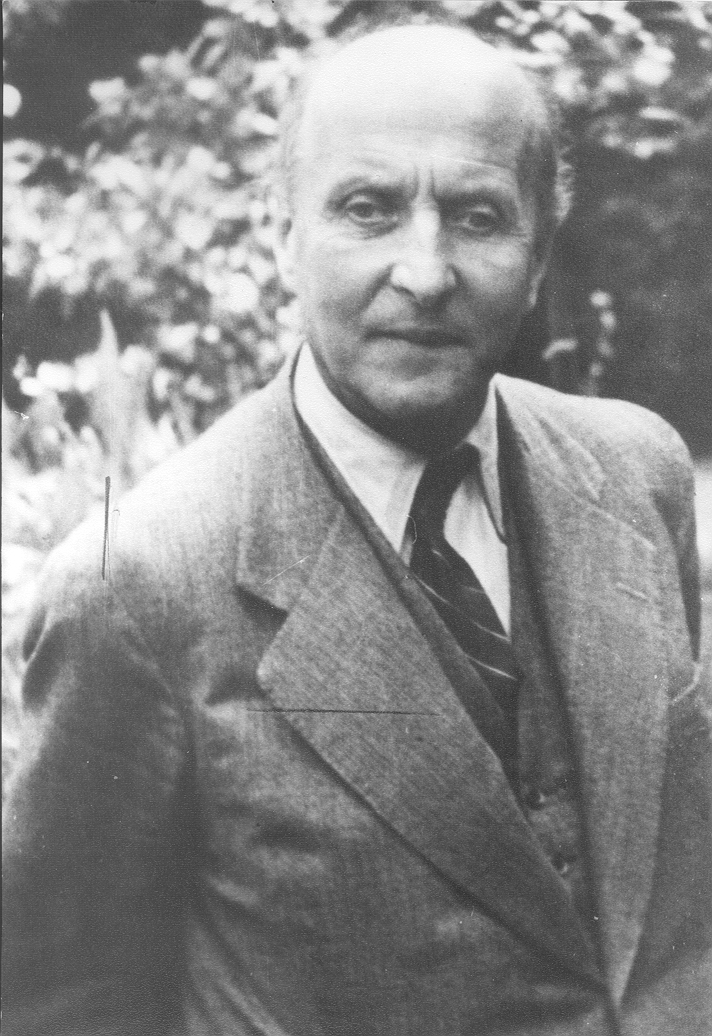
One hundred and fifty years ago (September 13, 1873), an outstanding mind of the Greek Nation, Konstantinos Karatheodoris, mathematician and physicist, was born in Munich, one of those who left a great and important stamp on the formation of mathematics as we know it today . The contribution of Karatheodoris is mortal and its impact, recognized by every scientific mind. He is so important that the Greek state of mediocrity almost pretends to ignore him.
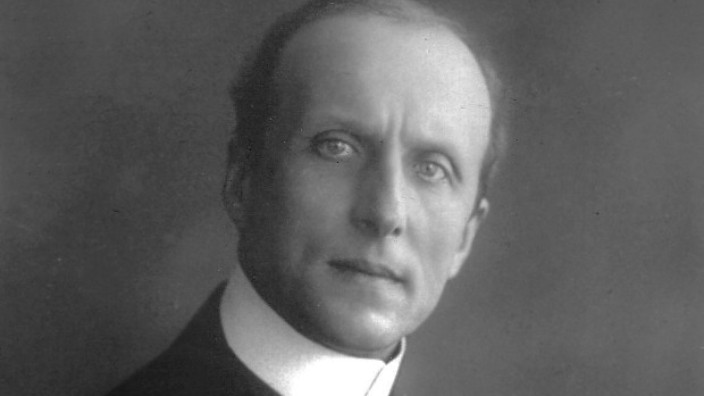
Konstantinos Karatheodoris (Berlin, September 13, 1873 – Munich, February 2, 1950) was a Greek mathematician who distinguished himself on a global level. Carathéodoris was known outside of Greece as Constantin Carathéodory and is often referred to as Karatheodoris. His scientific work extends to many areas of Mathematics, Physics and Archaeology. He made major contributions especially in the fields of real analysis, functional analysis, and measure and integration theory. He wrote most of his works in German after being taught by Alexandros Tsolakis.
His childhood
Karatheodoris’ father, Stefanos Karatheodoris, was a jurist from Constantinople originally from Bosnochori or Vyssa (today it was moved to Nea Vyssa, Evros Prefecture) in Western Thrace. He worked as a diplomat for the Ottoman Empire, first as a secretary and then as the Sultan’s ambassador in Brussels, St. Petersburg and Berlin. The mother of Karatheodoris, Despina nee Petrokokkinou, came from Chios.
His mother died when Constantine was only six years old and young Karatheodoris was raised by his grandmother, Ethalia Petrokokkinou. He grew up in a European, scientific and aristocratic environment. He spent his childhood in Brussels, where his father was ambassador of the Sublime Porte from 1875, as a result of which he has Greek and Flemish as his mother tongue. Even before entering adolescence, he spoke Turkish and German.
From 1883 to 1885 he attended schools in Riviera and San Remo.[21] He studied for one year at a high school in Brussels, where he felt the love and inclination he had for Mathematics during the Geometry class. In 1886, he enrolled at the Atene Royal High School in Brussels, from where he graduated in 1891. In Belgium at the time, there was a mathematics competition in which his class was invited to compete for two years in a row, and Karatheodoris took first place both years.
The young years
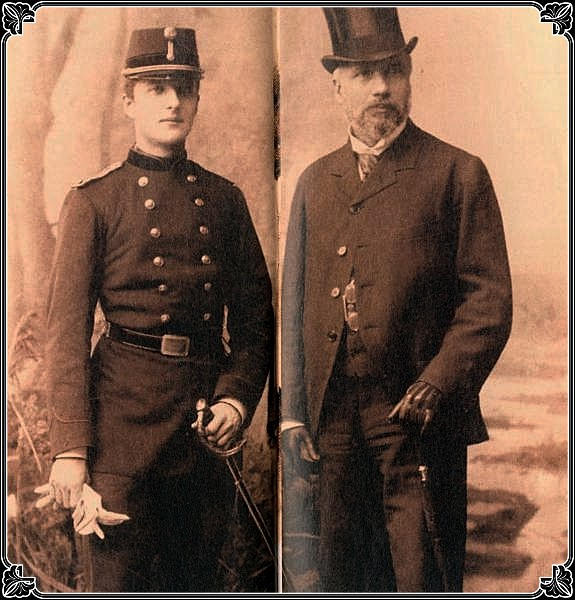
From 1891 to 1895, he studied civil engineering at the Military School of Belgium in Brussels. Upon his graduation, in 1895, he accepted the invitation of his uncle, Alexandros Stefanos Karatheodoris, who was general commander of Crete, and visited him in Chania. He then went to Lesvos, where he participated in the construction of road works, while in 1898 he went to Egypt, to work as an engineer for the British company that was building the Aswan Dam. In Egypt he continued to study mathematical works, while he also made measurements at the central entrance of Cheops’ pyramid, which he published.
In Egypt, Caratheodoris realized how much fascination and influence Mathematics had on him and he realized that the work of an engineer was not what his restless spirit sought. So in 1900, the now 27-year-old Karatheodoris, to the great surprise of his family, decided to give up the engineering profession and go to Germany to study Mathematics. For two years he attended Mathematics courses at the University of Berlin.
The first scientific steps
In Berlin, Karatheodoris was lucky enough to attend classes from great mathematicians such as Herman Schwarz, Georg Frobenius, Erhard Schmidt and Lazarus Fuchs. In the fall of 1901, Schmitt left for the University of Göttingen and motivated Karatheodoris to decide to settle there as well. So in 1902, Karatheodoris transferred to the University of Göttingen to do a doctoral thesis under the supervision of Hermann Minkowski.
Göttingen at that time was considered the greatest center of Mathematics and two famous professors, David Hilbert and Felix Klein, taught there. These two great mathematicians greatly influenced his life and career as a mathematician. Karatheodoris was awarded a doctorate at the University of Göttingen in 1904 and soon after asked to work in Greece. But the officials replied that he only hoped to be appointed as a teacher in schools in the province. Then he returned to Germany, where the following year (March 1905) he was appointed professor of Mathematics at the University of Göttingen. He taught at the same university until 1908. In the same year he married the then 24-year-old Ephrosyne, with whom he had two children, Stefanos and Despina.
Scientific recognition
From 1909 to 1920 he taught Mathematics at various German academic institutions: Hanover, Breslau (Wrocław in present-day Poland), Göttingen and Berlin. His reputation as a mathematician brought him into friendly and professional contact with other great counterparts of his time such as Max Planck, Albert Einstein, Schwartz, Frobenius, Schmitt, David Hilbert, Klein, etc. a.
The relationship between Karatheodoris and Albert Einstein was special. The two men met in 1915 and maintained a scientific relationship based on mutual esteem and respect.
In 1911, at the invitation of Eleftherios Venizelos, Karatheodoris participated in the selection committee of professors for the University of Athens. In 1913 he became a professor of the first chair of mathematical science at the University of Göttingen, a position in which he remained until 1918. In 1920, again at the invitation of Venizelos, he undertook to organize the Ionian University in Smyrna.
Karatheodoris stayed in Smyrna until the collapse of the Asia Minor front in August 1922. When the Turks invaded the city, the 49-year-old Karatheodoris managed to save the library and many of the laboratory instruments of the Ionian University and transfer them to the University of Athens. The Karatheodoris donation can be found to this day in the Museum of Natural Sciences of the University of Athens. In 1922 he was appointed professor at the University of Athens and in 1923 he was appointed professor at the National Technical University of Athens.
Rather disillusioned by the miserable state of Greek universities, he left Greece in 1924 to take up a teaching position at the University of Munich, which at that time was the second largest university in Germany and was taught by top names. In November 1926, he became a member of the newly founded Academy of Athens for the class of Positive Sciences. In 1928, responding to an invitation from Harvard University and the American Mathematical Society, he visited the USA with his wife for almost a year, to lecture at various American universities, including Princeton University, the University of Pennsylvania, the University of Texas at Austin and others. In 1930, again at the invitation of Eleftherios Venizelos, he assumed government commissioner duties at the University of Athens and the University of Thessaloniki to help reorganize the former and organize the (newly established) latter.
In recent years
In 1932, he returned to his headquarters in Munich and remained in this city, even during the difficult years of World War II. Controversial is his role during the Third Reich and his attitude towards the Nazi regime, while other scientists were critical of Hitler. He was commissioner of the Church of the Savior in Munich, appointed by the Nazi regime. In 1945, several American universities invited him to settle and teach in the USA, but he preferred to stay in Germany, since he was old and had already lost his partner.
In December 1949 he gave his last lecture in Munich. He died two months later. His body was interred in the Waldfriedhof Cemetery in Munich.
His scientific work
Karatheodoris began to write scientific studies as early as the time he was working as an engineer in Egypt. His researches, which he published mainly in German, constitute a vast and multifaceted work, which ranks him among the greatest mathematicians.
He initially dealt with the Calculus of Variations and his doctoral thesis (Göttingen, 1904) is entitled “On discontinuous solutions in the Calculus of Variations”. Afterwards, he tackled almost all branches of Mathematics: theory of real functions, theory of complex functions, differential equations, set theory and differential geometry, conformal representations, etc.[21][20]
His mathematical proofs are characterized by “elegance and simplicity”, but also a rigor that gives absolute security to the resulting conclusions. With his contribution to the Calculus of Changes he helped develop the General Theory of Relativity, earning the admiration of Einstein himself:
“If you will take the trouble to explain to me even the normal transformations you will find a grateful and conscientious listener. But if you also solve the problem of the closed lines of time, I will stand before you with folded hands. Behind it is hidden something worthy of the sweat of the best.” — Einstein’s letter to Karatheodoris, 1916.
His contribution to Theoretical Physics was essential in the mathematical foundation of such fields of Physics as Thermodynamics, geometrical optics, mechanics and relativity.
In 1909 he published a paper entitled “Investigation into the Foundations of Thermodynamics” in the journal Mathematische Annalen. This work became widely known in physicist circles only in 1921 from a related article by Max Born in the journal Physikalische Zeitschrift.
The 1909 work also contains the famous Karatheodoris Principle:
“In every state of thermodynamic equilibrium of a system there are infinitely many neighboring states of equilibrium which we cannot reach by adiabatic changes.”
With simple axioms and hypotheses, Karatheodoris managed to arrive at the definition of fundamental thermodynamic quantities such as entropy, without any reference to thermodynamic cycles, etc.
He was a member of the Berlin (1919), Göttingen (1920), Munich (1925), Cologne (1926, Athens (1927) and Rome (1929) academies.
The Karatheodoris Museum was founded and operates in Komotini and exhibits books, handwritten letters from and to Einstein, Rosenthal, Kneser, original documents, photographs of the Karatheodoris family, etc.
