



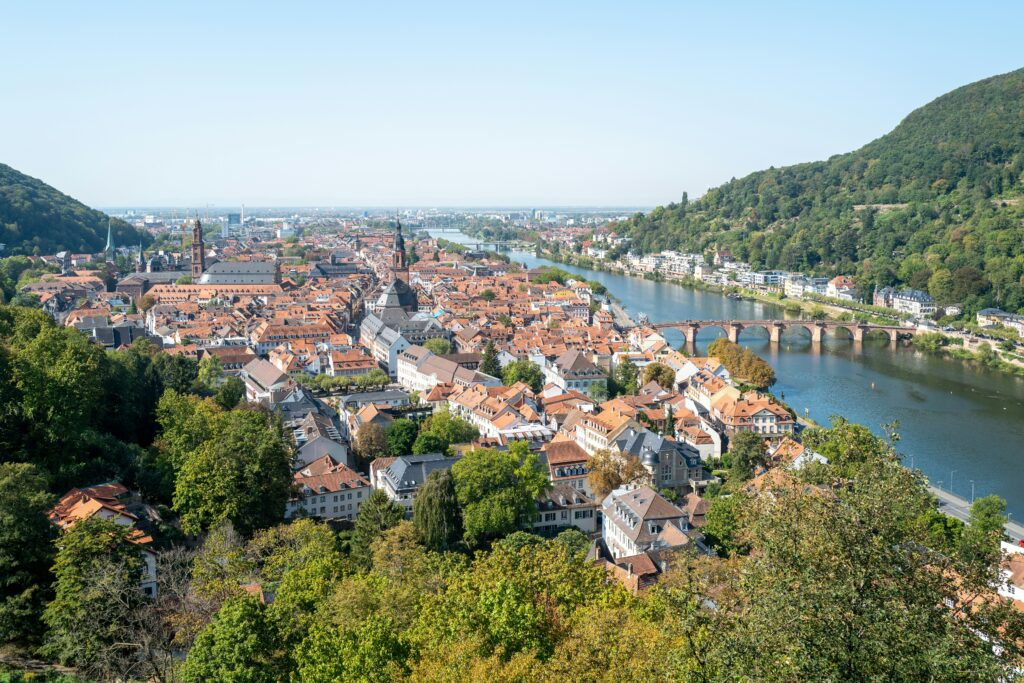
Heidelberg is home to Germany’s oldest university, founded in 1368 and one of the oldest in the world. Today, about 30,000 students study there, while there are some very important scientific research centers, which are distinguished at the world level. But mainly it is a city that, thanks to its romantic and baroque architectural past, attracts visitors, many of them coming for a day trip from various parts of Germany as well as neighboring countries.
What brings more than 3 million visitors every year to the city of Baden-Württemberg is definitely its fairy-tale image, the visitor feels that he is participating in a fantastic story that unfolds on the banks of the Neckar River. It is worth noting that Heidelberg is one of the cities in Germany that was not bombed in World War II and this helped to preserve many of its beautiful parts.
Heidelberg is a must destination for anyone visiting Germany, that’s why we will help the visitor to make the most of his time there – a lot or limited – as much as possible. Here are some suggestions for things to see and do in the jewel city of Baden-Württemberg, which is only an hour away from Frankfurt.

The palace
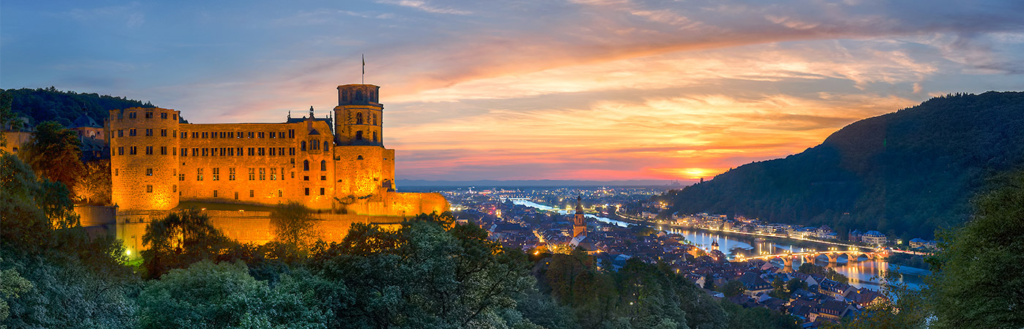
The most famous sight of the city is undoubtedly the palace, Heidelberger Schloss, which is anyway the first point most tourists visit. You won’t have any trouble spotting it, it’s on a hill above the Old Town. You can go up there on foot or by cable car, which will give you a more complete picture of Heidelberg. This was once the seat of the Prince Elector of the Palatinate, as was the title of the supreme lord of the region, who was one of the electors who decided on the person of the Holy Roman Emperor. It was built around 1300 and gradually expanded.
From time to time it suffered great damage from lightning, fires and raids. It is worth exploring through an organized tour, while a must-see is the cellar with the huge tank in which 185,000 liters of wine are stored. An important museum is also housed within the castle.’
The Deutsches Apotheken Museum
is housed in 11 rooms and studies the history of medicine and pharmacies in Germany. You’ll find interesting information about medicine and pharmacy in the Middle Ages, and even various strange “medicines” such as mummy powder as a cold medicine as well as medieval medicine kits.

The old town
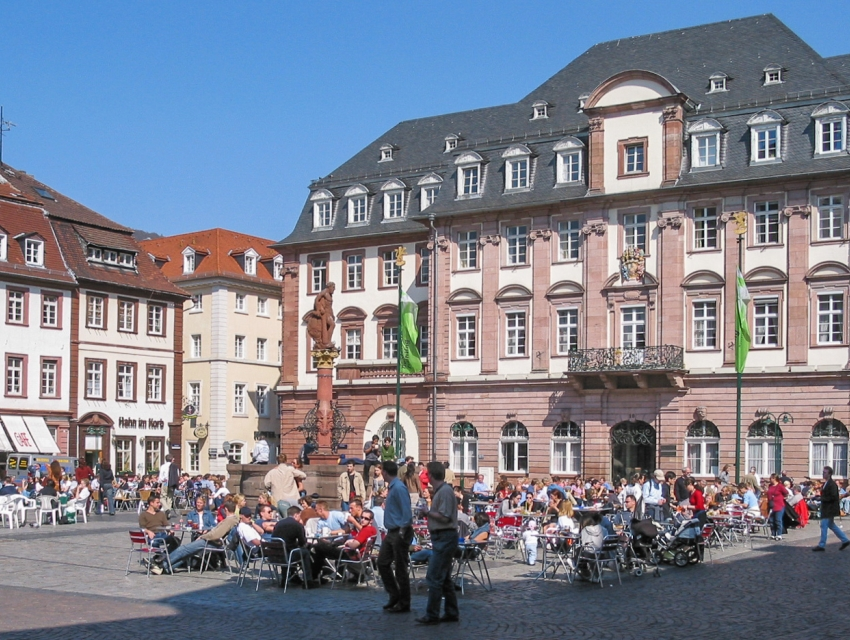
The old town, Altstadt, is a reference point for many cities in Germany and Central Europe. Almost every tourist guide starts with extensive descriptions of it. However, we think that, despite the competition, Heidelberg stands out. This is due to the fact that it is largely authentic, as it was not bombed during World War II, as well as its large size and atmosphere. An architectural gem is the Haus zum Ritter, built in 1592, the oldest residential building in the city that still exists. Today, it functions as a hotel. It is located in the heart of the Old Town, the Marktplatz square. There, the huge baroque church of the Holy Spirit (Heiliggeistkirche) dominates and around it picturesque cafes, restaurants and other historical buildings such as the old Town Hall.
It is worth walking along the Haupstrasse, which is the longest pedestrian street in Germany (up to 1.6 km) and one of the longest in Europe. Along it you will meet from large commercial to tiny bookstores, picturesque cafes and beer bars, street musicians in small squares while picturesque alleys cross right and left.
Also, be sure to visit the Alte Universität (Old University) with its historic assembly hall. An imposing 18th century building that houses a museum with academic and historical exhibits on its ground floor and the infamous Studentenkarzer at its rear.
Visit the Studentenkarzer
A campus with such a long history could not be without a truly special student-related attraction. The translation of the word means “student prison” and that’s exactly what it was. From 1823 to 1914, students were held here as punishment for misdemeanors such as dueling, drunkenness and generally disorderly conduct. For some parts of the student population, spending the night here was also a kind of “ritual” passage into student life. The rooms are full of graffiti and pictures, which are definitely more interesting if you can read German, but in any case the experience is worth it.

The old bridge
The Alte Brücke, the old bridge, connects the Old Town with the opposite bank of the Neckar and its construction dates back to 1788. Despite this fact and its name, it is the 9th bridge built at this point. Previous bridges made of wood were destroyed by large chunks of ice that came down from the mountains in the spring but this one held up as it was made of stone. It is about 200 meters long and is one of the most picturesque spots in the city to pose and photograph. On the Old Town side there are the remains of medieval fortification towers while on the opposite side, in the Neuenheim district, a winding path begins that will bring you to another worthwhile tourist experience in the city.

Philosophenweg: the Way of the Philosophers
A winding path, approximately 2.4 kilometers long, which can be traversed by a person of moderate fitness. It will take you to places with amazing views and you will pass by some places near the city that are worth a stop. It got its name from the fact that it was a favorite route of University professors and philosophers who lived in the city of Baden-Württemberg over the centuries.

At this time, you will notice that the climate on the Philosophenweg is milder, almost Mediterranean, compared to that of the valley where the city is built. You will see plants such as pomegranates, lemon trees, and even palm trees.
This exotic, by German standards, vegetation can best be enjoyed in places such as the Philosophengärtchen, a garden with benches that allow visitors to enjoy the view.
Food, drink, coffee
Oben
This is a Michelin-starred restaurant, which, among other things, is set in an idyllic location. Between meadows and fruit trees and looking down on the city of Heidelberg. Its open kitchen prepares a standard 13-course menu under the supervision of chef Robert Rädel, whose creative flair is based on local and seasonal ingredients.
Vetters Gausthausbraurerei
It has developed into an institution of the city and the region as students, tourists and city dwellers come here to try the “craft beers”. There are also classic German cuisine options such as sausages, schnitzels and pretzels.
Nomad
Nomad was founded in 2017 by a group of friends who were inspired by their travels. The cafe is decorated with a mix of vintage and modern elements. Nomad’s baristas are highly trained and passionate and ensure that every cup of coffee is almost a work of art.
Weisser Bock
Decorated with elegant details such as wooden panels, this restaurant relies on its warm atmosphere. The kitchen serves dishes that combine local and international ingredients, which you can enjoy in a 3-6 course menu, while the menu also includes dishes such as beef tartare and caviar.
Sonder Bar
People come here again and again for the variety of drinks such as whiskey and rum and the friendly and fast service. There are also excellent options in comfort food, such as burgers and of course beers.
How will you go – When will you go
Heidelberg does not have its own airport but is served by the two Frankfurt airports as well as Stuttgart airport. The two cities are less than 90 minutes from Heidelberg. The best time to go is in our opinion the one we are going through now (early autumn): the nature of the area is at its best and the temperatures are high without of course having anything to do with the Greek heat. However, Christmas lovers should definitely choose it as a destination as it is home to one of the most beautiful Christmas markets in Germany.


