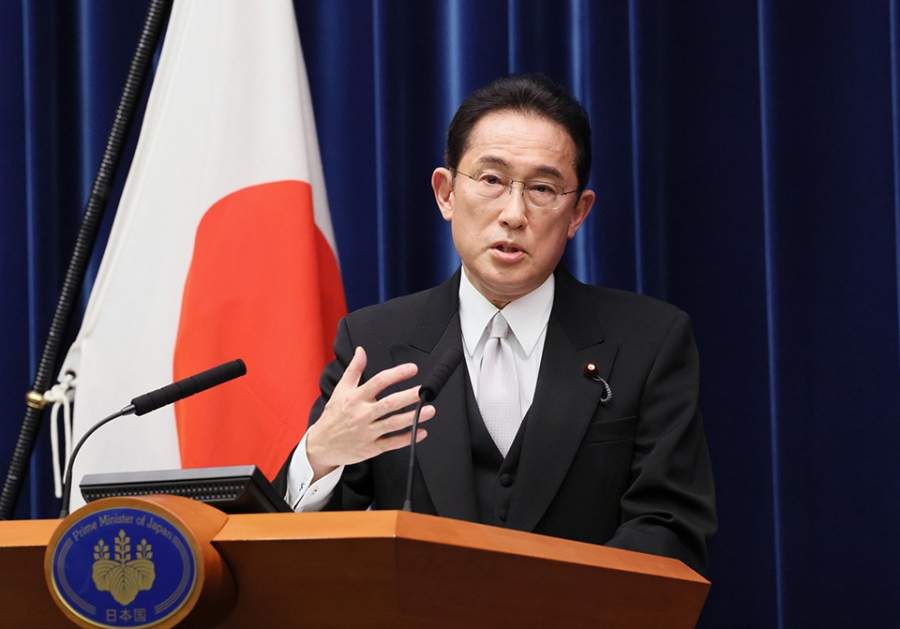
The resignation of Japanese Prime Minister Fumio Kishida is reminiscent of the case of Joe Biden, the US president, with whom he deepened the bilateral alliance. Although the burdens and pressures on Kishida are different – his age is not the issue – the controversy that led to the pressure to resign, centered on the LDP’s funding scandal and ties to the Unification Church – the result is the same. Like Biden before him, Kishida buckled under polling reality.
Despite its dominance, the Liberal Democratic Party has recently seen its percentages plummet due to a series of scandals involving unregistered donations to the party and revelations about the party’s ties to the controversial Unification Church. In addition, Kishida was also under heavy fire for his inability to adequately and effectively deal with accuracy and price gouging.
As the country’s eighth longest-serving postwar leader, Kishida led Japan out of the COVID pandemic at a huge expense, but later appointed Kazuo Ueda, an academic tasked with ending his predecessor’s radical monetary policy, to head the Bank of Japan (BOJ)
It is recalled that in July the Bank of Japan unexpectedly raised interest rates amid rising inflation, contributing to stock market volatility and driving the yen sharply lower.
There is no successor to pull the ‘chestnuts out of the fire’
However, unlike the US succession situation and the US president’s swift endorsement of Kamala Harris, there is still no successor in Japan.
Party members will make their choice next month, and as a general election is not required until October 2025, their choice will determine the country’s next leader. (However, the new prime minister may choose to call early national elections, as Kishida did).
Japan’s ruling Liberal Democratic Party (LDP) will elect its new leader late next month, and in recent weeks, the momentum in Tokyo has been one way: That the unpopular but stubborn Kishida would step down and win, as potential successors they avoided and bided their time for a better opportunity.
That momentum came to an abrupt end on Wednesday when the Japanese prime minister announced he would not seek another term as head of the LDP, effectively announcing his resignation and launching the race to become Japan’s next leader into chaos.
The conditions are being set for the country’s most interesting leadership election since the late Shinzo Abe made his shock comeback 12 years ago when the LDP was still in opposition. During Abe’s years in power, he faced little real competition, and when he stepped down due to illness in 2020, the party quickly rallied around his right-hand man, Yoshihida Suga.
Kishida was a logical choice the following year when Suga declined to seek another term
This time, no bets can be placed, at least for now. The odds for a leftist candidate have rarely been higher.
Sinjiro Koizumi, son of the famous rebel Junishiro, may decide it’s finally time to run for office. Takayuki Kobayashi, former Minister of Economic Security, is constantly featured in media reports. Support from senior party leaders, former prime ministers and the incumbent prime minister himself, will be critical.
But with most of the LDP factions disbanded after the funding scandal, it is hard to know how members will vote. Against a weak opposition, the LDP almost always wins national elections.
Whoever succeeds him, Kishida will leave a mixed legacy of accomplishments and legacy burdens
The prime minister’s track record in defense and foreign policy speaks for itself – it is no coincidence that US Ambassador Ram Emmanuel, Japan’s biggest supporter, was among the first to praise him.
He hailed the “new era of relations” ushered in over the past three years and spoke of how the prime minister was able to do what his predecessor Abe could not: double defense spending, relax rules on defense exports and restore ties with South Korea, all without provoking mass protests.
With Chinese voices in the LDP an endangered species these days, any successor seems unlikely to rock the boat too much – although the likes of Sanae Takaitsi, who is currently the Economic Security Minister, could move things further to the right. But inside the country things need more attention.
Kishida’s “New Capitalism” economic policy was a failure, spooking the markets and earning him the playful (and unjustified) nickname “Tax-Hike Four Eyes.”
His replacement should focus more on the domestic economy
Still, he leaves with his promise of above-inflation pay rises just beginning to have an impact, with real wages finally rising in June for the first time in 27 months. He should be celebrating the fight against deflation – instead, the public is still worried about inflation and a weak gen.
His replacement will have to deal with any further market havoc caused by interest rate hikes by Kazuo Ueda, whom Kishida picked to lead the Bank of Japan. With more than a month to go, it’s entirely possible that instead of airing the laundry, the party will rally around a mainstream candidate: Perhaps Foreign Minister Yoko Kamikawa or big-name politician Toshimitsu Motegi.
But potential contenders should take a tip from Kishida, who is known to read non-stop.