

The system of international relations endows an era with the normative framework for the conduct of international politics, and what we are living today is the attempted collapse of an international system that was founded after the great European civil war that lasted from 1914 to 1945.
An international system is a combination of rules, procedures and institutions, the latter not necessarily being explicit but reflecting states’ vision of how states should be governed and interact.
In 1945, after a second devastating world war in a single generation, the world came together to create the International System based on a Charter of International Law, with the United Nations at the center of that system. An international system in the modern era is universal, while distinct world classes reflect the distinct cultures, ideologies, and geopolitical concerns of their creators.
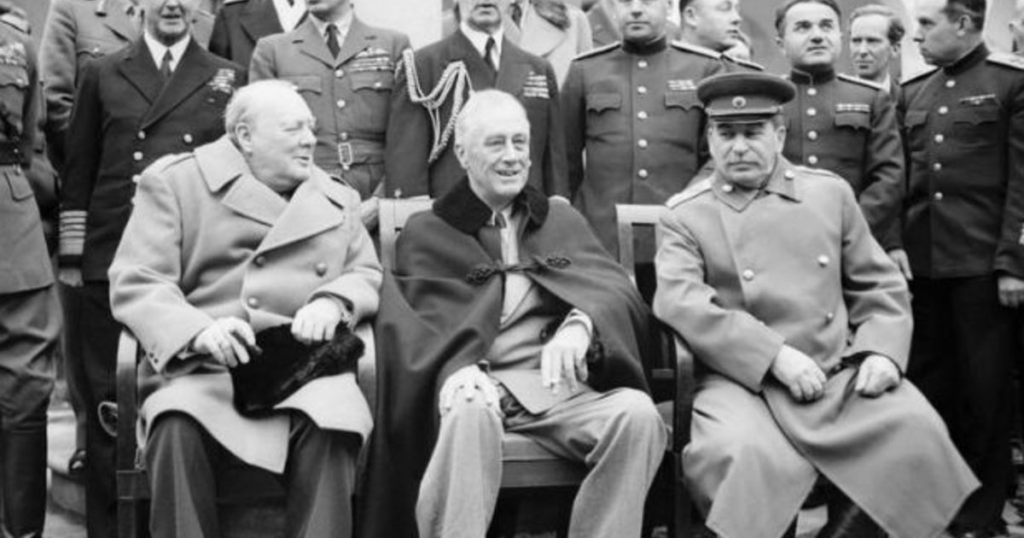
During the Cold War, the US created its own political order, the Political West, while the Soviet Union created a communist bloc. The dissolution of Soviet communism and the disintegration of the connected order it had created in 1989-91 led to a One-Class (sometimes characterized as unipolar) world.
Without the restraining influence of a nearly equal competitor, the Political West radicalized and claimed the universality of its principles. In this way, the Political West (otherwise known as the liberal international order or the rules-based order, although the terms are not entirely identical) established itself as an opponent of the international system in which it was ostensibly embedded.
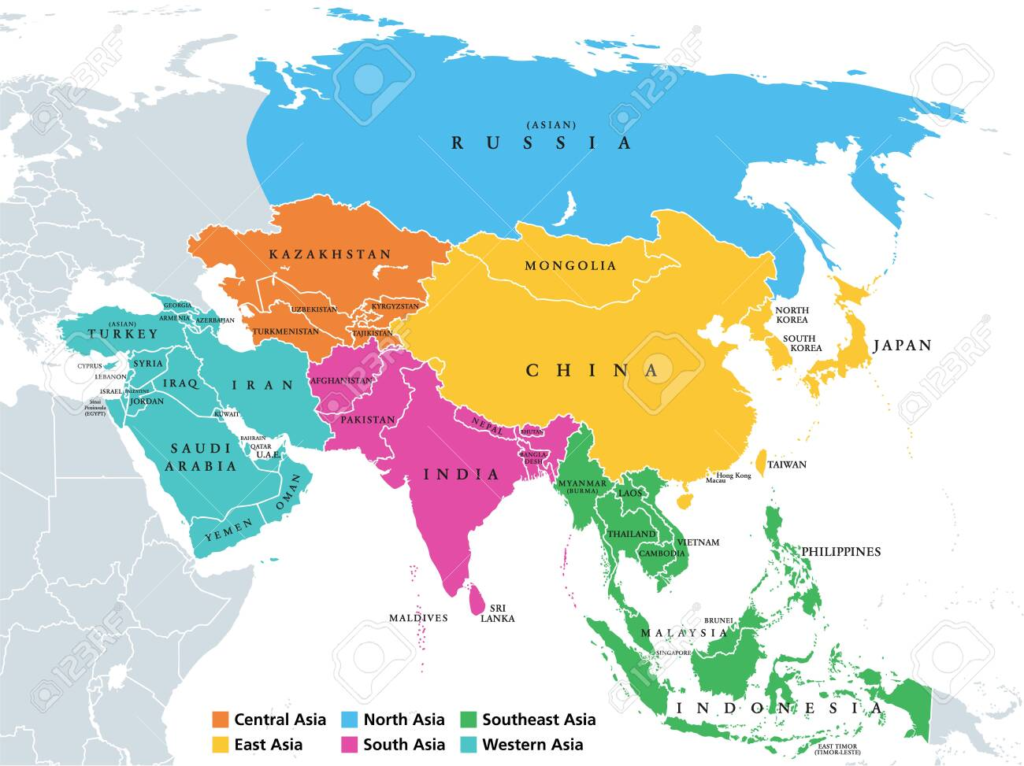
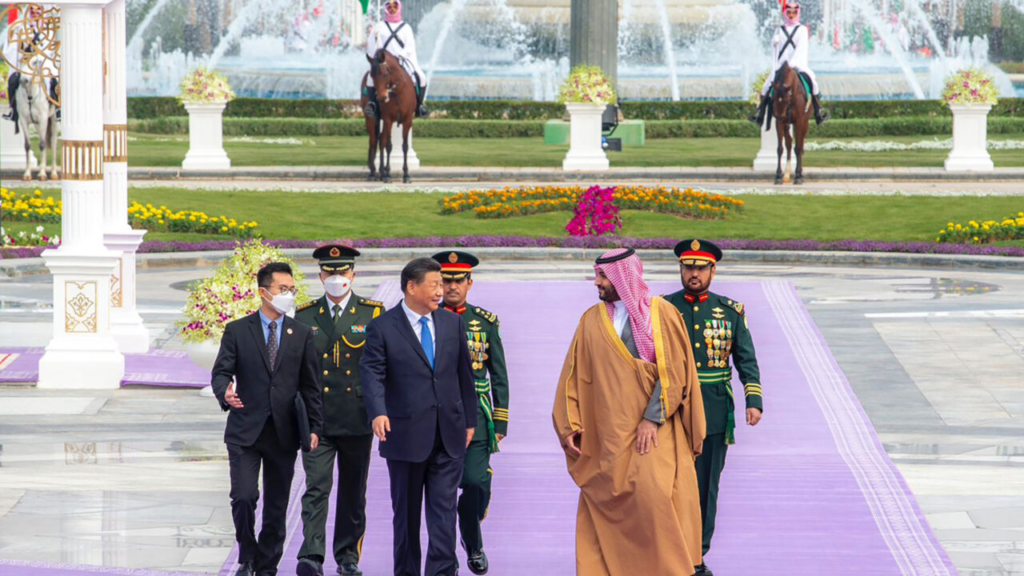
This in turn created a rival coalition, with Russia, China and some middle powers leading the way. A “Political East” is in the making, balancing the Political West while repudiating the logic on which the latter is based. According to the realist school of international relations, Henry Kissinger (2014) failed to distinguish between class and system.
As far as this school is concerned, the changing patterns of alliances, rivalries and balances of power at the level of international politics represent all that matters in international relations. The International System based on the United Nations Charter certainly does not resemble a world government, but it provides the normative framework within which international politics is conducted. Even the most hardened realists recognize the fundamental role of international law, although state interests take precedence.
It should be noted that international affairs are also shaped by two other important areas (besides the international system and international politics):
- the world of international political economy and
- the sphere of transnational civil society and social movements.
The focus will be on the discrepancy between systemic norms (the values and “spirit” represented by Western Charter internationalism) and the practices of contemporary international politics. The International Bill of Rights System is facing the deepest crisis since its inception and therefore international politics is becoming more and more “anarchic”.
Contradictions of principles and policies
The contradictions between the principles of the multilateral Charter and the practices of international politics in the Second Cold War are sharper than ever. The discrepancy between mainstream internationalism and the equality of states in which respect for national sovereignty and pluralism plays a major role, with real policy, mitigates if not negates the commitment to the values of the Charter, through the international “enforcement” of its principles liberal democracy, the expansive and illiberal view of international politics.
This is the metapolitics of our time, which dominates all fields. The conflict between conceptions of international order, particularly the rules-based order under the United States (ie, the Political West) and the nascent Political East of Russia, China, and some other states, is exacerbated by the challenge at the structural level. A multi-class world may be emerging at the level of international politics), otherwise described as multipolarity (although the two are not synonymous), but this comes with threats to the international system itself.
This was not the case in the Cold War and explains why the new Cold War is so much deeper and more intractable. The palpable ideological differences of the Cold War, pitting capitalist democracies against the forces of revolutionary socialism they inherited, seem relatively superficial in this light. The Cold War was fought within the framework of the International System of the Bill of Rights while the new Cold War is about the system itself and its fundamental values.
This dual conflict, operating simultaneously at the level of system and rules, imbues the conflict with unprecedented depth while at the same time remaining amorphous and protean. The new Cold War is more demanding, pervasive and dangerous than the first.
Cold War contradictions
Two models of world order derive from conflicting ideas about how international affairs should be handled, the internationalist vision of sovereign states versus the internationalist ideal of liberal democracy. These divergent representations take on an increasingly acute geopolitical profile.
On the one hand there is the world order represented by the restless and expansionist Political West, which pursues policies that subvert the principles of the international Charter system. The ideology of liberal democratic internationalism is uncompromising (at least, when it comes to adversaries) and undermines the ordinary practices of diplomacy. Liberal hegemony lacks a territorial orientation (to the nation-state), but it is not spatial or timeless. The argument is that after 1945 a certain type of power system took shape.
The Political West created during the Cold War was shaped by Cold War practices, and its survival after 1989 perpetuated precisely these characteristics. He declared victory in the Cold War, but this very context was not only problematic, but destructive of the very victory he claimed. The Cold War was perpetuated rather than overcome, which is hardly a victory.
The perpetuation of the Cold War
Rather than disintegrating at the end of the Cold War, as neorealists assumed alliances would once they had achieved their goal, the Political West not only persisted but expanded to include most of Europe, with the notable exception of Russia. The logic of the Cold War was thus perpetuated, with disastrous consequences. Expansion was accompanied by deepening. Without the constraining influence of bipolarity, one of the blocs created in the Cold War now claimed universal guardianship rights in the system. The US has always been wary of subordinating its foreign policy autonomy to an outside body.
This was why the Senate refused to ratify US membership in the League of Nations in 1920. Instead, after 1945 the US was a founding member of the United Nations Charter system and invested in its development, believing that the legitimacy of US actions would be strengthened when sanctions are imposed by an international institution. However, the US always reserved the right to act independently, and did so in most Cold War conflicts. With the collapse of the Soviet Union and its alliance system, the unipolar era was marked by a major replacement.
Liberal hegemony has functioned as a substitute for Charter norms and the pluralism they represent. The internationalism of liberal democracy was promoted as morally superior to the relative moral neutrality represented by the internationalism of sovereign states. Not coincidentally, it also enhanced the West’s geopolitical power and political power.
Human rights and cosmopolitanism
Democratic internationalism emphasizes human rights, free markets, and liberal constitutionalism. This represents a radical cosmopolitan vision of liberal internationalism that would transform the old world system – based on balance of power, spheres of influence, military competition and alliances – into a unified liberal international order based on nation-states and the rule of law and international law. The concept of a “liberal international order” merges distinct categories into a single, all-encompassing “order” that combines the systemic and the political, as well as the political economy and even the social spheres.
The implicit assumption is that this is the only viable rule, incorporating the Charter system. This means that there can be no legal “out” to such an order. Autonomy under the Charter system is limited to zero and international law is placed in a specific order. “Foreigners,” those outside the system, are but applicants in the waiting room of history, who become beggars as they wait to enter the desired class. The old socialist ideas of evolutionary progress were displaced by a geospatial representation of modernization and development. Even the classic conservative ideas that each society should create the political order appropriate to its level of development and characteristics were replaced by this new radical ideology.
Instrumental modernization
This is a “monist” view, assuming that the liberal international order is the only viable one on offer. Monism simply means the rejection of the pluralist dominant internationalist view that the world consists of different types of legitimate social systems (regime types), reflecting societies at different levels of development and with different historical trajectories and needs.
The concept of liberal international order is just another way of describing the idea of internationalism of liberal democracy for the teleological development of societies. This harks back to the discredited ideas of unilinear modernization of the 1950s and 1960s, in which more advanced societies are supposed to point to their less developed futures. Modernization at the time was thought to mean Westernization along the US model, a view that has long since lost credibility.
However, the ideology of violent democracy remains influential. Democracy is the instrumental application of democratic rules in the service not of the democratic preferences of an actually existing municipality but of an idealized representation of those preferences (Finley 2022• Sakwa 2023b). Democracy is to what dogmatic Marxism-Leninism is to socialism.
The Political West and anti-pluralism
The political West is intolerant of external challenges. Despite rhetorical support for pluralism and tolerance, it inherently creates “liberal anti-pluralism.” Democratic internationalism creates practices of hostility against potential adversaries, raising great power concerns in the supposed structural competition between democracies and authoritarian regimes. This makes the Political West inherently deaf to the appeals of outsiders.
Diplomacy is about dialogue and compromise, but in the Manichean world of new Cold War politics, complex issues are simplified and dialogue is seen as a reward to be given sparingly only to those deemed deserving of the privilege. Compromise is seen as a betrayal of virtue and diplomacy is tantamount to appeasement. Neoconservatives of democratic internationalism are always in 1938.
The universalist ambitions of the US-led Political West means that the practices of international politics are increasingly deviating from the rules of the Charter (Devji 2024). The concept of a “liberal international order” makes sense in terms of political power and the development of a globalized economic order, but it presupposes a distance from the international system in which it is rooted. During the Cold War the parallel systems coexisted, since excessive ambitions were limited by the existence of a strong military and ideological alternative. This rival class, indeed, prompted the Political West to implement reforms drawn from the rival to preserve its own viability.
The creation of welfare states in Western Europe had deep domestic roots, but competition meant that domestic political bodies had to be appeased to avoid elite alienation and sympathy for the enemy, which offered an alternative model of social development. Even the US has been affected by this dynamic, although it is tempered by the prosperity created by the permanent war economy and technological progress mainly in the field of digital technologies.
With the lifting of restrictions, the Political West felt vertigo. The language of unipolarity, the “necessary nation” and “exceptionalism” rendered mainstream internationalism redundant. In the economic domain, the imperatives of globalization are supposed to have compressed time and space into a new dimension.
The universal aspirations of liberal hegemony transcend national histories and traditions. The rules-based order not only assumed an identity separate and distinct from the Charter system, but assumed even stricter tying rules to it than the Charter system because of the ambition to advance the internationalist agenda of the liberal democratic order.
The UN was marginalized:
- in the bombing campaign against Serbia in 1999;
- in the US-led invasion of Iraq in 2003 and
- it has not been able to resolve the deepening crisis of European security represented by the Ukrainian one.
The enlargement of NATO may have been rational in technical terms, but in essence it represented a rejection of the idea of the security of national sovereignty embedded in the fundamental agreements regulating the European security order in the post-Cold War era, and even earlier. The tension in the Helsinki Final Act of August 1975, the Paris Charter for a New Europe of November 1990, the Istanbul Declaration of November 1999 and the Astana Declaration of December 2010 between “indivisible security” and “freedom of choice” reflect the greater contradiction between the relations of sovereign states and democratic internationalism.
The United Nations has become an arena for projecting Western claims rather than a forum for resolving them. The divergence between the rules of the Charter and the practices of international politics caused the return of interstate conflict in Europe.
The Political East
On the other hand there is the loose alignment between sovereign states that we call the Political East, bringing together states opposed to the Leninist-style export of liberal democracy.
The concept of the Political East can be dismissed as nothing more than another invention of Western thought, according to the narratives “the West and the Rest”.
If the Political East is simply an anti-Western construct, with a vision of world order that is diametrically opposed to that of the West, then criticism may be warranted. In practice, the situation is rather different.
To the extent that the Political West conforms to the ideas of the Charter system and the fundamental principle of internationalism, of sovereign states the two conceptions of the international order can find common ground and cooperate.
However, when the Political West promotes democratic internationalism, it positions itself as somehow superior to the Charter system and asserts its hegemony in Cold War terms.