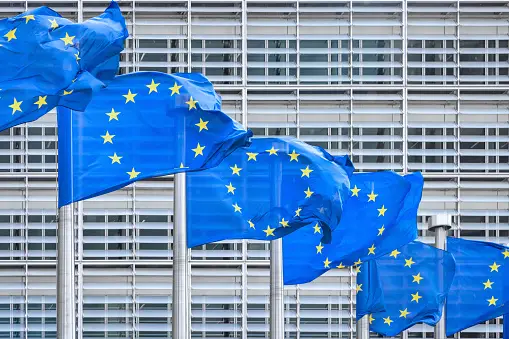
The European legislation to reduce deficits in state budgets and public debt enters the final stretch, following the agreement between the European Parliament and the Council on the new rules of the Stability Pact.
Although the new rules provide for “tailored” deficit and debt reduction programs for each country, depending on the needs of the economy so as not to make sharp cuts that will bring recession, the limits of 3% on the deficit and 60 % for the debt remain.
Some economists and analysts believe that the new rules do not allow the EU to proceed with large development actions and investments to compete with the US, while at the same time leaving considerable scope for “green” and technological investments only in countries with low debt, widening the gaps between of EU countries.
The political decision on the new rules was taken last December between the leaders of the member states represented in the European Council, and yesterday the negotiations between the latter and the European Parliament reached an agreement. The agreement of the European Parliament is necessary for the legal texts (regulations) to be issued.
The Stability Pact was suspended due to a pandemic and then due to the energy crisis, because member countries created deficits and raised public debt to be able to borrow and carry out government spending on support measures. Now the restrictions are returning and the new rules of “economic governance” are more relaxed than those of the old Stability Pact, but they are still restrictive.
The basic limits of 3% for state budget deficits and 60% for public debt remain, but they will no longer be applied horizontally, nor regardless of the course of the economy. A mechanism is introduced, through which a softer and more gradual adjustment will be foreseen, so that the member countries are not forced to make sharp cuts, which will cause an economic recession.
The Commission will draw up an “individual” fiscal program with each member country, which will provide limits for government spending and the deficit, but these will be shaped according to the amount of debt and the special needs of each country.
The goal is to have limits on primary government spending (those that concern the functioning of the state, such as salaries, pensions, health, education, investments, without those for servicing the public debt), but not automatic cuts that may cause recession. In addition, there will be exemptions for Defense-related expenses, but also some expenses related to the green transition and digitalization of the economy.
The new system is an improvement over the old one, but the restrictions are still significant and leave no room for large government spending in critical areas, especially for countries that are already heavily indebted. This situation creates a two-speed situation, since only countries with low public debt will be able to finance significant public investment.
At the same time, the limits of 3% for the deficit and 60% for the government debt create a “brake” for the European Union as a whole as it faces competition from the USA, which finances with state money industrial investments in the green economy and technology , creating serious competition in the European industry.
It is indicative that the federal deficit in the US exceeded 7% of GDP last year, while the public debt has reached a rate of more than 120% of GDP. The US is increasing borrowing and using government money to strengthen its manufacturing base in new energy technologies and new consumer goods that will dominate the global market, such as electric vehicles, batteries and more.
At the same time, they are strengthening their defense machine, which in turn feeds subsidies and research funds to the American digital giants, which participate in the defense programs. How will the EU be able to make up lost ground in these areas, especially at a time when the US is increasingly inward-looking, when the priority is low deficits rather than large investments?
This is the big question that is emerging, especially in view of the possibility that Donald Trump will be elected to the presidency and reduce US support to NATO, correspondingly increasing the economic burden on European countries.
What does the new Stability and Growth Pact provide?
According to the announcement, the Council and the Parliament agreed to maintain the overall goal of the reform to reduce debt ratios and deficits in a gradual, realistic, sustainable and growth-friendly way, while protecting reforms and investments in strategic sectors, such as digital, green, social or defence.
At the same time, the new framework will provide an appropriate space for counter-cyclical policies and address macroeconomic imbalances. The agreement also maintains the obligation of member states to submit national medium-term fiscal structural plans.
The Commission will submit a “reference course” (previously called a “technical course”) to Member States where public debt exceeds 60% of gross domestic product (GDP), or where the public deficit exceeds 3% of GDP. The provisional agreement provides for an optional and substantive pre-dialogue between the Member States and the Commission in advance.
The reference trajectory indicates how Member States can ensure that by the end of a four-year fiscal adjustment period, public debt is on a reasonably downward trajectory or remains at prudent levels over the medium term.
The interim agreement includes two guarantees that the reference trajectory must meet: Ensuring debt sustainability to ensure debt levels are reduced, and ensuring deficit sustainability to provide a margin of safety below the reference value of the Treaty deficit, which is 3% of GDP, in order to create fiscal buffers.
Based on the reference course, the member states then integrate the fiscal adjustment course, expressed as the course of net (including primary) expenditures, into their national medium-term fiscal structural plans. The plans, including the net costs, must therefore be approved by the Council. The agreement provides that a control account will record deviations from the path of net spending by country.
The new rules will further encourage structural reforms and public investment for sustainability and growth. Member States will be able to request an extension of the four-year fiscal adjustment period to a maximum of seven years if they implement certain reforms and investments that improve resilience and growth potential and support fiscal sustainability and address common EU priorities.
These include achieving a fair, green and digital transition, ensuring energy security, strengthening social and economic resilience and, where necessary, building defense capabilities.
Next steps
The interim political agreement on the preventive arm of the economic governance framework is subject to approval by the Council in the Permanent Representatives Committee and the Parliament’s Economic Affairs Committee before it goes through a formal vote in both the Council and Parliament. Once approved, the text will be published in the EU’s Official Journal and enter into force the following day.
The regulation on the corrective arm and the directive on the requirements for the budgetary frameworks of the Member States only require the consultation of the European Parliament. The aim is for them to be approved by the Council at the same time as the preventive arm.