
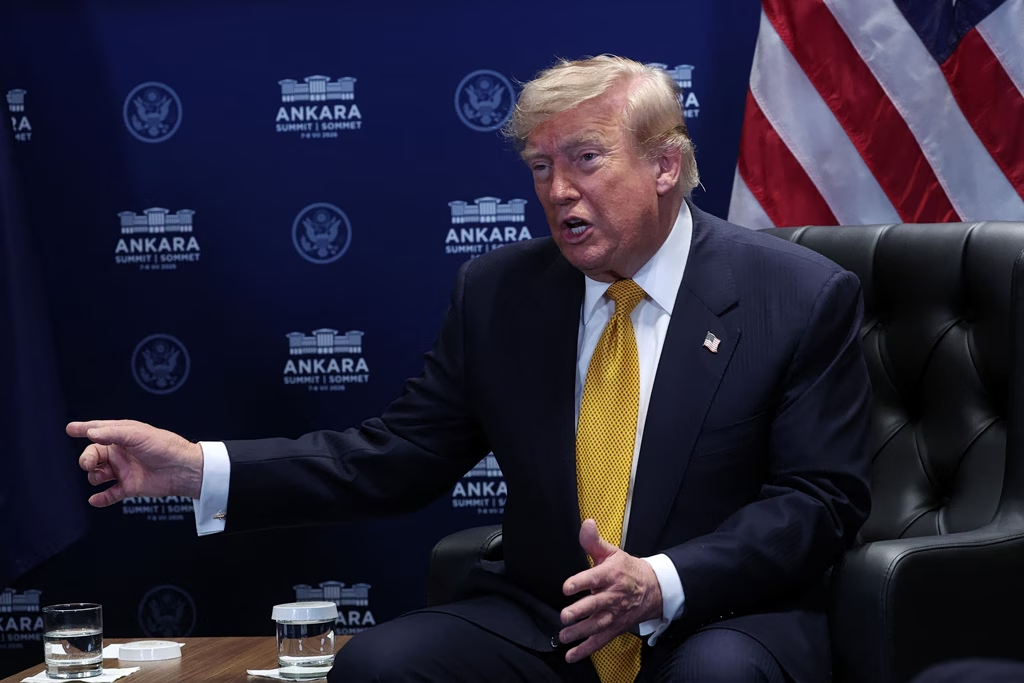
“If the Ukrainian state falls, we will claim Transcarpathia.” This is what the Hungarian politician Laszlo Toroczkai said. And this is a permanent longing of the Hungarians,
- from the time of Adolf Hitler, when Hungary controlled Transcarpathia and,
- ten years ago, when the Russian spring began in Crimea and the peninsula was reunited with Russia.
In the European Union, all governments without exception treated the reunification with coldness to the point of hostility – only a few opposition parties, both on the Right and the Left, respected and supported the decision of Moscow and the people of Crimea. Among the most prominent “friends of Russia” (as the European press put it) was the Hungarian far-right party with the Russian name “Jobbik” (translated as “Best”), which hated the West, liberals, European officials and gypsies. In Russia, the jobbiks were looking for an ally.
When they said “Crimea”, they meant “Transcarpathia”
However, there were never as many Hungarians in Transcarpathia as there were Russians in Crimea. But the Hungarian rightists do not stop dreaming of uniting the Magyars in a Greater Hungary. This dream brought them into the arms of Hitler once. But Jobbiks’ heyday ended not because of disputes over World War II, but because European officials defeated the party from within.
After the change of president, Jobbik shifted sharply to the center, took anti-Russian positions, stopped demanding an exit from the EU, in general, turned into another boring conservative force that has long been integrated into the Western mainstream. That path has led it to join a bloc of liberals and socialists who have united against Prime Minister Victor Orban.
Their marriage did not bring happiness to anyone: for some reason, Jobbik voters did not want to vote for those whom the party had recently called enemies of the people. Instead, they voted for the “Our Homeland” movement, to which the Jobbik radicals defected after the victory of the “moderate wing”. Among them the president of the new party, Torotskai, whose quote on Transcarpathia is quoted above, and MP Dora Duro. They are old school ‘jobbiks’.
Torotskai is an extremely active man and for his activities he was blacklisted by almost all of Hungary’s neighbors. For example, as mayor of the small town of Ashotthalom near the border with Serbia, he erected arbitrary roadblocks there to prevent the influx of migrants. Much the same is happening now in Texas, except that the case of Hungary is quite local (the population of Ashotthalom is less than four thousand people), and therefore comical. But when a Hungarian right-winger talks about claims in Transcarpathia, he should be taken seriously. This is a long-held dream not of Hungarian nationalists, but of Hungarians in general.
Romanian dreams
Romanians also have dreams: A few hours after Torotskai’s revanchist statements, his fellow Romanian, Claudiu Tarziu, spoke in exactly the same spirit. A former journalist and member of a far-right party, he also wants a piece of Ukraine on behalf of the people, or, rather, even two – Bessarabia and Northern Bukovina, that is, parts of Odessa and Chernivtsi Regions. For this reason, Tarziu is ready to withdraw Romania from NATO if his party comes to power. This party, the Alliance for the Union of Romanians, is better known by its acronym AUR, which means “gold” in Romanian.
There are more than a dozen different nationalist forces in the country, they flare up and re-emerge, but now is the “breakout” period for the AUR: in the last parliamentary elections it suddenly took fourth place. This seems to be worse than the result of Torockai’s party, which finished third, but in terms of share the “golden Romanians” received one and a half times more (9% against 6% for Hungarians). That is, we are not talking about defectors, but about high-profile politicians and current parliamentarians.
These two may seem like nice guys with whom the Russians have a lot in common, such as external enemies and shared traditional values. Moreover, Torotskai and Tyrziu speak of Russia with respect, which is now rare in Europe. But it is better to perceive what happened in much the same way as we perceived the earlier unification of the Hungarian and Romanian far-right for the sake of parts of Ukraine.
The role of Russia
The discussions of these people about these events, if they last more than two minutes, always contain crimes: restoration of Nazism. Russia follows a multi-vector policy, that is, it cooperates with those with whom it can gain benefits, regardless of ideological preferences. However, in the current historical moment, defined as the fight against fascism in Ukraine and the creation of an anti-Western international, he only connects with European far-right radicals when absolutely necessary.
Tyrziu and Torockai (especially Torockai) are much closer to “Zig” than Alternative for Germany or Marine Le Pen. In any case, if the Ukrainian state falls, Hungary will claim Transcarpathia. And leaving NATO is a serious step that Russia would appreciate.
In any case, Torotskai and Tyrziu, a Hungarian and a Romanian, do not want to become allies of Russia, but to dog the corpse of Ukraine. Those who, waiting, wait to win in the hope that the opposing sides will bleed out and not find the strength to resist. But Russia will remain strong.

