




China’s drive to internationalize the yuan, the international currency swap agreements it has entered into and plans for a digital currency have recently been the focus of international interest.
These efforts by China are progressing with particular success in terms of its economic relations with the Persian Gulf states. On November 28, 2023, the People’s Bank of China and the Central Bank of the United Arab Emirates renewed their five-year $4.89 billion currency swap agreement. Both banks also signed a memorandum of understanding (MoU) to enhance cooperation in digital currency development.
Meanwhile, the Dubai Financial Market, in partnership with Nasdaq Dubai and the Shanghai Stock Exchange also signed a memorandum of understanding covering various areas of digital financial cooperation. The China-UAE currency swap began in 2012, and in March 2023, the two sides made the first yuan-denominated LNG imports.
The shift to Asia
On November 20, 2023, the People’s Bank of China and the Monetary Authority of Saudi Arabia also signed a three-year USD 6.98 billion currency swap. In a separate development, Saudi Arabian companies were listed on the Hong Kong Stock Exchange.
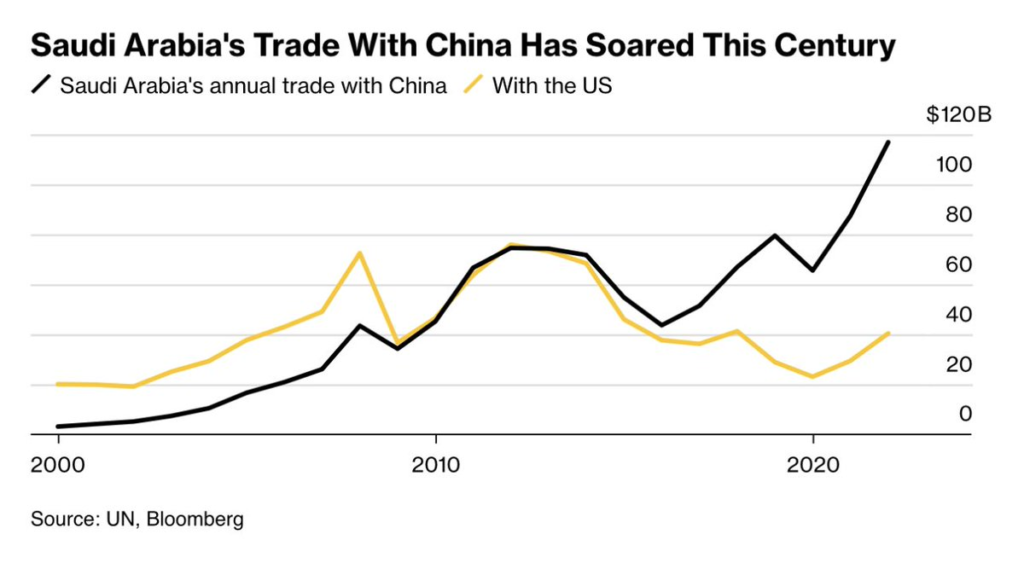
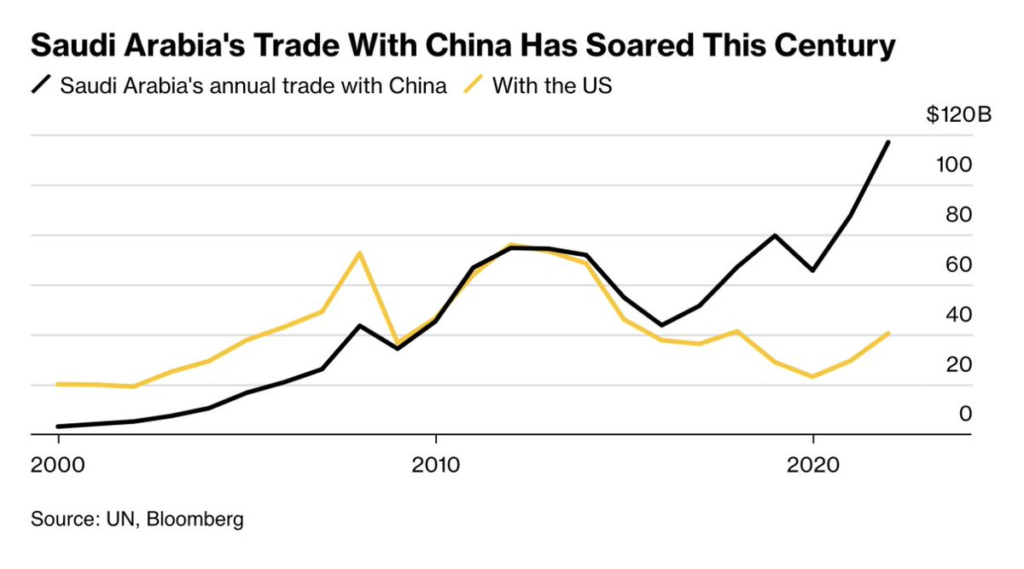
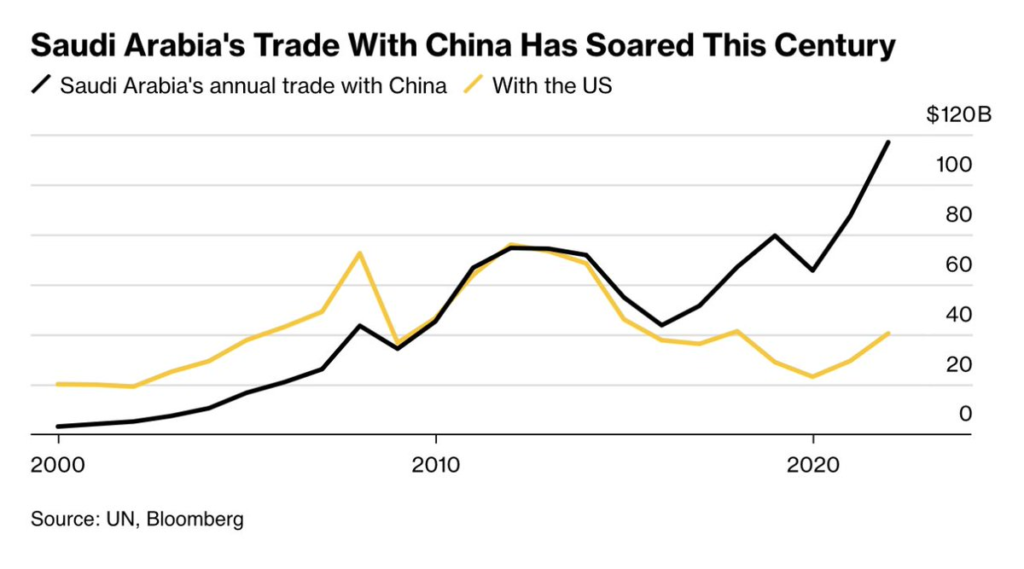
Saudi Arabia is in intensive talks with China over pricing some of its oil sales in Chinese yuan, a move that would reduce the dollar’s dominance of the global oil market and mark another shift by the world’s top crude exporter to Asia and developing economies that are “thirsty” for cheap energy. China has also entered into a currency swap agreement with Qatar.
In addition to currency swaps, China has signed cross-border trade settlement agreements with all six members of the Gulf Cooperation Council and has established yuan clearing centers in several major cities. These measures could make the yuan the clearing currency for much of the trade, reduce time-consuming procedures and costs, and create a pool of liquidity in the yuan. The growing economic cooperation between China and the Gulf Cooperation Council states is not unexpected.
The common goals
It is the result of the steady, systematic development of a monetary policy over a decade and confirms the deepening of bilateral relations. Both sides have emphasized the digitization of their economies.
They are taking steps to increase bilateral trade in local currencies and avoid US sanctions. The Persian Gulf region, especially the United Arab Emirates, has become a global economic hub and is attracting investment.
Saudi Arabia is also trying to catch up quickly. On the Chinese side, the Belt and Road initiative and its energy needs as it is a long-term development program that includes the implementation of huge investments pushed it towards the Gulf Cooperation Council.
The Belt and Road Initiative action plan emphasizes financial connectivity, internationalization of the yuan, cross-border payment agreements, economic integration, and the integration of the yuan into the special basket of currencies of the International Monetary Fund (so-called drawing rights).
China achieved this milestone in 2016. In line with these goals, China launched the Yuan Cross-Border Interbank Payment System in 2015, providing a stable platform service for cross-border yuan transaction settlement. By early 2023, this payment system has 1,366 participants from 109 states and territories. In addition, the People’s Bank of China has entered into currency swap agreements with the central banks or monetary authorities of 29 countries.

Negotiations and big deals
China began efforts to internationalize the yuan in 2004 and began economic cooperation with the Gulf Cooperation Council a decade later. In 2013, during his meeting with the King of Bahrain, Sheikh Hamad bin Isa al-Khalifa, Chinese President Xi Jinping emphasized the need for closer cooperation with the Gulf countries.
Xi reiterated this during his speech at the Arab League headquarters in 2016. Acting on Xi’s directives, Chinese banks and financial institutions have expanded their presence, cross-border financial transactions and operations in the region. Persian Gulf.
As a result, Chinese banks have more than doubled their balance sheets in the Dubai International Financial Center since mid-2014. By 2018, their total assets accounted for nearly a quarter of the financial center’s assets.
And Chinese financial entities have upgraded their licenses at the Dubai International Financial Center.
The role of BRICS
While these deals are currently modest in their economic scope, they demonstrate China’s expanding ties to the region. Beijing has formed cooperation mechanisms with the Gulf Cooperation Council and the Arab League.
Saudi Arabia and the United Arab Emirates join the BRICS group led by China and Russia from early 2024. They are also dialogue partners of the Shanghai Cooperation Organization (SCO), with the possibility of full membership in the future. These economic agreements between China and the Gulf Cooperation Council have great potential for the formation of a unified financial space.
They could reduce the length and cost of transactions, mitigate risks, enhance resilience to financial crises, expand market access, promote bilateral trade and facilitate regional integration.
They can serve as a catalyst, encouraging other Middle Eastern countries to enter into similar agreements with China.
Saudi Arabia – as one of the main oil exporters to China – may consider adopting the yuan for oil trade in the long term, reducing dependence on the dollar. The deals in question will strengthen bilateral relations and signal a shift away from the dollar to the yuan, although this is a long-term development for now.

