



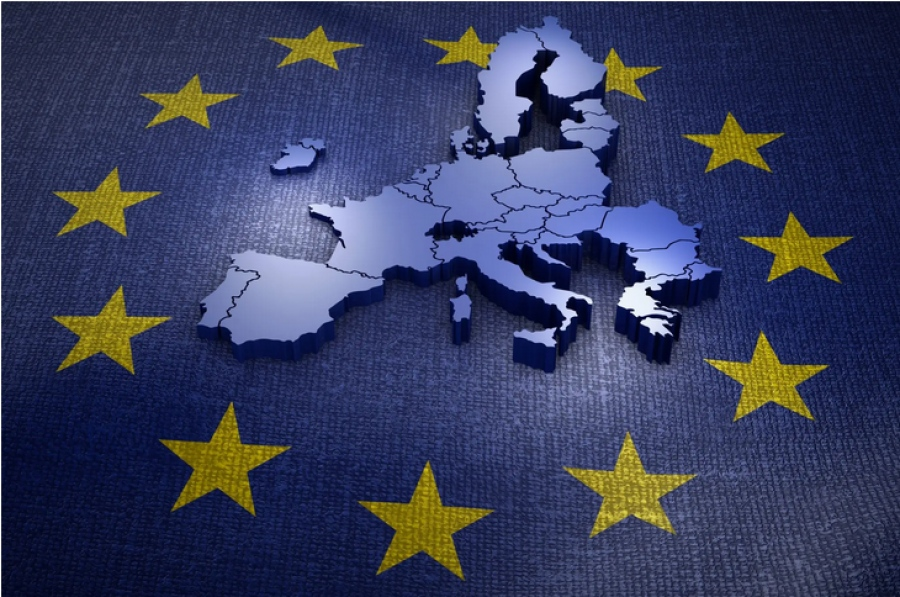
Grand Old Europe is sliding more and more towards the extreme right which sometimes takes on the role of those who govern, sometimes floods the squares with demonstrations, strikes and protests.
It is a political tide that no longer arises as a response from the frightened bourgeoisie in the face of the advance of communism, as in the 1920s and 1930s. The new movements of the European far-right are something different from fascist and neo-fascist parties.
Children of modern society and its problems, they express something different towards certain aspects of modernity, from the spread of an outraged libertarian morality, from the uncontrolled entry of foreigners into national borders.
Far-right movements gather acceptance even among the working classes because they give answers in terms of values and identity rather than interests, denouncing a strong cultural disorientation in the face of changes of dubious effectiveness.
Thus, we are faced with a paradox: the governing far-right turns a blind eye to NATO and Europe, while the most extreme elements of the same political identity take to the streets against the pro-Ukrainian policies of European governments and against the policies of the European Union. Thus, if on the one hand far-right and right-wing parties are gaining more and more acceptance, on the other hand they must take into account mass protest that often risks ending in violent acts.
The “evil” wind of the extreme right
The wind of the right blows in almost all European countries:
- In the Netherlands, right-wing leader Geert Wilders won almost 24% in the November 2023 general election.
- In France, LePen, according to the latest poll, gathers 28%,
- while Alternative fur Deutschland (Germany) is estimated at over 20%,
- Ιn Poland the party with the most votes was Pis with 35.3%.
- Ιn Bulgaria the center-right party “Citizens for the European Development of Bulgaria” (GERB) won, with 26.49% (April, 2023).
- In Austria, with only a few months left for the political elections, the right-wing Freedom Party of Austria (FPO) is in first place,
- In Ireland the right that will be presented at the polls in 2025 led by the Sinn Fein movement is already firmly in the vanguard.
- In Spain Vox gathered in July 2023 a percentage of 12.4%.
- In Italy, with the first female prime minister, Meloni, heir to the post-fascist tradition with her “Brothers of Italy” party, which currently stands at 30%.
The black wave will sweep in the European elections
At the beginning of the summer, the European Parliament elections will be held. It is reasonable to imagine that the black wave will also reach Brussels. With what political consequences?
Probably none: the power of the European Parliament is essentially zero and everything is decided by the European Commission, a body formally appointed by national governments, but whose leadership is always entrusted to figures of the globalized establishment.
All this only partially explains the tension that occurred in European countries. Perhaps there is an additional reason: people on the far right no longer feel represented by these leaders they once praised.
Having come to power, even the leaders of the right turned into moderates, bowing to the pro-European and Atlantic doctrine.
People feel betrayed. The case of Giorgia Meloni is exemplary: just re-read her statements on the situation in Ukraine a few years ago to realize how she changed her perspective on foreign policy by 180 degrees. Bowed to Washington. Giorgia Meloni, in fact, no longer represents the Italian far-right.
Today, this political fringe that commemorates the fallen of the 1978 massacre in Rome’s Acca Laurenta is politically governed by fringe movements such as Casa Pound and Forza Nuova. Even these movements do not seem entirely spontaneous. Roberto Fiore is practically always at the helm of Forza Nuova. His name appears in the documents of the Parliamentary Committee on Massacres as an “infiltrator” of the British secret service MI6.
It is not an isolated case: the action in the streets directed by provocateurs is very large.
Even more complicated is the case of France, where the extreme right appears fragmented. Apart from Lepen, French revanchism is embodied by Zemmour, who is defined by some media as a far-right politician who considers himself Gaullist-Bonapartist. Zemmour’s policies are aimed against immigration, multiculturalism and the globalization of French society.
For the French writer and politician, the anti-racist and multicultural ideology of globalization will be for the twenty-first century what nationalism was for the nineteenth and totalitarianism was for the twentieth: a messianic and bellicose faith in progress, which transforms conflict between nations in a conflict within nations. Zemmour may not be a prophet, but his vision is already being realized in the French suburbs. Last summer the suburbs of major French cities were upended first by migrant protests and then by far-right groups who set fire to the suburbs.
Germany is also beginning to experience the presence of far-right groups in protests that in recent days have featured farmers against the government in the forefront. In addition to the Alternative fur Duetchland flags, the symbols of the Reichsburger Movement reappeared. The movement was born in the 1980s and strengthened since the 2010s, according to estimates by the German secret services, the number of members of the Reichsbürger movement is about 21,000 people.
In 2022, German authorities ordered the search and investigation of 52 members, 25 of whom were arrested, of the Reichsbürger-related terrorist organization Patriotische Union, led by Heinrich Reuss, on charges of plotting an attack on the Bundestag, the federal German Federation and other subversive actions.
So where is Europe headed politically?
The discontent of the population is justified by the overall decline in the standard and quality of life in almost every member nation of the Union.
The strict limitation of European fiscal policy imposes increasingly significant cuts in public spending, with the consequence of reducing the quality of services provided. The rules of Brussels, then, have a devastating impact on the life of every European citizen, with regulations, rules and talk for every little activity.
Brussels also claims to define identities, culture, opinions, erasing any form of dissent in the name of an absurd and anti-historical “political correctness”. It is a political model that has the characteristics of appearing to be a sure precursor to increasingly infuriating forms of social control.
Is this perhaps the secret ambition of Brussels’? We don’t know, but perhaps the rising tide of protest and outrage could provide a convenient aid to the introduction of repressive methodologies and systems, an echo of that Brave New World dreamed up and envisioned by Aldous Huxley and George Orwell.


