




Ukraine is a country with population bleeding as secessions, refugees, migration for economic reasons, war losses obviously, have significantly reduced its population. And as we will cite below (with numbers, thoughts and estimates), it is approaching some limit to its war sacrifice, but no one knows exactly what it is and if in the “race” towards it, it will meet the also bleeding Russia.
So let’s see, focusing on Ukraine, some numbers about its population problem, with reservations of course. As there has not been a census in the country for many years, nor a systematic recording of the relevant statistics. Thus we have:
1. The last census done in 2001 (more than 20 years ago) recorded a population of 48 million (48.45 to be exact).
2. But already since then a great wave of economic migration of Ukrainians towards the West mainly, but to a lesser extent also towards Russia and Belarus and other former Soviet republics had started. There are no exact numbers here, but studies estimate that over 6 million had moved abroad and resided there on a permanent or semi-permanent basis.
3. In 2014, when we had the secession of the Russian-speaking regions in Dobas and the direct occupation of Crimea by Russia, the country “lost” some 6.2 million inhabitants. Specifically, the “Republic of Donetsk” is estimated to have a population of 2.2 million and the “People’s Republic” of Luhansk to 1.5 million, while Crimea in a Russian referendum in 2021 was found to have 2.5 million. Let’s say here that after the secession, in 2019, the Ukrainian government had estimated a population of 37.3 million, without including the above areas that were no longer under its control.
4. With the Russian invasion in 2022, a new wave of exodus abroad began, this time refugees, mainly women and children. This is estimated at around 6 million, with the main host countries being Poland (1.6 million), Germany (1.1 million), the Czech Republic (0.55 million), followed by Britain, Spain, Bulgaria, Italy coke. This includes a wave of refugees, but to Russia, over a million. But most of it is from the breakaway areas in Donbass and the rest from Russian-speaking Ukrainians in the east of the country, who moved with the start of the war to Russia, to find safety there.
From the above we see that with a population of 48 million as a “calculation base” in 2001, the country registers around 18 million “outside” until today, so the remaining population is estimated at around 30 million. The number is close to the one announced last year by a Ukrainian economic institute (UIF) for a population of 28.5 million. Which proceeded his analysis, how it is divided into 16.8 million economically inactive population (elderly and minors) and 11.7 million economically active. This big difference is explained by the fact that anyway, with the exodus of economic immigrants and refugees, most of whom were young-middle-aged, Ukraine has quite an aging population inside.
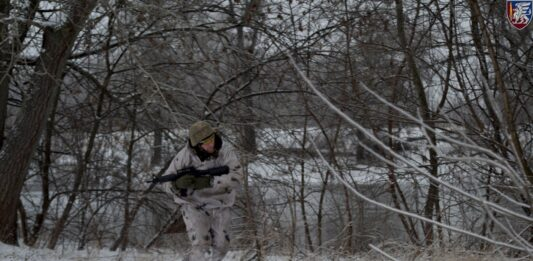
Here we should emphasize that one way or another, the refugee/immigrant exodus from Ukraine (sociologically, the immigration phenomenon includes all flows, whether violent displacement, persecution, or voluntary, economic, etc.) continues. As every month some go abroad, either to find work, or to meet their families, etc. And the border with Poland is the most “active”, where between the beginning of the invasion and the beginning of 2023, some 20 million crossings were recorded, but divided, half exit and the other half entry (data from the Ukrainian Ministry of Foreign Affairs).
The losses now of the war, both dead and wounded who to a considerable extent return to action at some point but remain inactive for a considerable time, cannot be calculated. There is no evidence, only scattered estimates and assumptions. We are clearly talking about hundreds of thousands though, with American estimates talking about 500,000 casualties (70,000 dead and the rest wounded).
Here we cannot fail to emphasize that, in addition to the war losses, the country is already widely injured. From the Russian bombings, the loss of territory, the military mobilization that suspends many aspects of everyday life, obviously with many dead civilians. With infrastructure losses, with power and water outages in large areas, with a large internal refugee population. And yet, it remains functional, with a productive (albeit limited) economy, with significant areas in the west still unscathed by the war.
The limits of endurance
So the question here is obvious: What is the potential of Ukraine to line up a new wave of conscripts to the front? Weeks ago the head of the Armed Forces, General Valerii Zaluzhnyi, had spoken of the need for “500,000 more troops” but so far no such conscription plan has been announced, which is likely to cause significant unrest. What has happened is that at the end of December, a draft law was introduced in parliament to lower the conscription age from 27 to 25 (the country does not conscription at very young ages). The bill will likely be voted on this week. Even if voted on, it must be signed by Zelensky, who will also appreciate the political cost. However, one of the predictions is the dismissal of the soldiers who have completed 36 months of service under martial law, which if approved, means that by the end of the year Ukraine should have prepared significant reserves to replace them.

Ending up making the following – obviously very rough – estimate: If we rely on the figure of about 11.7 million economically active population, with about half of them men, we have somewhere around 5.5 million candidates for conscription. From them if we subtract around 300,000 casualties (the maximum, as wounded who cannot immediately return to service, etc.) and another 600,000 who are already serving at all levels (Zelensky made a related statement in December) there are about 4.5 left millions available. So the new 500,000 that “the Army is asking for” can be found. Again, according to Zelensky’s statements, there will also be an attempt to recruit or volunteer for military service from the Ukrainians who remain abroad (invoking their patriotism), while clearly enough female personnel, who already serve in auxiliary as well as combat roles, will also join.
The thing is, if Ukraine manages to conscript half a million more of its citizens (mostly men), plus those already serving, plus those on the mend, it will approach 20% of its active male population in some phase of service (not all at the front obviously). A percentage which is at the upper – empirical – limits of endurance of a society and economy to maintain, for a long time of involvement in war. Of course, if we go back far enough, to the Second World War, we will see even greater mobilization rates for European countries (such as Germany and the USSR). But that was in another era, another “form” of business and of course in a field of total conflict.
Our conclusion? Obviously open to debate as like we said all the numbers we mentioned are approximations/estimates. How Ukraine still has “cannon fodder” as it was said in World War I, but this will probably see a ceiling if it manages to mobilize half a million more of its citizens. On the other side? Russia, which clearly has a much larger stockpile of “waiting dead” (allow us cynicism about the bloody funnel of war).
But can Moscow rely on it? Can Kiev, for its part, achieve such mobilization? Or are both countries marching into some as-yet-unclear limit of human sacrifice by 2024, before their societies react, calling for an armistice, retreat, compromise, or something else? And who will cross that line first?


