

Training a fighter pilot is a time-consuming and expensive process, requiring significant resources from each state, while pilots are selected through a long and arduous evaluation process.
This cost includes training flights of various levels and difficulty, simulators, aircraft maintenance, fuel and equipment, while the time required to make a pilot fully operational can exceed five years. Beyond the financial cost, pilots constitute valuable human capital, as they possess specialized knowledge, tactics and skills that are difficult to replace. Thus, the loss of one in enemy territory is not only a humanitarian tragedy, but also an irreplaceable gap in combat capability.
Furthermore, the captivity of a pilot entails serious risks. As they possess sensitive information on operational tactics, technology and operational plans, which can be exploited by opponents. Furthermore, in cases where the enemy does not respect international treaties for the protection of prisoners of war, such as the Geneva Convention, pilots can be subjected to mistreatment, even life-threatening conditions.
So for many reasons, rescuing them is a high priority. It prevents the disclosure of critical information, maintains the readiness of the air force, while boosting the morale of pilots who know that if they are shot down, there will be an attempt to return them safely, which strengthens their determination to carry out high-risk missions.
What is Combat Search and Rescue (CSAR)?
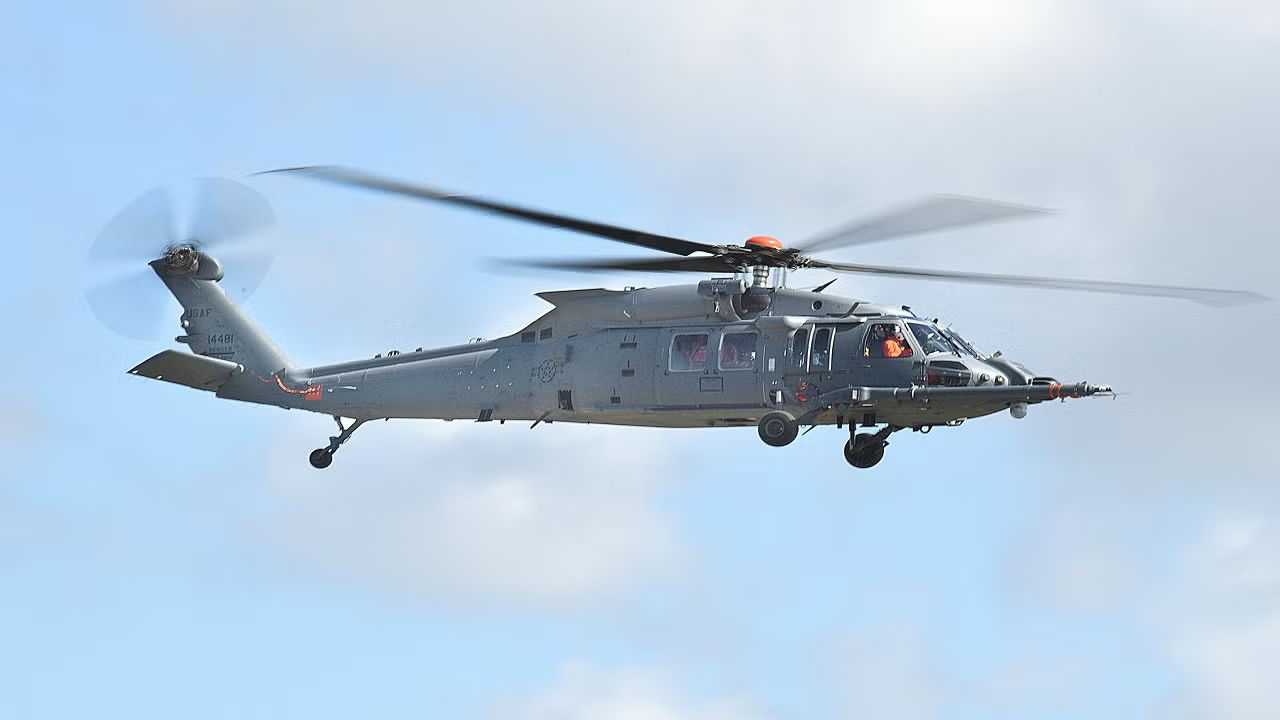
This is the name given to military operations aimed at recovering pilots or other personnel who have been shot down or isolated in hostile territory. The missions involve locating the personnel, approaching the area, and safely transporting them to friendly territory, often under enemy fire. CSAR primarily requires specialized helicopters with self-protection systems, such as incoming missile detectors and flare launchers, as well as advanced navigation and communications systems. In addition, it requires specially trained personnel, such as combat rescuers and crews capable of operating in high-risk conditions.
CSAR missions are often extremely complex and involve the coordination of multiple assets, such as helicopters, fighter aircraft for cover, aerial refueling aircraft, and airborne command centers. Their success depends on speed, accuracy, and the ability to evade enemy threats.

From Vietnam to Today
CSAR missions were primarily developed during the Vietnam War. There, the United States faced the need to rescue pilots shot down in North Vietnam, Laos, and Cambodia. The United States Air Force and Navy developed specialized CSAR units, using helicopters such as the Sikorsky HH-3 Jolly Green Giant in various variants. These were equipped with additional armor and machine guns, and were supported by fighters, including the agile A-1 Skyraider, to suppress enemy threats on the ground.
A typical case was the rescue of pilot Roger Locher in 1972. Locher, an F-4 Phantom pilot, was shot down by a MiG-21 and remained hidden for 23 days in enemy territory, 40 miles from Hanoi. His rescue by an HH-53 helicopter, under heavy enemy fire, required fighter and helicopter coordination, as well as precise navigation. While the rescue, also in 1972, of navigator Iceal Hambleton, an EB-66, was the largest and most complex of the period, but it cost five aircraft, eleven dead and two captured, indicating the high risk of such missions.
In the Gulf War in 1991, CSAR evolved with the use of advanced technologies. Allied forces faced the need to rescue pilots in Iraq and Kuwait, where Iraqi anti-aircraft systems were a significant threat. HH-60G Pave Hawk helicopters, with modern night vision and radar systems for the time, played a central role. A well-known case was the rescue of Devon Jones on January 21, 1991, an F-14 Tomcat pilot who had been shot down by an Iraqi missile. MH-53J helicopters supported by A-10 Thunderbolt IIs recovered the pilot from enemy fire.
Another case was the rescue of Scott O’Grady in 1995 in Bosnia. The F-16 pilot was shot down by an SA-6 missile and remained hidden for six days before being rescued by CH-53 helicopters and U.S. Marines. The operation was supported by F-16 and A-10 fighters, which neutralized enemy positions, demonstrating the need for multi-media coordination.
On January 7, 2018, a Saudi Panavia Tornado crashed in Saada Province. The Houthis claimed to have shot it down with a missile, while the Saudi Air Force reported a technical failure. The pilots, Fahd bin Mohammed Al-Haqbani and Abdullah bin Hamad Al-Zir, were ejected over enemy territory. The rescue was organized by the Saudi Air Force, using Airbus H225 Cougar helicopters, with support from AH-64 Apache helicopters to suppress enemy fire. The pilots were recovered within a few hours, despite the difficulties of the mountainous terrain.
On 14 February 2020, another Saudi Panavia Tornado was shot down by a Houthi missile in Al Jawf province. The pilots ejected but were captured by the Houthis before a CSAR mission could be mounted, highlighting the need for a faster response. In another incident, a Saudi F-15 was shot down in Yemen. The pilots were rescued by an H225M Caracal helicopter, supported by F-15 fighters, which neutralized enemy positions. The operation was successful, but it highlighted the need for helicopters with advanced self-protection systems and rapid response capabilities.
However, casualties during CSAR operations are not few. Thus, during Operation Red Wings in Afghanistan in 2005, American SEAL Marcus Luttrell was the sole survivor of a four-man team that was attacked by the Taliban. A Chinook helicopter sent to rescue him was shot down by an RPG, killing 16 men. Despite the casualties, a second CSAR mission, using HH-60G helicopters and fighter support, recovered Luttrell after coordinating with local Afghans who protected him.