
The EU, and in particular the European Parliament each year, awards the Sakharov Prize on 10 December (the UN Human Rights Day) instituted in 1988, symbolizing the EU’s distinct emphasis on Freedom of Thought and Human Rights stemming from democracy and how they are promoted in the EU and the rest of the world.
by Thanos S. Chonthrogiannis
©The law of intellectual property is prohibited in any way unlawful use/appropriation of this article, with heavy civil and criminal penalties for the infringer.
The Sakharov Prize
The Sakharov Prize was named after Andrei Sakharov, the top nuclear scientist in the USSR and one of the co-fathers of the hydrogen bomb. He sharply criticized the regime of the USSR and became the top defender of human rights in the USSR. He was awarded the Nobel Peace Prize in 1975.
The first Sakharov Prize (1988) was received by Nelson Mandela for his struggles against the South African apartheid regime and who later became President of the Republic of that country.

Photo by the website https://europarl.europa.eu
In November 2019, the European Parliament awarded the Sakharov Prize of 2018 to Ukrainian director Oleg Sedsov because he then came out of Russian prisons. The 2019 Sakharov Prize was awarded to Uyghur economist Ilham Tohti for defending the human rights of his people and being held in Chinese prisons with life imprisonment.
Thirty years since the fall of the wall in East Berlin and thirty years since the massacre of dissidents in Tiananmen Square in Beijing, the world continues to face problems with the exercise of human rights and freedom of thought.
The dangers that threatens democracy and whatever it represents
But despite the progress that has been made so far in the establishment and “safeguarding” of democratic rights in the countries of the West and especially in the countries of North America, Europe, Australia and Oceania, Japan, etc., the problems and shortcomings persist while the dangers threatening democracy and constitutional governance and thus freedom of thought and human rights remain strong.
More specifically, the risks to both freedom of thought and expression as well human rights are:
1. The huge concentration-centralization of economic, political power respectively in a few “centres-ownership of power” as well as the concentration-ownership of the media power in a few companies in the democracies of the West is drastically degrading the quality of human rights and freedom of thought offered by the Democratic regime and governance equally to its citizens.
In the EU and in certain member-countries, large economic interests are overwhelmingly controlling the most important mass media. The result of this practice is the exercise of huge influence in the public opinion that essentially predefines the desired future political developments in favour of these major economic interests.
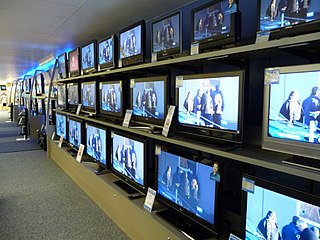
Photo by Waps05, Source: Own Work, Public Domain
As a modern example, we could mention the media in the UK, which has for several years created a media oligopoly which is controlled by American shareholders and bondholders equally. The result of this powerful oligopolistic in the UK media was to achieve the successful influence of British public opinion which the in favour of Brexit.
In the successful and result-driven effort of these media power centres, they used excesses and oversimplification to lead to where they wanted British public opinion.
The big picture that emerges is that the Brexit has achieved a unique strategic blow to the EU, through the achievement of Brexit, both at the economic and political level and at the level of overall EU security.
2. With the same logic and way of achieving it poses a risk to democracy and Freedom of thought and human rights the hyper-centralization of all kinds of powers of a state in a single pole of political power and as this is the case with the example of the Eastern EU member countries with the overriding example of Hungary as an EU member country.
The ruling party in Hungary to continually strengthen its position over the other parties and extending over time in power, succeeds in abolishing in substance the necessary separation of powers that must necessarily exist in a constitutional governmental, thereby concentrating under the government and party control of both the judiciary and the oligarchs of the press and the media, causing a substantial deterioration of the democratic rights of Hungarian citizens.
Our conclusion is that the citizens of a country or union of countries or union of states, should strive continually and continuously without complacency against the hyper-concentration of the powers that exist at the economic, political and informational level similarly to few people, since oligopolies or monopolies of powers wherever they exist in the above sectors degrade the functioning of democracy and freedom of thought.
3. The role of the internet and especially of social media in the present age concerns to the people of the world have nothing to do with the technology and the ability to communicate and information (social media and internet respectively) that they offer but how they are used by the technological giants.
More specifically, technological giants what they want through their services is to collect as many as possible personal information from their users, without having to explain the reasons for this policy to them. This policy of technological giants makes it vulnerable both to users and to the technological giants themselves to misappropriation of personal data as was done with the Cambridge Analytica scandal.
At the same time, technological giants of social media do not care so much if they are moving fake news or if they take part through these fake information and as they focus only on this type of news (misinformation and insults) because this type of news and information is which stimulate advertisements, but affecting freedom of thought as well.

As a modern example of the above described the role of the internet and social media and what we should expect in the future is the electoral showdown of the US Presidential elections (November 2016) with the electoral prevalence of the current President of the United States Donald Trump.
The processing of data from the use of the internet requires a very strict control framework otherwise there will be a problem of running and applying democracy and constitutional governance.
All the elements and choices that people give and do on the internet, characterize the online behavior and personal profile of each user, which data and behaviors are stored in a huge database. They are then sent personalized messages that could shape attitudes and ways of thinking, both in terms of consumer preferences and political beliefs.
4. The “corrupted deep state” mechanisms in cooperation with criminal and economic crime which hinder in every way both the transparency that must exist both in the decisions of the political centres of power and in democratic control and generally in whatever democracy is defended.
A striking example of all these corrupted deep state mechanisms is the murder of researcher- journalist Daphne Anne Caruana Calizia (2017) in Malta, in a member-country of the EU.

Photo by MaEr, Source: Mafia family structure tree.jpg, Public Domain
This specific researcher-journalist with her revelations and interventions on the internet through her personal blog with the name Running Commentary revealed the interconnection of the Governmental executives of Malta, with bank accounts that they maintained and held in Panama and whose bank accounts were fueled by oligarchs of the economic and criminal (mafia) crime respectively of Malta.
In order to uncover the perpetrators of the murder of Daphne Anne Caruana Calizia, there had to be tremendous pressure on Malta from the European Parliament to bring to the surface the evidence incriminating by those members of the Maltese government.
The result was the Director of the Office of the Prime Minister of Malta and Prime Minister’s close partner as well as two governmental ministers being forced to resign, while unofficially resigned (or self-proclaimed) and Maltese Prime Minister Joseph Muscat. For more analysis about this issue please read the analysis “The Dishonorable launching of a Prime-Minister and the Protection Framework for Researchers-Journalists“
The same phenomena of governmental corruption, which was co-operated with the local mafia and led to the murder of Jan Kuciak’s investigative journalist, also appeared in Slovakia-an EU member country, leading the then socialist Slovak Prime Minister Robert Fico to resign.
The protection of the everywhere journalists-researchers of the world in every way is imperative, because these revelations protect democracy from arbitrary and corrupt political, economic and media power.


