




Since Hamas attacked Israel, two US aircraft carriers – with 7,500 personnel each – have been making their presence felt in the Eastern Mediterranean “to prevent hostile actions against Israel” and “any attempt to spread the war”, according statement by US Secretary of Defense Lloyd Austin. A third aircraft carrier is also in the Persian Gulf.
Although Iran seems to be moving cautiously – despite the strong rhetoric – so as not to cause a war with the US as well, a – imaginary? – question is what could happen to the powerful American fleet in a conflict with Tehran .
The brilliant US Marine General Paul Van Riper had given the very unpleasant answer about 20 years ago: An army like Iran’s – that is, much more obsolete than that of the US – could send US aircraft carriers to the bottom of the sea! But how would such a thing be possible?
The US Army’s most expensive simulative operation
At the turn of the century, the US had held its most spectacular military games, the famous 2002 Millennium Challenge Experiment.
In particular, Congress had mandated that this particular military exercise “explore critical warfare challenges at the operational level of war that the US armed forces will face after 2010”. It took two years of preparations and a budget of $250 million [nearly half a billion dollars today] for an exercise involving 13,500 personnel from 17 simulation sites and 9 real-force training sites.
The games (Game Theory) were a Pentagon-promoted demonstration of “cutting-edge technologies” and intended to provide commanders with “mastery knowledge of the battlefield” to conduct “rapid decisive operations” against future adversaries.
Van Riper, therefore, would take on the role of an enemy commander – that is, the Iranian army – who would conduct a fierce defensive war, against a much stronger force – that of the USA – which would be commanded by Lt. Gen. Burwell Baxter Bell.
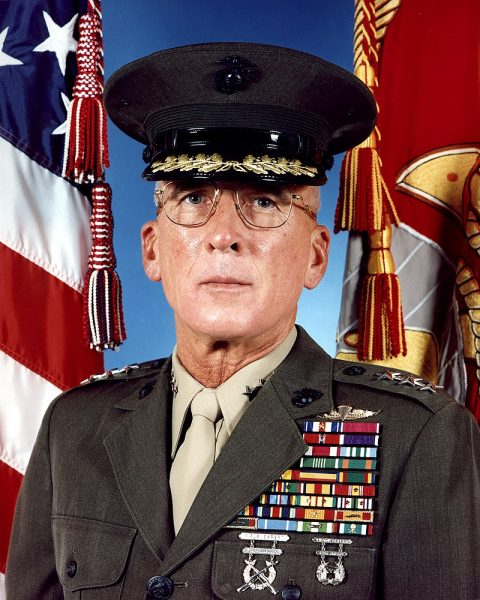
Ripper had carefully prepared his plan, with the ultimate goal of supposedly protecting the “regime” and removing the invading Americans. Adversaries would undertake to secure sea lanes in the region, destroy weapons of mass destruction and force the Iranian regime to abandon its hegemonic plans.
The Vietnam War veteran adopted an asymmetric strategy, in particular, using forgotten methods to avoid detection by America’s sophisticated electronic surveillance network. He used motorcycle messengers, like in the distant past – to send orders to the troops on the front lines, and beacon signals, like in World War II, so that there was no need to use radio communication to take off planes.
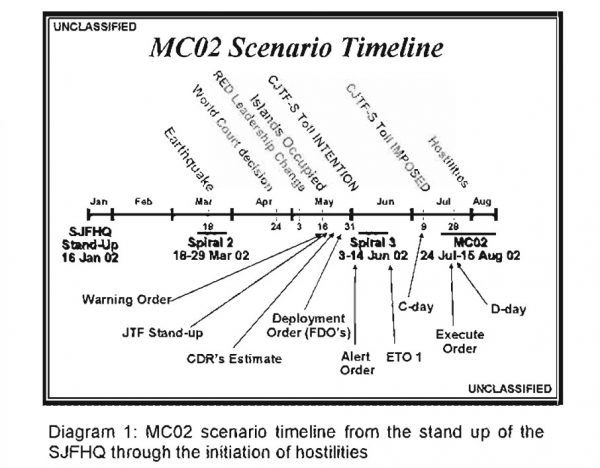
Reaper’s “Iranians” were given an ultimatum by the rivals – which was a demand for surrender – to be answered in 24 hours. Knowing the enemy’s intentions, Ripper sent a fleet of small craft into battle to determine the position of Blue’s fleet by the second day of the exercise.
In a pre-emptive strike, the general unleashed such a barrage of cruise missiles on the adversary that it overwhelmed its electronic sensors, destroying 16 warships, including an aircraft carrier.
In actual combat this would equate to the death of 20,000 American soldiers. Shortly after the cruise missile attack, another major part of the US Navy was “sunk” by an armada of small “Iranian” boats, which carried out both conventional and kamikaze attacks, as they could not be detected. His unorthodox practices proved that the basic assumptions on which the US military built its strength to prepare for future war were problematic, to say the least.
Retired General Paul Van Riper: “You changed the rules, I quit”
However, while the exercise was progressing, the rules were changed with the result that the “American” forces were strengthened, causing reactions in military circles and of course in Ripper himself. He claimed that 250 million dollars were wasted while criticizing the script of the new exercise and thus resigned. He accused those in charge of the exercise of changing the exercise’s purpose only to reinforce existing US military doctrine rather than serve as a learning experience.

On the other hand, such pandemonium, as stated in the Pentagon’s official post-exercise report, can also be attributed to various deficiencies in simulation capabilities and design that significantly hampered the combat and command capabilities of Reaper’s opponents.
For example: a time delay in intelligence, surveillance and reconnaissance services forwarded to “US forces” by the exercise (simulation) manager, various errors that limited the defense capabilities of “US” ships, and an error in the simulation that placed ships not realistically close to Iranian troops.
Let’s hope the time never comes to find out if the Ripper was right or wrong.


