
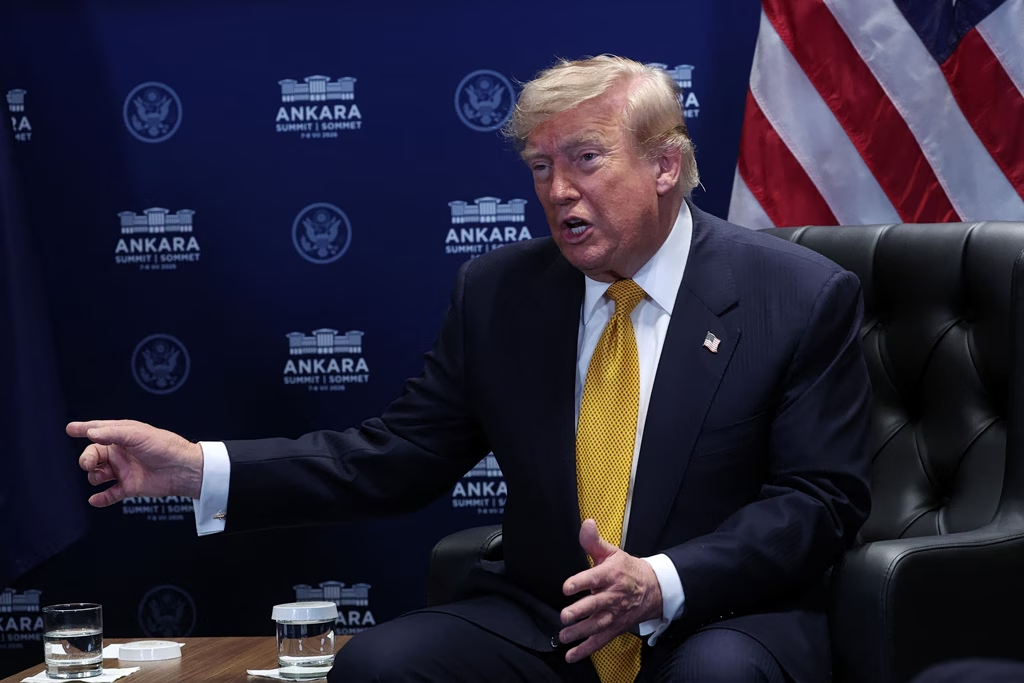


The US relationship with Israel is particularly strong and runs deep. Of course, it wasn’t always clear-cut. The US has often tried to distance itself, while Israel has often pressured the US to align itself more with it.
In the immediate past, the relations between the two countries were tested. The far-right turn of the Netanyahu government, the cooperation with the parties of the religious right, the insistence on promoting the reform of the judicial system – which had a particularly negative impact on the Jewish diaspora in the USA – all these created friction.
On the other hand, the American government insisted on supporting the effort to “normalize” Israel’s relations with Arab countries and especially the Gulf states.
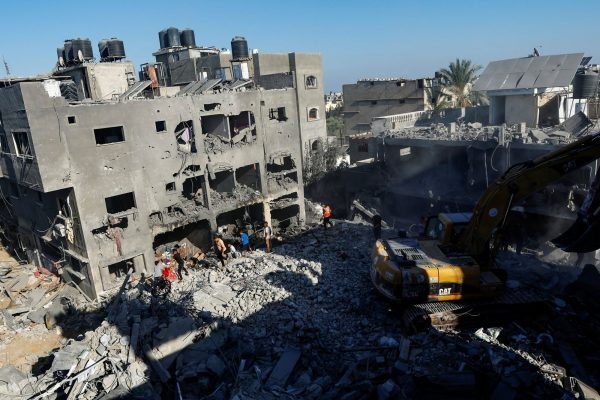
The attack of Hamas on Israel and the war declared by the Israeli government on Gaza created a new situation. The US could not help but rally, while the formation of a government of national unity in Israel also lifted reservations about the Israeli government.
This, however, does not mean that even now there is an identification between Israeli politics and that of the USA.
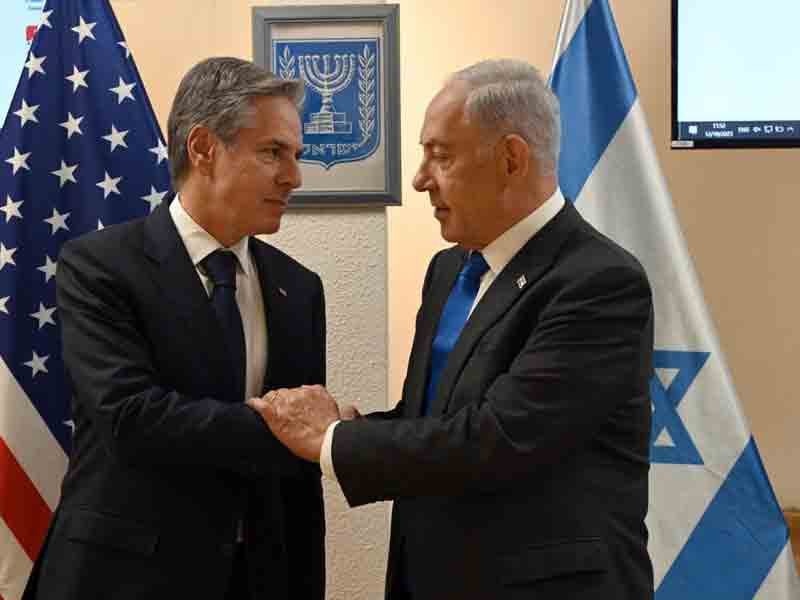
The messages of the Blinken visit
With his visit to Israel on Thursday 12 October, Anthony Blinken sent some clear messages:
- The Biden administration supports Israel and its security needs, but the US will not be involved in the military operations in Gaza, except at the level of providing escape routes for those civilians who would like to leave the conflict zone. .
- The US is particularly interested in the hostage issue, as a number of American citizens are still missing. This also goes through the effort to involve the local forces that can influence Hamas and thus facilitate their release in the negotiation for the hostages.
- The US will continue to talk with the countries of the region, Egypt, Saudi Arabia, Qatar, the Emirates, Jordan with the main priority of not expanding the conflict.
Against this backdrop, the presence of two aircraft carriers and their accompanying warships so close to the war zone is certainly a show of force. But, it is unclear on what scale they will be involved in business. Especially if this is something that looks like a total ignition.
Certainly, with their presence they will act as a deterrent and facilitate the monitoring of Hamas communications.
However, we could say that the American presence, if it works as a deterrent, is mainly towards the forces of Hezbollah, since in its case we are talking about even greater firepower than Hamas, and then the ignition would be generalized.
The delicate balance with Iran
Of particular interest is how the US is handling the issue of Iran. While Israel is investing heavily in communicating the line that Iran is behind Hamas, in the hope that this would allow for a more overall aggressive stance by Israel’s allies against Iran.
Iran itself sent its own messages through Khamenei’s speech on Tuesday, October 10 at the graduation ceremony of Iran’s military academies.
- There he warned Israel that what he is doing in Gaza will bring them even greater destruction.
- He denied that Hezbollah was involved, saying it was nonsense that non-Palestinians were involved.
- He recalled the strength and readiness of the Iranian armed forces.
Essentially, the messages are that he is not involved and that he is demanding that the US abandon any plans to attack Hezbollah, but that it will respond as necessary.
This also refers to the assessment made by Tehran that there are thoughts in the US in the context of the overall polarization at the global level to modify the relationship in both Lebanon and Syria.
That is why it is of particular interest that it was the US that leaked the information that, according to its intelligence services, Iran’s leaders were surprised to learn of the start of Hamas operations, information that implicitly means that at this stage the US is not going to to try to assign direct responsibility to Iran for what is happening in Israel.
Accordingly, Iran sent similar messages when, for example, the telephone conversation between Iranian President Ibrahim Raishi and Saudi Arabia’s Crown Prince Mohammed Bin Salman focused on the need “to avoid further escalation.”
The open questions
In the delicate balance that American diplomacy wants to move, there is also the question of what the results of the operations of the Israeli armed forces might be.
Why can Israel hope for a crushing blow that would significantly weaken Hamas, but the ground operation will be extremely difficult, there will be significant civilian casualties and of course a mass exodus of Palestinians to Egypt would create very serious problems for a key ally of the USA in the region. A protracted war would be a big headache for the US who know that necessarily all their plans for a more comprehensive normalization in the region would backfire.
