



Two weeks after ordering the bombing of Iran’s main nuclear facilities in support of Israel in its “preemptive” attack on the Islamic Republic – even likening the American strike to the atomic bombs that the US dropped on Japan during the presidency of Harry Truman – US President Donald Trump hoped that he would not have to bomb the Islamic Republic again and declared himself optimistic about a new ceasefire between Israel and Hamas in the martyred Gaza.
However, as was the case before the so-called “12-Day War” between Israel and Iran, uncertainty surrounding Tehran’s nuclear program and related ambitions remains, and has increased.
Correspondingly, in Gaza, which continues to drown in blood, the differences between Israel and Hamas remain unbridgeable and suspicion abounds as to whether a new ceasefire agreement will ultimately have the same inglorious end as the previous one.
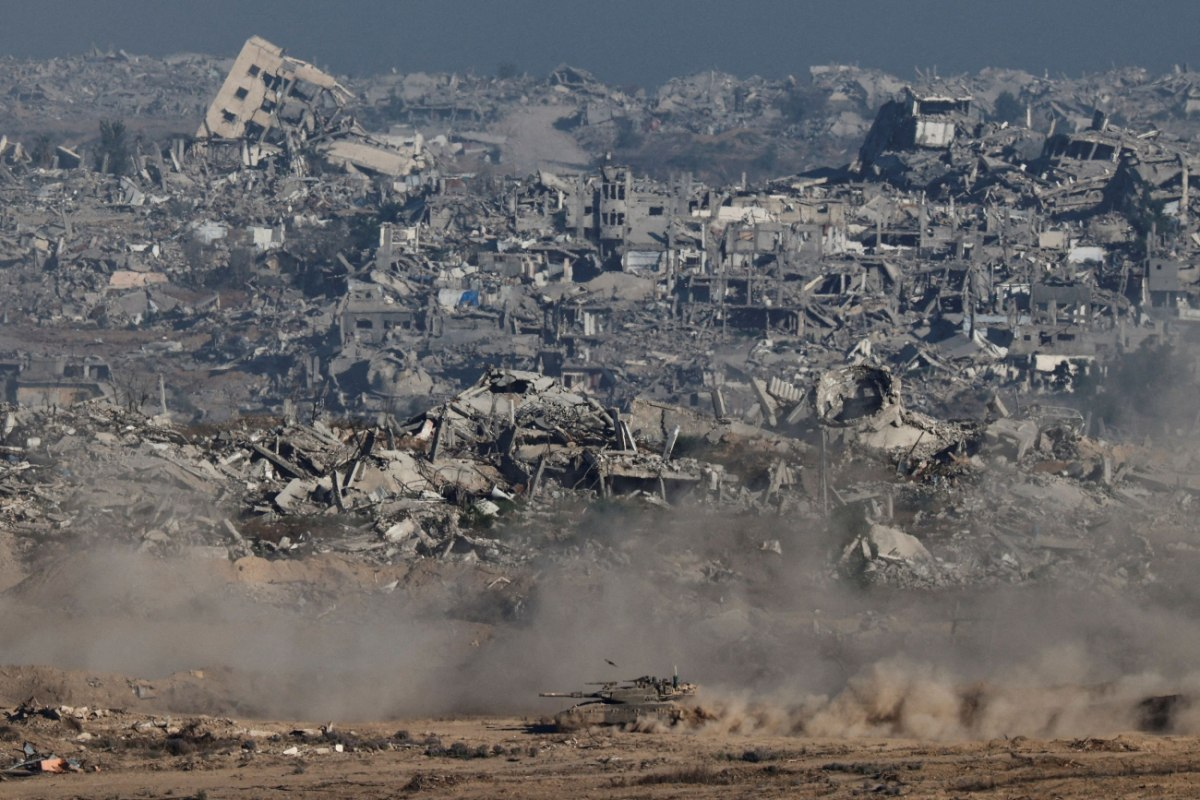
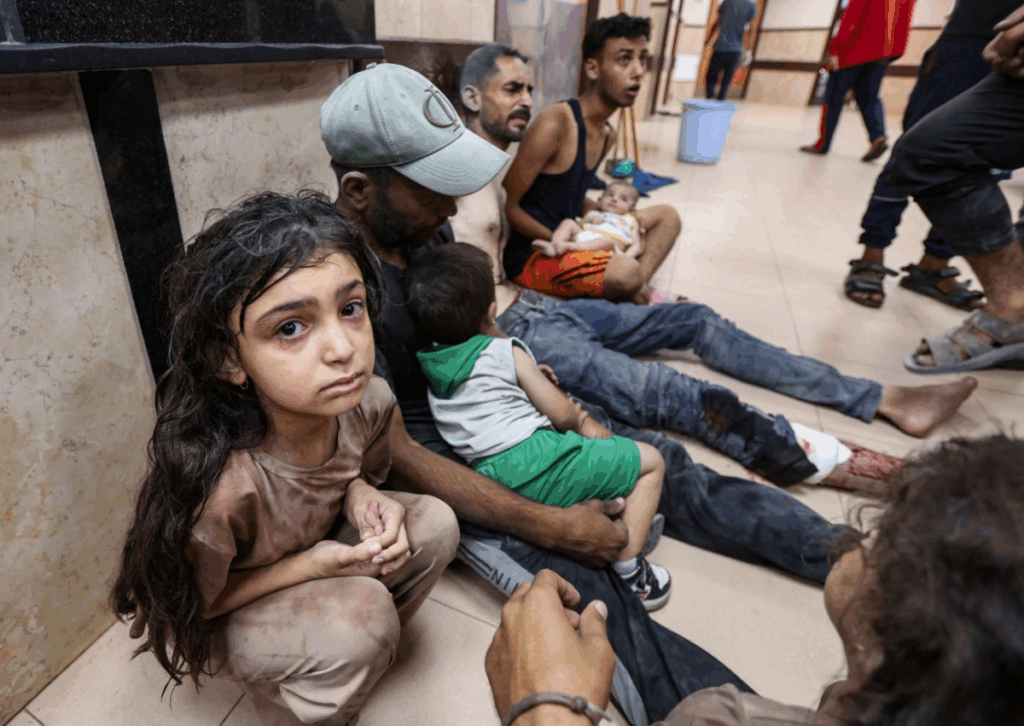
It collapsed last March, when Israel resumed its deadly military operations, plunging the Palestinian enclave and its approximately 2.3 million inhabitants into an even more nightmarish humanitarian catastrophe.
The announced move to Doha by Donald Trump’s special envoy for the Middle East, Steve Witkoff, in order to immediately sign an agreement – by the end of the week, the American president wants – demonstrates the challenges.
This, after 20 months of war – which was triggered by the Hamas attack on southern Israel with 1,195 dead and 251 hostages – with the Palestinian dead from Israeli attacks on Gaza now exceeding 57,600, the vast majority civilians.
“Chasing” Momentum
As a would-be Nobel Peace Prize laureate, the “America First” White House occupant sees a rare momentum in the current Middle East situation that may not last long.
His profile as a “peacemaker through strength” is already fraying with the ongoing Russian invasion of Ukraine—the war he boasted during his campaign that he would end “within 24 hours.”
Donald Trump’s recent announcements of new negotiations with Iran’s weakened theocratic regime have so far been denied, while in Tehran itself, hardliners and reformists appear to be engaged in an underground power struggle.
Even the stance of Israeli Prime Minister and close ally Benjamin Netanyahu is not a given…
With the possibility of early post-war elections in Israel on the table, for now his political survival depends on his far-right government partners, who envision a “Greater Israel” and oppose any deal without the complete destruction of Hamas and the reoccupation of the Gaza Strip.
Trump, for his part, is pushing to end the war in Gaza with a cynical geopolitical cynicism and on terms of business transaction in a new Middle Eastern landscape.
With a view to stability in the region, he envisions an immediate expansion of the Abraham Accords to normalize Israel’s relations with its Arab neighbors (especially Saudi Arabia), a regional agreement with the pro-Turkish “repentant” jihadist rulers of post-Assad Syria, and, in the background, the big deals that the India-Middle East-Europe Economic Corridor (IMEC) will bring, acting as a counterweight to the Chinese “One Belt, One Road Initiative”.
Gaza also fits into this framework, which Trump has been trumpeting since last February that he wants to turn into a “Riviera of the Middle East”, with a massive displacement of its population for the reconstruction of the enclave.
Building “palaces” on bloody “sand”
“I think President Trump had a brilliant vision,” the Israeli prime minister commented from the White House early Tuesday morning, in his third meeting with the American president, in just five and a half months of his second term in the United States.
“It’s called free choice,” Netanyahu added unflinchingly about the Palestinian residents of the Gaza Strip, which Israel had been under blockade for years before razing it.
“You know, if people want to stay, they can stay, but if they want to leave, they should be able to leave,” he said. “It shouldn’t be a prison.”
The reality on the ground itself and the recent leaks of dystopian plans for Gaza are proving otherwise.
The common denominator is the murky-funded “humanitarian foundation” GHF, which, with the support of the US and Israel, has militarized and polarized the distribution of food aid in the enclave, limiting it to centers under the control of the Israeli army and American security contractors.
They have become death traps for impoverished Palestinians, with over 600 dead from gunfire in the 6 weeks of operation…
The GHF is therefore allegedly behind a plan to build “Humanitarian Transit Zones” – essentially concentration camps for Palestinians – inside and possibly outside Gaza, for “temporary residence, deradicalization, reintegration and preparation for relocation, if they so wish.”
A first pilot implementation of the plan has already been announced in Rafah by Israeli Defense Minister Israel Katz.
In the other, more far-reaching plan for post-war Gaza as a “Riviera” – brought to light by the Financial Times – GHF’s involvement is through the consulting firm Boston Consulting Group (BCG) and Israeli businessmen, who contributed to the establishment of the “humanitarian foundation”.
Building a “Middle Eastern Riviera” in Gaza
Working with former US government officials and members of the Tony Blair Foundation, BCG and Israeli businessmen worked from October to May to develop a post-war plan for the Gaza Strip.
Among other things, it includes investments in blockchain, special low-tax economic zones, a “smart” industrial zone on the Israel-Gaza border, and a deep-sea port to connect to the India-Middle East-Europe Economic Corridor.
Under one scenario BCG examined, it is reported that more than half a million Palestinians would leave the enclave “voluntarily,” with “resettlement packages” of $9,000 per “head.”
A similar plan on a much smaller scale, calling the forced displacement “voluntary exit,” has been implemented by Israel in recent months.
According to Netanyahu, his country is working “very closely” with the United States to identify states willing to accept displaced Palestinians from Gaza. Like Trump, he has hinted that several of these discussions are progressing.
In any case, Netanyahu’s condition is the exile of Hamas from the Gaza Strip, whose post-war governance remains extremely unclear.
Various scenarios have been heard, such as active support by Arab states for a political transition process, with parallel “reform” of the Palestinian Authority.
However, amid the expansion of illegal Jewish settlements in the occupied West Bank, Netanyahu made it clear that any peace deal to end the war with Hamas should not include the recognition of a Palestinian state.


