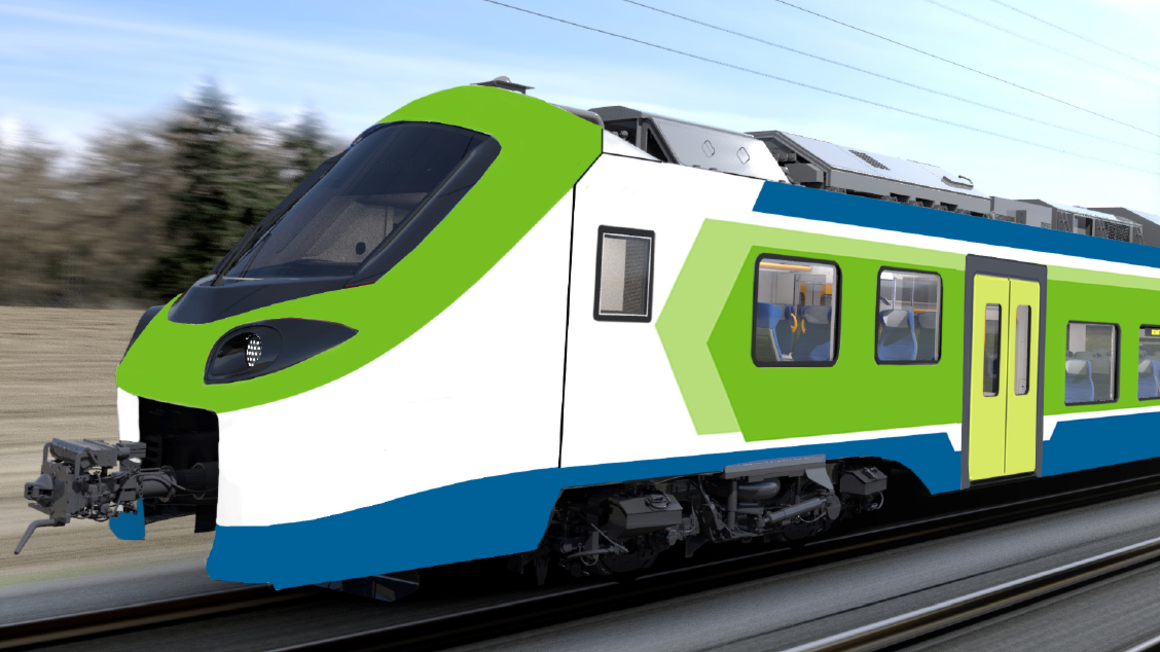
The Coradia Stream train powered by hydrogen cells was jointly presented by FNM, a group active in the field of sustainable mobility, and major train manufacturer Alstom. The related event took place within the framework of EXPO Ferroviaria 2023.
The train will enter commercial service in Valcamonica between the end of 2024 and the beginning of 2025, along the non-electrified Brescia-Iseo-Edolo line of FERROVIENORD.
On this line the train service is operated by Trenord, as part of the H2iseO project, which aims to create Italy’s first hydrogen valley in the area of Brescia.
The hydrogen-powered Coradia Stream meets the European target of zero CO2 emissions by 2050 and is Italy’s first direct zero emission train, with a total capacity of 260 seats and a range of over 600 km.
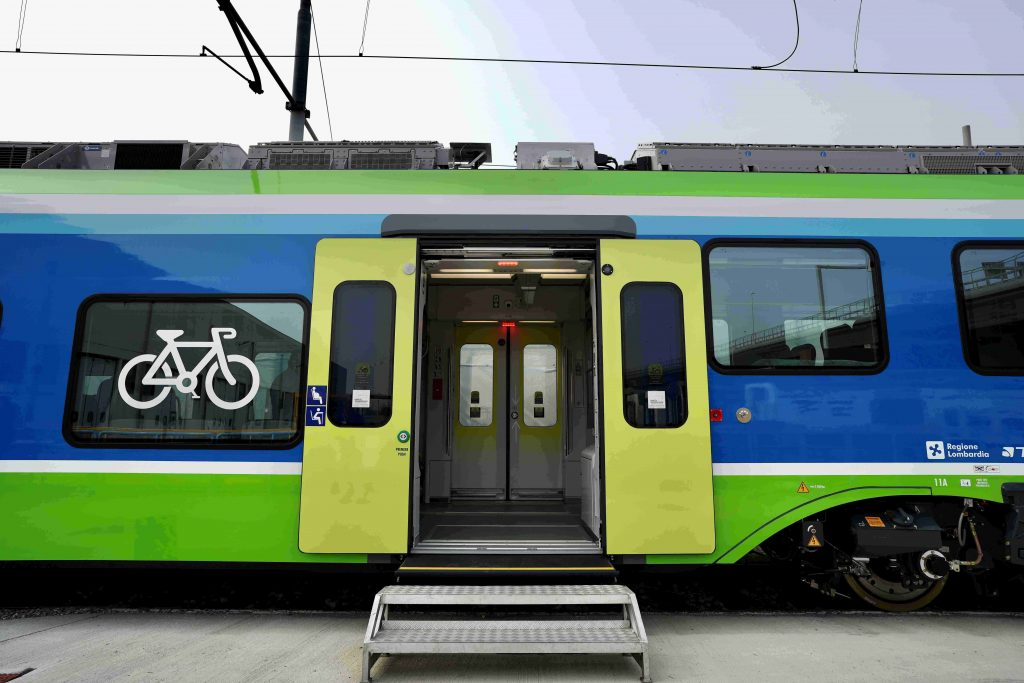
The ceremony
The event follows the agreement signed by FNM and Alstom in November 2020 to supply six hydrogen fuel cell trains to Trenord, with an option for eight additional trains. The introduction of the hydrogen train is part of the H2iseO Hydrogen Valley project.
Hydrogen supply chain
With the support of FNM, FERROVIENORD and Trenord, H2iseO aims to develop an economic and industrial hydrogen supply chain in Valcamonica, starting from the mobility sector, to start the region’s energy transition and contribute to the decarbonisation of a important part of local public transport.
This is a highly innovative project, which foresees, among other things, the construction of 3 plants for the production, storage and distribution of renewable hydrogen without CO2 emissions (in Brescia, Iseo and Edolo), as well as the operation of 40 hydrogen buses in replacement of the entire fleet currently used by FNM Autoservizi.
The new hydrogen-powered trains are based on Alstom’s Coradia Stream single-deck train model, aimed at the European market and already produced by Alstom in Italy.
The hydrogen-powered Coradia Stream can operate on non-electrified lines as a replacement for fossil-fueled trains offering comfort and low-noise features comparable to other electric Coradia models, with a range of over 600 km.
How the hydrogen train works
The intermediate rail car called the “Power Car”, in which the heart of the hydrogen technology is located, is the main source of energy. The energy is provided by combining hydrogen (stored in tanks) with oxygen from outside air, without emitting CO2 into the atmosphere. High-performance lithium-ion batteries store energy, which is later harnessed during acceleration phases to support the action of the hydrogen cells and ensure fuel economy.