

The truth is that a visit to Ireland usually leads stereotypically to overpriced Dublin, mandates at least one visit to an Irish pub and brings back memories of the enigmatic modern figure of James Joyce. Although only the discerning decide to explore the Irish hinterland in depth, a visit to Galway, the small vibrant port city of the west of Ireland and the heart of authentic Irishness, will prove to you why this city is the hidden gem on the island next to Geria Albion.
Built on a small bay on Ireland’s windswept and ancient glacier-fed west coast, Galway is a historic port that for centuries put Ireland on the trading map of Spanish and Portuguese explorers. The almost tiny bay at the mouth of Europe’s second smallest river, the Corrib, was the most ideal spot to build a city that would also be protected from the unpredictable Atlantic climate and provide easy access to the wet, rocky and green Irish countryside inland.
Almost a millennium after the founding of the city and having endured a difficult 20th century of decline and hardship, Galway is emerging as a vibrant destination known for its festivals, cuisine and Irishness, as it is the living heart, where the Irish – traditional and modern – music, Irish literature and Irish cinema. In fact, the Irish themselves often refer to Galway as the ‘bilingual capital of Ireland’, as local residents alternately communicate in Irish and English with a clear preference for Irish, however.
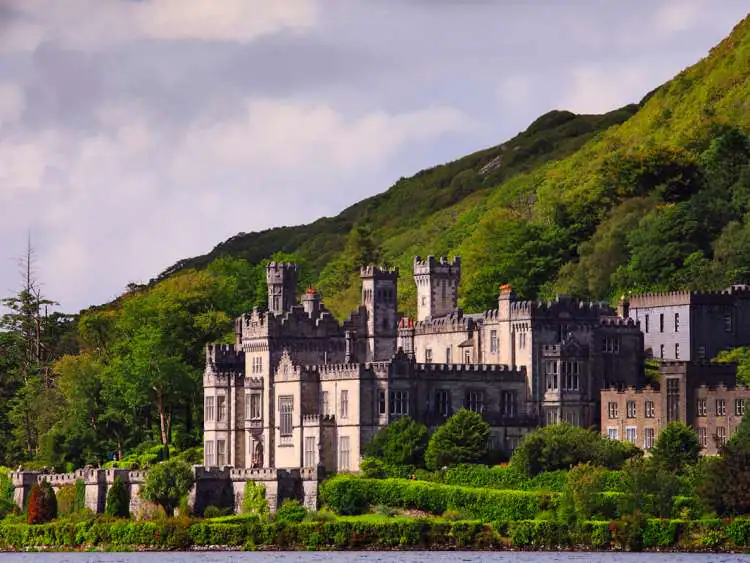
Located in the middle of the ‘Wild Atlantic Way’, as the west of Ireland is known, Galway is renowned for its countless arts and non-arts festivals that each year attract a huge number of young-age visitors from all over the world, while among others, the well-known Arts Festival holds a special place. An institution since way back in 1978 and having started with a budget of barely $1000, the Galway Arts Festival was started by a group of student activists and through a long course of challenges and problems, it has become one of the most important arts festivals in Europe entire having highlighted productions that reached as far as New York. Did you know that the hit play “Misterman” that wowed New York audiences and the New York Times actually started as a small theater on the fringes of the festival?
But because time is always better spent with food, every September the picturesque Irish town hosts the one of a kind Oyster Festival. As Galway is relentlessly buffeted by the raging waves of the Atlantic, it has developed a huge tradition of fishing and seafood, with the result that every September the city hosts its imaginative oyster festival, where the city’s restaurants and bistros offer oyster-themed dishes. oysters, lobsters and, in general, North Atlantic seafood. Don’t be surprised to see oyster competitions or seafood dishes served in the most imaginative combinations, while for the two days that the festival lasts, the small town turns into a huge table offering all kinds of seafood experiences to put you in the mood for the ocean.
If seafood is not to your taste, you can plan a route in the Irish hinterland along the Atlantic coast. The rocky landscapes with little green vegetation and the foaming waves of the Atlantic mercilessly hitting the shores is undoubtedly an experience that you will not easily forget and will definitely want to experience again. Exceeding 2500 kilometers in length, the west coast of Ireland offers a breathtaking experience that you can try by bike or even on foot if you are close to your base. If, however, you want to explore Galway in depth, the city’s small but good museums are an ideal choice.