


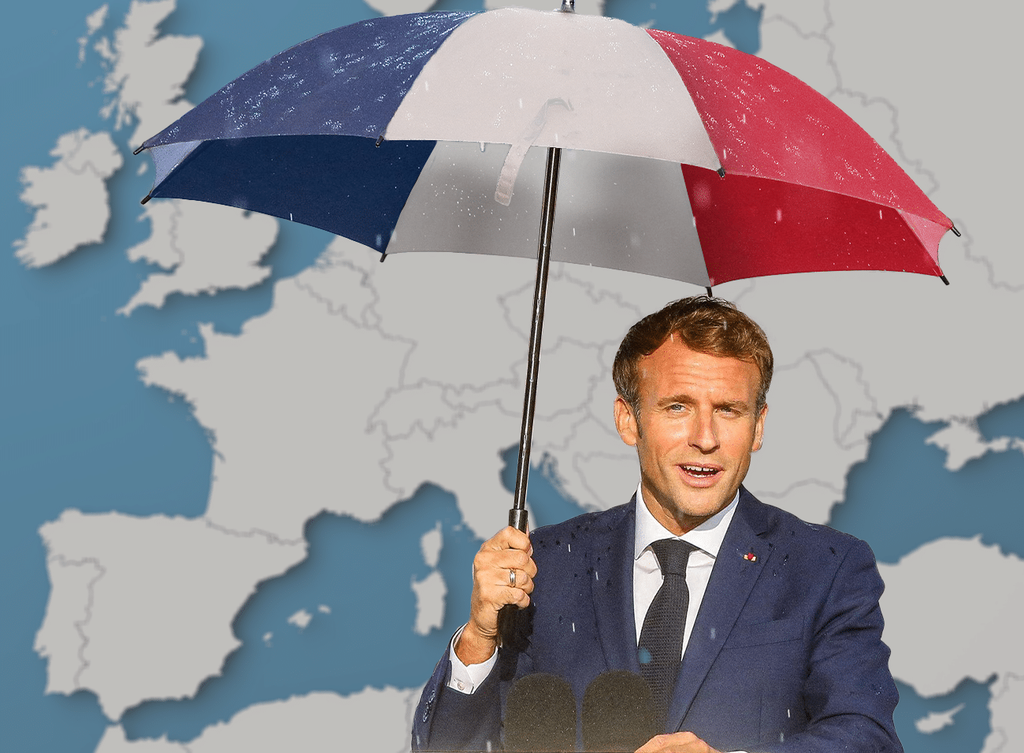

The bells are ringing deafeningly. According to all valid studies, we are facing climate chaos. The planet may find a way to regain a balance, but what will happen to humanity and our civilization? Teams of experts are looking for new ways to protect the climate and what it sustains.
Do we need to start treating nature as a whole of which we are a part and not as pieces of land to which we have ownership rights? Could it be that if forests, for example, had recognized legal rights and representation, would it be easier to avoid interventions that lead to their destruction?
The Western legal system was based on the concept of separation between humans and the rest of the living world, with the view that nature is for humans merely a resource. At present, law thus regulates relations between people, nature being nothing but property that we can exploit more or less efficiently.
Trees with legal status?
It is precisely this relationship between man and nature that Christopher Stone, professor of law at USC University in California, tried to question in 1972. In his article entitled “Should trees have legal status?” Stone developed that, until a subject acquires legal rights, we cannot see it as anything other than a thing that serves our needs. “Throughout legal history, every successive expansion of rights has been a bit unimaginable,” he pointed out, citing children, women, minority units, states as examples. All of the above once did not have the legal rights that they subsequently acquired. Stone with this correspondence proposed that forests, rivers, oceans should acquire legal rights. “I seriously recommend it,” he pointed out.
In 1972, the year the article was written, public opinion was in a completely different mood towards nature than it is today. Only a few years before, the first moon landing had taken place, and the planet was probably considering how to expand its boundaries outward, rather than how to maintain them inward. That same year, however, was the first time the UN convened states to address the issue at the Stockholm Conference, which legitimized the environment as an area of international cooperation. Stone was 34 at the time. He was neither an activist (“he didn’t go hugging trees,” his wife would comment) nor had he ever published such a groundbreaking legal proposition. However, his theory stirred the waters. When he died in 2021, Dan Estey, professor of environmental law at Yale University, commented: “He was one of the people who helped start the modern environmental movement. This article is one of the most academically cited publications, it is absolutely fundamental in environmental law.’
What differentiated Stone’s work was that he was able to bridge Western culture with concepts that are difficult to perceive in it, such as the relationship of certain ancient cultures with Mother Earth.
In order for the rights of nature to be represented, he proposed the application of a model that was already working and familiar in concept: the legal guardian appointed by the court to defend the rights of another person who is unable to do so, either due to age or other condition.
Justice in Ecuador
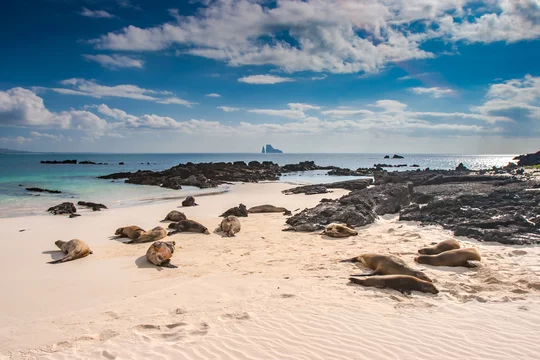
This idea is gaining more and more ground. In 2006, the community of Tamaqua, Pennsylvania, USA, became a pioneer, prohibiting the dumping of toxic waste as a violation of the rights of nature. Two years later, in 2008, Ecuador became the first (and still only) country to include the rights of nature in its constitution. Since then, more than 30 countries around the world have similar legal provisions – often countries with a history and presence of indigenous communities, who assist in the effort, such as the Maori in New Zealand, since the rights of nature are rooted in their understanding. (In Maori culture, tupuna – ancestors – continue to live on through the natural world, and it is the community’s duty to protect both the natural environment they inherited and those who came before them.) In a historic decision in December 2021 , the Constitutional Court of Ecuador ruled that the mining operations carried out by a state company – in collaboration with a company from Canada – threatened the right of the Los Cedros forest to exist and thrive, that is, in other words, the rights of nature were being violated. Thus, mining was deemed illegal.
Other examples of countries that have adopted such laws are Bangladesh, Bolivia and Panama. Last year we also had a European first, as a law was adopted on the legal status of the Mar Menor, the largest lagoon in Spain. Despite its status as a protected area of enormous ecological value, the Mar Menor has for decades received sewage as well as mine waste, bringing it to the brink of ecological disaster. Much of its flora and fauna were lost, as the authorities were inactive in the face of the desperate appeals of environmental organizations and citizens. Experts hope her legal recognition will help protect her.
But how does this model work? Technically, the system suggested by Professor Stone in that article of his, fifty years ago, is often followed. In New Zealand, where the Faganui River has recognized legal rights, state and Māori appointed guardians are responsible for its protection, while in the case of Spain the responsibility rests with a tripartite body made up of committees: citizens, guardians, scientists. However, as in the case of Ecuador, in Spain any citizen can go to court to defend the rights of the Mar Menor, without having to prove that its destruction infringes his own rights, as was the case previously.
The rights of nature and Mother Earth appear for the first time in writing in the historic Kunming-Montreal Convention on Biodiversity.
Crimes of ecocide
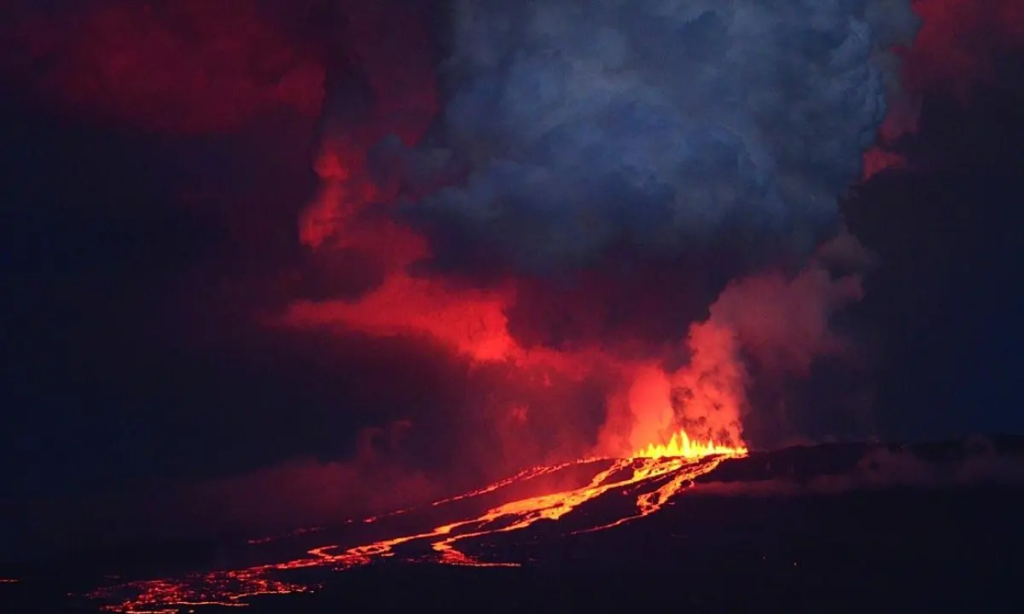
The recognition of the rights of nature would also require a legal framework to protect those rights at all levels. Another important change that is gradually taking place at the international and local level brings to the fore the way we perceive the relationship of man with nature: the recognition of ecocide as a criminal offense, with stricter penalties in relation to the already existing sanctions for the destruction of environment found in the legislative texts of each country. Among them are France, Ukraine, Vietnam and Mexico, where, if the law is passed, anyone guilty of offenses recognized as such will face up to fifteen years in prison and hefty fines. Moreover, at least in the EU, in the future this change may no longer be optional, since the European Parliament has proposed a law which, if adopted, will make the criminalization of ecocide mandatory for member states.
The legislative initiative in Mexico uses the definition of ecocide given in 2021 by a panel of leading jurists from around the world, in what has been described as a historic development. The purpose of this paper is to recognize ecocide as an international crime, along with genocide, crimes against humanity, war crimes and crimes of aggression (invasion, military occupation and annexation, blockade of ports, etc.). Moving away from the anthropocentric model will set international law on new paths.
If ecocide is recognized, instead of suing the big companies, who simply have the money to cover the fines, the people responsible for actions or decisions that lead to serious environmental harm will be subject to criminal prosecution.
Matter of life and death
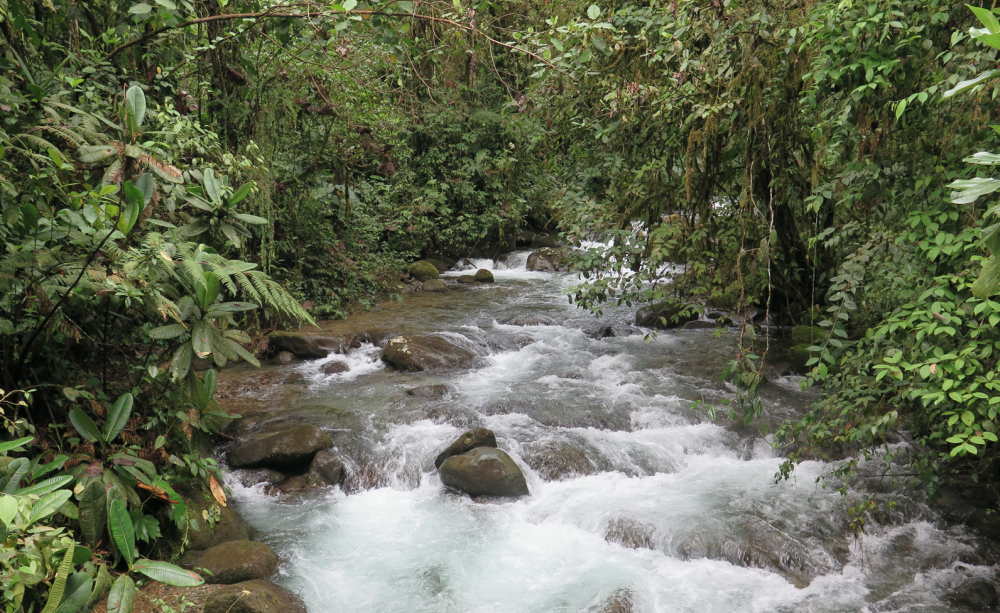
The climate crisis goes hand in hand with the crisis of natural ecosystems and biodiversity. They cannot be separated. Without climate stability there is no ecological stability, and vice versa. Biodiversity has long gone beyond seeing nice animals or taking nice vacations. It is not just a matter of health, but of life and death.
Back then it was very difficult for anyone to conceive that the climate is changing because of emissions from China or the US and the effects are affecting a very distant place like the Amazon. Given the failure of the current modus operandi, the attribution of rights to nature is a new approach worth trying, as new chapters need to be opened, as long as it does not lead to further polarization of society, as it contains a strong moral proposition that does not it is accepted by all people.
In 1972, Christopher Stone wrote that humanity should consider itself the brain of the Earth, as distinct from the rest of nature as the human brain is from its lungs.

