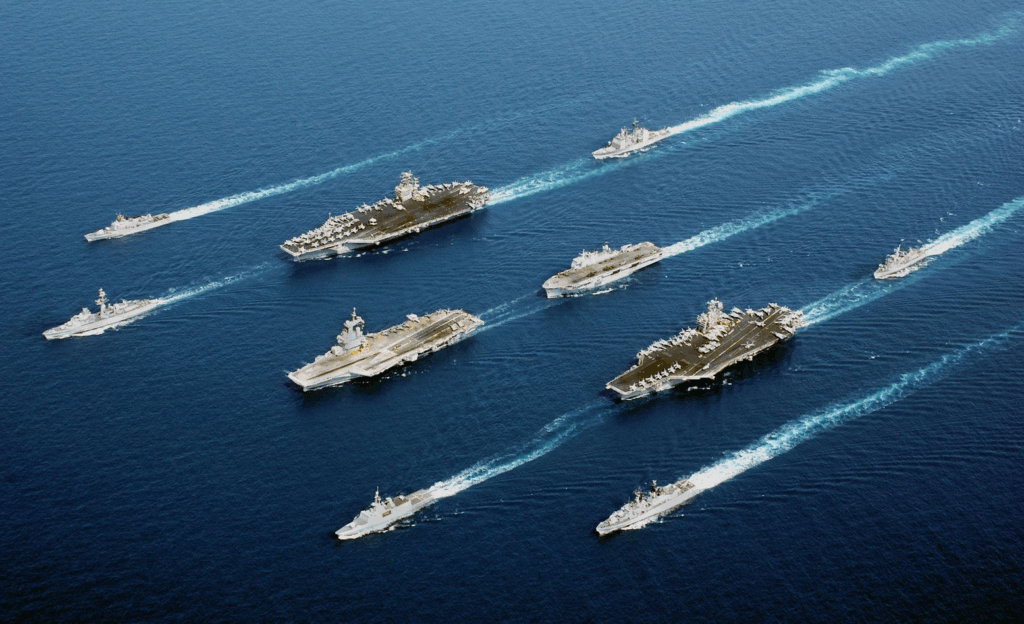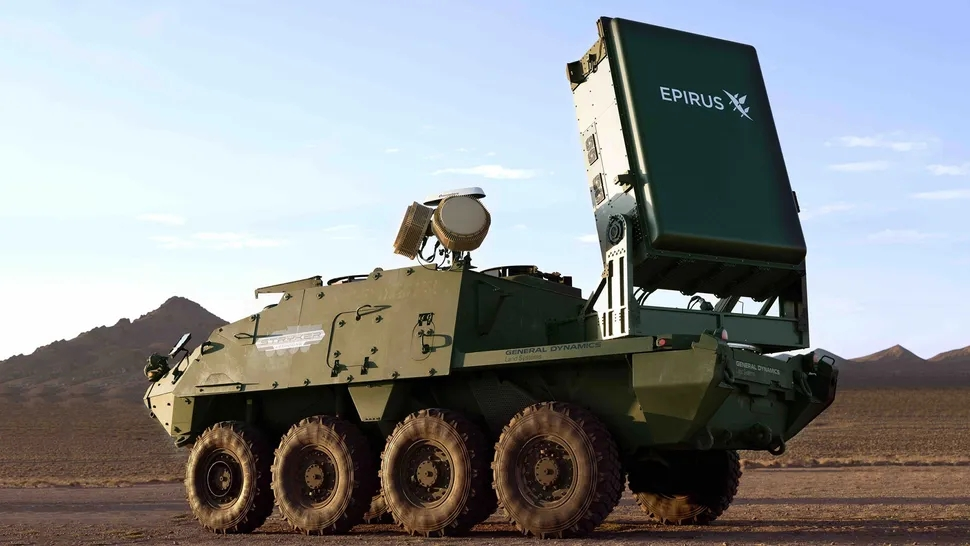


Link 16, also known as the Joint Tactical Information Distribution System (JTIDS), is a military tactical digital data link system used to exchange information through secure telecommunications. Military aircraft, ships and ground units participate in this telecommunication network, in general everything that carries the corresponding infrastructure. The system was developed by the United States and NATO, and is designed to improve situational awareness and coordination of military forces on the battlefield.
Link 16 uses a frequency hopping technology (ie the information transmitted uses not one frequency, but a range of frequencies, constantly changing between them) together with strong encryption, which makes it highly resistant to eavesdropping and electronic interference. This allows military units to share sensitive information, such as the location of friendly and enemy forces, without the risk of being intercepted or jammed by the enemy.
One of the key strengths of Link 16 is its ability to provide real-time information. In addition, it allows the use of information in various formats, including text, images and video, so it has the corresponding flexibility of information. The speed of information transmission reaches up to 115.2 kilobits per second, which is sufficient to transmit a significant amount of information (which is also coded, so a small amount contains important information). But as telecommunications evolve, it begins to show its limits, especially when high-resolution video transmission is required.
The range of the transmission reaches up to 300 nautical miles, but it depends on the terrain, so the practical range is less as it remains limited to the visible horizon. Thus aerial units with a Link 16 terminal can communicate over greater distances (due to height, they have a longer horizon) than ground units. But a unit can also act as a repeater within a network, indirectly increasing the range of a broadcast.
In recent years, Link 16 has been increasingly integrated into military aircraft, ships and ground vehicles, enabling greater information sharing and coordination between the various branches of the Armed Forces. In addition, the system is constantly updated and improved, making it more secure, resistant to interference and able to handle a larger amount of data.
It is currently used by the Armed Forces of the United States and those of NATO countries, as well as allied countries, e.g. Australia and New Zealand. There is a special “office” (a multinational service more correctly) called the MIDS International Program Office, which manages the entire program by setting the relevant protocols, controlling security and encryption, access, network organization, its development, its integration into new platforms, the certification of the relevant terminals, etc. In this service, based in San Diego, the USA has a major say and control.
In conclusion, Link 16 is an advanced and secure military tactical digital data link system designed to improve situational awareness and coordination of military forces, something critical in today’s battlefields where good communication becomes a top requirement. Its establishment as a standard in the West and its ability to provide real-time information.