With global warming worsening and existing mitigation plans deemed insufficient by the UN Intergovernmental Panel on Climate Change (IPPC), heat waves will increase. Not only in frequency, but also in intensity and duration.
This year may even turn out to be the hottest ever in the world, fueled by heat-trapping greenhouse gases and the El Niño phenomenon.
The European Environment Agency warns that if sufficient action is not taken against climate change by 2100, Europe will see a spike in excess mortality, mourning an extra 90,000 deaths a year.
Cities, which around the world are becoming increasingly hot due to urban heat islands, are at the center of concern.
Although they correspond to only 3% of the natural space, in 50 years – according to UN forecasts – 60% of the world’s population will be piled into them.
Already terribly energy-intensive and polluting – they consume 80% of all energy produced and are responsible for 75% of greenhouse gas emissions – they are considered by experts to be the place where it will ultimately be decided whether the fight against climate change will be won or lost.
The risks of urban warming have not yet been fully quantified.
It is already known how and to what extent high temperatures and especially heat waves affect health, work, education and the economy. But in the densely populated concrete cities, inequalities have begun to affect social cohesion as well.
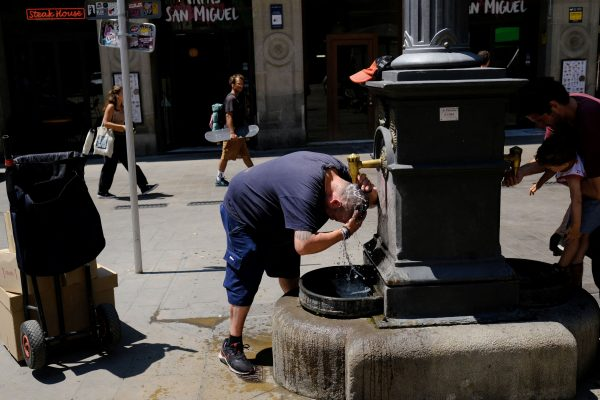
The social impact of the heat wave
Recently, studies after studies have been carried out to establish how urbanization on the one hand, the worsening of climate change on the other, can create an explosive mixture in cities, testing the endurance – physical and mental – of citizens.
In an interesting recent study titled “Temperature impacts on hate speech online: evidence from 4 billion geolocated tweets from the USA“, PhD researcher Annika Stechemesser of Germany’s Potsdam Institute for Climate Impact Research analyzed – using artificial intelligence – more than 4 billion Twitter posts.
It found that when the temperature is at its highest, between 42 and 45 degrees Celsius, tweets with hate speech increased by 22%, compared to a day of normal climate conditions.
Another study titled “The impact of extreme heat on workplace harassment and discrimination” by Harvard University researcher Ayushi Narayan assessed the association between heat and discriminatory behavior and harassment in the workplace. He had postal workers in the US as a sample.
The conclusion; When the temperature exceeded 32.2 degrees Celsius, harassment increased by 5%. The correlation between warming and homicides has also been studied in cities such as Chicago and New York.
With a 5 degree Celsius increase in average daily temperature, homicides increased by 9.5% and 8.8% respectively. One explanation given by scientists is that excessive heat increases the feeling of discomfort, the degree of frustration, impulsivity or even aggression. When it is combined with a poor quality of life – as a result of social inequalities – it can increase delinquency. And especially in degraded areas.

“Fire” in social inequalities
In the United States, for example, long-standing discriminatory housing policies mean that the poor usually live in the hottest parts of a city.
These are mainly densely populated areas, with few green spaces and large surfaces of asphalt and cement, which absorb heat instead of reflecting it.
Many of their residents, meanwhile, either do not even have air conditioning in their homes, or are unable to use it due to high costs. The result is that the slums suffer much more than the rich ones. And in different ways.
Linking high temperatures to increased crime, a University of Southern California study found a 5.7 percent increase in crime when temperatures exceed 30 degrees in Los Angeles, but not in the city’s wealthiest neighborhoods.
So in Beverly Hills, everything looks the same, regardless of whether it’s hot or not. But “in poorer communities in Los Angeles there is a greater correlation between heat and violence. This is because “the costs of climate shock fall mainly on the poorest people.
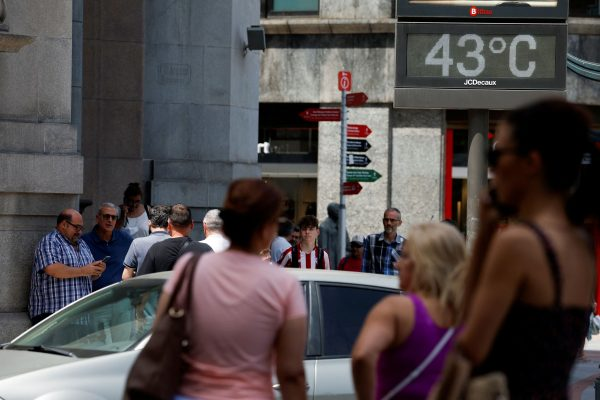
New future challenges
As climate change worsens and cities become larger and more populous, a broader understanding of the impact of heat waves and urban heat islands on physical and mental health becomes increasingly imperative.
In increasingly dense, increasingly hot cities, the risk of aggressive behavior between people is not negligible, even if it may be subtle.
The need to make cities sustainable, for all residents, will become increasingly pressing.
The increasing use of air conditioners is clearly not the solution. Instead, it opens a new vicious cycle.
In emerging economies alone, it is estimated that, by 2100, it will lead to 33 times more energy consumption.
Production meanwhile continues to be based mainly on fossil fuels, exacerbating global warming. More and more experts emphasize the need for more drastic interventions.
For more shading and green spaces, for the use of materials that reflect solar radiation, for better urban planning. All this, however, requires will, money and brave decisions, which will be taken with social justice in mind.
In the interim, the time limits seem to be getting tighter. But the road to making and implementing decisions seems nightmarishly long…