




NATO Secretary General Jens Stoltenberg says the security concerns of the Western military alliance and Japan are “closely intertwined”.
The absence of Taiwan
Accordingly, for the first time, Japan, together with Korea, participated in the NATO Summit in Vilnius, as did Australia. Taiwan, of course, was not invited as an observer either. Allowing Taiwan to attend could offend pro-China players in Europe and many in the Biden administration (please also read the analysis titled “China rejects NATO move in Asia-Pacific region“).
But how is it possible that there is some kind of NATO cover for Japan and Korea and not for Taiwan?
Meanwhile, the US Secretary of State went to China to be humiliated, and Janet Yellen, because China needs her, managed to slavishly bow and embarrass herself in front of Chinese officials, rather giving up a lot without getting anything.
China, however, continues its military harassment of Taiwan every day, probably because no one in Washington told it otherwise. In other words, any influence she has has been eroded by top US officials.
NATO expansion
Therefore, we have NATO expansion north and east. In the North it means that Sweden will not be allowed to join until the Turkish parliament rubber-stamps Erdogan’s deal with Stoltenberg and Biden.
This concerns the exchange of Sweden with Turkey’s accession to the European Union. How this will play out is still a mystery, but Erdogan, who presents himself as a peace broker for Ukraine and Russia, has likely burned any such opportunity.
In Vilnius, there was no agreement on Ukraine joining NATO now. Stoltenberg has suggested a quick process, but Washington, Berlin and others won’t move until the war is over (please also read the analysis titled “Why is NATO still denying pending membership status to Ukraine?“).
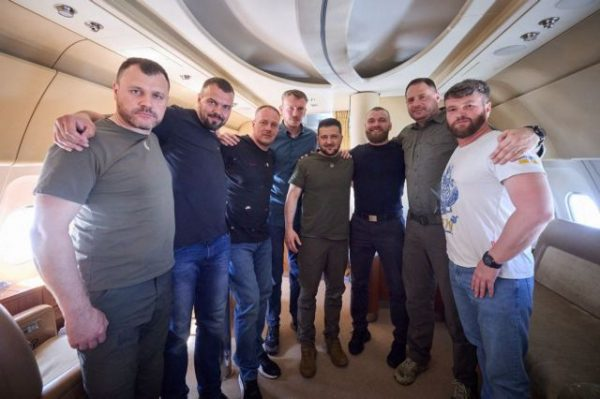
Meanwhile, Turkey released high-level members of the Azov Brigade, the notoriously fascist, some say anti-Semitic, Ukrainian fighting group that the Turks had vowed to keep in their country until the end of the war.
He has also stated that if Russia does not accept the renewal of the grain agreement with Ukraine (an agreement that is constantly violated as Ukrainian grain has been delivered to Europe and not to starving Africans and Indians), then it will provide military escort to Ukrainian ships who will transport them.
Probably Turkey does not know that there are many Russian submarines in the Black Sea.
Sweden in the spotlight
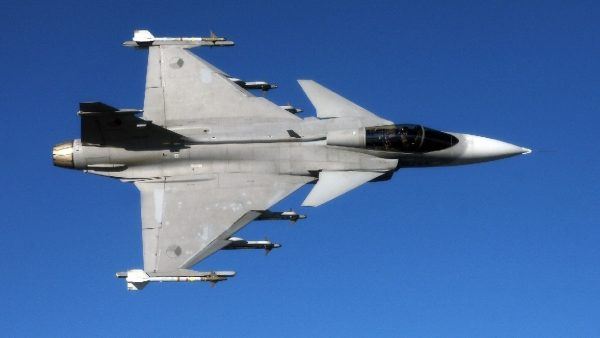
Sweden only has a small army, but has a very good air force. For years the heads of the Swedish Air Force have understood that their enemy is Russia. Sweden maintains a large air base on the island of Gotland, not far from Russia.
He also knows that the Russians are conducting underwater espionage and “active measures” operations off the Swedish coast.
But there is a problem for her safety. If hostilities break out, as a NATO member it could be attacked by Russia. As a neutral state, this would not happen. Apart from the failure to invite Taiwan to Vilnius as an observer, the North Atlantic alliance is in a significantly weakened state.
Its members have not significantly improved their acquisition of the military hardware needed for their security and have raided their warehouses to supply Ukraine. They also agreed that 2% of GDP for defense would be the lower limit for the money its countries are required to spend.
The boiling cauldron
But this level is subject to the law of supply and demand because the war in Ukraine and the recession in Europe may soon lead to the collapse of some important governments of countries at the top of the list such as France, Germany and the United Kingdom.
There is opposition to war and excessive defense spending on the Left, for example Labor in the UK, and on the Right, such as the AfD in Germany and the National Front in France.
These factors, as well as social unrest due to immigration from Africa and the Middle East, are like a boiling cauldron, and if it explodes, as recently in the French riots, it will endanger stable governance.
NATO may need to help states that are threatened internally, rather than the threat from Russia.
None of this has dampened the enthusiasm of the current crop of European leaders to present themselves as strong men capable of standing up to Russia.
The theater of the absurd
However, if you add to this the suggestion that they react to China, then, as far as NATO is concerned, we have entered the theater of the absurd. It is not that they are wrong to care about Europe’s security. His alliance was built as a defensive one.
The entry of Eastern European states into its ranks transformed it from a purely defensive to an expansionist one. This is what infuriated the Russians in the first place, especially when advanced Western weaponry appeared in places like Poland and Romania, not to mention the Baltic states.
Equally problematic were the commitments not to expand the North Atlantic alliance: they were given by Western leaders to the Russians, to remember Bill Clinton, and NATO broke them.
The advantage that the North Atlantic alliance had in implementing its ambitious expansionist program was a weak Russia. For more than a decade after the collapse of the Soviet Union almost twenty years ago, it was a mess economically.
The retreat of Ukraine
As Gorbachev told French President François Mitterrand in 1985, it was a backward third country with nuclear weapons.
During this time, Russian industry was frozen. Russian equipment was neither modernized nor well maintained, and Russia mostly focused on improving its defensive strategy, rather than its offensive power.
Ukraine’s war, paradoxically, helped it to really invest in its armed forces by building new and better hardware. We now see that on the battlefield the Russian military has not only resisted a massive counterattack across the entire line of contact coming from Ukraine and NATO, but is on the offensive.
The affair has been costly for both sides, but Kiev has been hit the hardest as its counter-offensive begins to turn into a retreat and its forces move back into defensive positions. If the Ukrainians lose more tanks, armored vehicles, artillery units and troops, they will be in deep trouble.
The Europeans are speechless
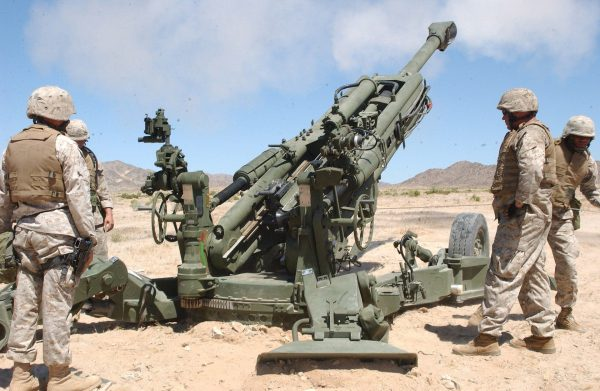
The US is short of 155mm artillery ammunition, a key component of the Ukrainian supply, and is now sending old cluster bombs to Ukraine.
Many Europeans were stunned by Biden’s decision, either because they have signed the ban, like some NATO members, including Germany, or because they are horrified by the risk of civilians being killed by unexploded munitions.
The US M-777 155mm howitzer supplied to Ukraine will not be able to launch such bombs and will need cluster munitions for its drones. Some Americans also protest, citing painful histories of these weapons.
The risk of collapse
It’s hard to talk about expanding NATO when its number one foreign adventure in Ukraine could, any day, collapse.
Stoltenberg’s term as head of the alliance was extended for another year because Biden vetoed giving his leadership to Ben Wallace, the UK defense secretary.
This blow to British prestige, which has generously supported US policy on Ukraine, leaves NATO with Stoltenberg for the next year.
If Europe is weakened internally, and as NATO has expanded too much, their future looks murkier than ever.

