Like the Kornilov putsch in 1917, the corresponding movement of the Wagner group now may have dramatic consequences for Russia. Then the weaknesses of the Russian army were highlighted and it was easier for the Bolsheviks to organize their final attack. Key weaknesses in Russian defense and deterrence systems have now been exposed.
For observers of the Russian political scene, the conclusion of the developments is not that the Putin regime and his position in power have shown weaknesses. Vladimir Putin has no weaknesses in the way he controls power and the situation in general. Its internal power is unquestionable and it absolutely controls all levels of power and in all departments of the country – republics and regions (Oblasts).
Consequently, although his prestige has been slightly dented by the movement of Pirgozin (his friend from St. Petersburg, with an artist mother and owner of a gallery in London, who speaks excellent Russian and who is socially a level above), his real control capabilities of power were not diminished in the slightest. Only in the field of Russia’s international position did a serious question arise.
China, for example, which recently has close ties with Putin, suddenly found itself resting on an entity with many weaknesses. The fact that the rather marginalized leader of Belarus, Lukashenko, had to play a central role as a mediator to defuse the situation, caused a numbness in Beijing about the image of Putin’s traveling companion. For President Xi, the possibility of someone with pro-Western tendencies being in the Kremlin is a nightmare. Again, the third countries, which had invested a lot in Russia, Syria for example, Iran and some former Soviet republics mainly in Central Asia, were filled with disappointment from the developments but also anxiety about what will happen next.
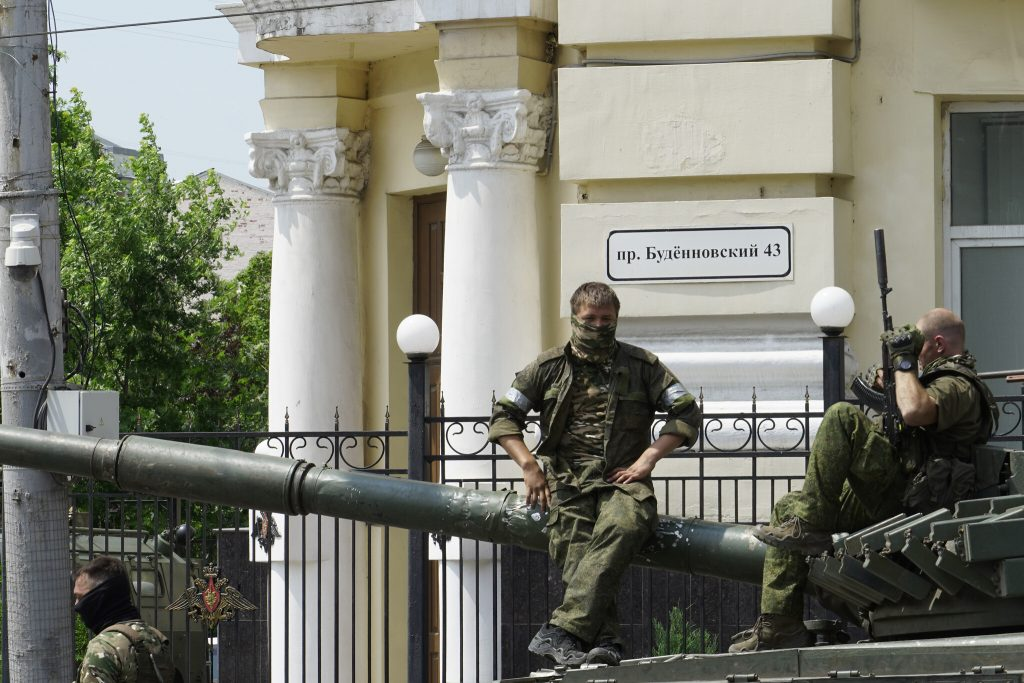
However, the most serious, and extremely threatening, result of the events for Russia is geostrategic. The general damage that Russia’s image as a world military power has suffered since the Ukraine war has so far not affected its ability to effectively defend its national territories. The almost operatic march of the Wagner group to Rostov and from there almost to Moscow surprised everyone. Because Prigozhin’s advance was unimpeded. This showed that the Russian army west of the Urals is basically committed to operations in Ukraine, thus leaving the hinterland almost undefended. And other forces are not readily available to move. The FSB (formerly KGB) forces tasked with border defense are rather non-existent. All this shows that some mercenary (only?) forces, with relatively good weaponry, can advance towards Moscow with relative ease. The messages of these conclusions are, I believe, obvious and disturbing.
A complete reorganization of the Russian armed forces is more than necessary. If nothing else, the situation showed that Prigozhin’s complaints about the weaknesses and ineffectiveness of the army leadership have a rather serious basis. And the risks to Russia’s defense are more than real. But are these changes possible? Does President Putin still have the full capability, even the manpower, to enforce them?