



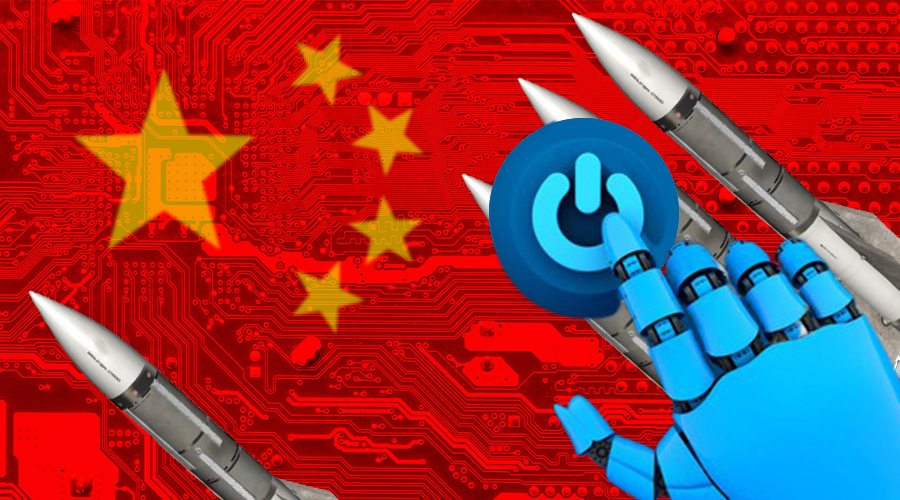
Whether with fighter jets or warships, the “hot” incidents in the South China Sea are intensifying between the US and China.
With relations between the two countries at a nadir, Chinese President Xi the other day called on the National Security Commission of the Communist Party to prepare for “the worst and most extreme scenarios”, against the background of “complex and difficult conditions”.
However, according to the official Chinese news agency Xinhua, the meeting under Xi discussed, among other things, the need for “special efforts to guard political security and improve the security management of Internet data and artificial intelligence.”
Already the People’s Liberation Army (PLA, the Chinese Armed Forces) appears to be increasingly focusing on a type of modern “intelligent” warfare. It is so named as it concerns military systems and operational concepts based on artificial intelligence (AI).
The aim is estimated to be the development and upgrading of operational capabilities for intelligence control operations, raising the war to… another level. These activities, conducted in sync with other Power Tools, can influence attitudes and behavior by influencing, protecting or disrupting the minds of individuals and groups to gain an advantage over the adversary, incorporating capabilities in cyber, information, psychology and social engineering.
China and its investments in Artificial Intelligence
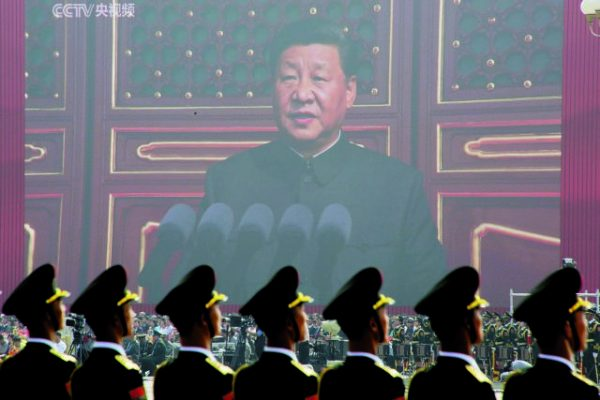
Xi Jinping has made it clear how much he is investing in cutting-edge technologies for the urban giant’s national security and military superiority.
In his speech at the historic 20th Congress of the CCP last October – which cemented his omnipotence with a third consecutive presidential term – he stressed that China is seeking to build a “world-class” military by incorporating artificial intelligence.
The goal of “intelligent warfare” is not new for Beijing. Described in the 2019 National Defense White Paper.
Now China has not only set a national goal of becoming a world leader in artificial intelligence by 2030, but is focusing on the cognitive aspects of “intelligent warfare.”
In recent months, articles in the PLA Daily, the official newspaper of the People’s Liberation Army, have described the importance of developing intelligence operations to ensure victory in “future wars,” which will be unlike the known conventional ones.
“In the war in the cognitive domain,” reports the Chinese newspaper, “all parties are fiercely competing for public opinion control, information guidance, and cognitive formation, not only in the physical confrontation, but also in the virtual space, demonstrating the important characteristics of “technology +” in the digital age”.
In short, for the Chinese Armed Forces – and not only – “cognitive warfare” is reduced to a new battlefield, along with land, sea, air, cyberspace and space.
The wars of the future
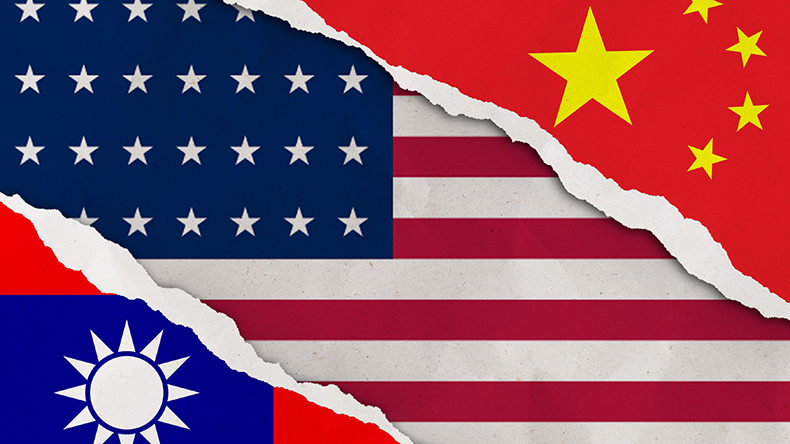
The Biden administration has since last year “blacklisted” Chinese institutes and entities as a threat to US national security for allegedly developing technologies, including brain control weapons.
Platforms such as TikTok are examples of cognitive influence, shaping the beliefs and preferences of their massive user base, collecting data and developing psychographic profiles of them.
Targeted mass cyberattacks on data banks are also considered another method in this direction.
But both the U.S. and Chinese militaries are working toward integrating AI into three common areas: intelligence processing, unmanned weapons, and decision-making.
At the same time, the People’s Liberation Army – like the armed forces of other countries, such as the USA – uses artificial intelligence to record, influence and shape the way combat units act and react.
According to PLA Daily, the method is already being tested in virtual simulations by implementing an “Intelligent Psychological Monitoring System”.
It involves real-time recording of soldiers’ reactions and biometric data with “smart devices”, determining behavioral patterns and providing on-the-spot psychological support.
“On the surface, the military confrontation concerns the forces of two sides,” a researcher of the Chinese Academy of Military Sciences points out characteristically, “but at a deeper level – regardless of the nature of the war and the goal – it is a struggle of human will.”

