



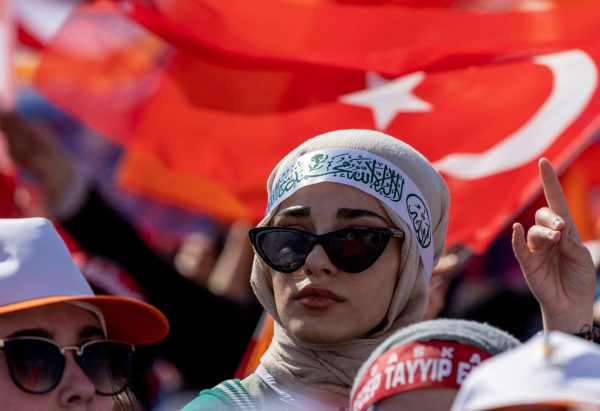
The only image they have of Turkey is the one ruled by Recep Tayyip Erdogan. And yet now it is very likely that their own vote will lead to the end of the “Erdogan era”.
The reason for the approximately five million Turks who will vote for the first time and who, due to their age, have no memories of any other leader. Much of them are included in the “undecided” vote that remains particularly large in Turkey, even though we are very close to polling time.
A marginal battle
In any case, the polls show that the conflict will be particularly intense. The final estimates before the ban on opinion polls in force in the last ten days before the election is activated, show, in the presidential ballot box, an inconclusive result. Kilicdaroglu maintains a slight lead, but Erdogan, always a tireless and skilled campaigner, has managed to close some of the gap.
This is a different picture from the 2018 election when towards the end Erdogan managed to widen the gap with the runner-up, Muharrem Ince.
But at the same time there are several differences compared to 2018. The state of the economy has worsened. Inflation may not be at the highest point it reached in October 2022, when it reached 85.5%, but the 50% it recorded last March is still a particularly high rate.
Let’s not forget that to this is added the appearance of higher rates of unemployment, especially among young people, but also the widespread feeling that corruption has significantly intensified within Turkish society.

The result is overall high rates of dissatisfaction in opinion polls, with particularly high rates of negative responses to the question of whether citizens are satisfied with their lives and the state of the country, and the rates of those who say things are going in the wrong direction are clearly higher than those of those who argue that things are moving in the right direction.
At the same time, the economy seems to be the biggest cause of concern for Turkish citizens, far ahead of issues such as corruption or even the issue of refugees from Syria, where lately there has been a retreat of the initial climate of solidarity.
And of course the recent earthquakes although there has been an area where Erdogan wanted to show that he can have things under control and lead the reconstruction nevertheless, at the moment it has been a catalyst that leads to a significant loss of confidence for both Erdogan himself and the his administration.
Voters who know what they don’t want, not necessarily what they want
Turkey has a high percentage of undecided voters, at least in opinion polls. A large part of these voters are basically voters who are dissatisfied with the Erdogan government, but which the opposition has not yet been able to convince them that it really has an alternative to offer. But the opposition also has some problems in rallying its voters.
Especially in the presidential elections, this also has to do with the failure of the opposition leadership to convince Muharrem Indje to withdraw his “divisive” candidacy, which in the end may also result in a second round in the presidential elections.
The combination between the presidential and parliamentary elections also plays a role in the political uncertainty. Although a certain correlation seems to have been clarified in the presidential elections, in the parliamentary elections things are more complex. In any case, if there is to be a second round, the opposition wants to go into it with an air of victory from the parliamentary elections.
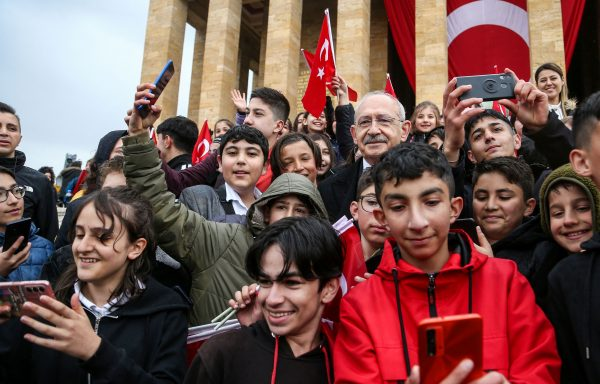
Young people seem to prefer the opposition
Against this background, young voters seem to be the ones who mostly seem to be turning their backs on Erdogan.
This certainly has to do with the greater economic insecurity faced by this particularly massive age group due to Turkey’s demographic dynamics, but also with other parameters.
For example, the fact that the Turkish government has from time to time restricted access to various websites has caused negative feelings among a social class that is particularly familiar with the digital universe, which was especially evident when the government restricted social media in the wake of the recent devastating earthquakes. .
Similar moves such as successive waves of university dismissals by the government, or criminal prosecutions against music bands have also caused a negative image among students.
Erdogan himself has tried to invest in the image of the leader who brought new technology and multiplied the available university places, but there is a sense that he has now lost some of the ability to communicate with young people.
Of course, not even Kilicdaroglu, who exudes the profile of a 74-year-old former civil servant, has much penetration among the youth, while Ince, who once seemed to have a special appeal among the youth, is now seeing a relative decline in his influence.
However, the opinion polls show that a large part of the young voters will go to vote and this means that the fact that they seem to support the opposition to a comparatively greater extent could be one of the decisive parameters for shaping the election result.


