



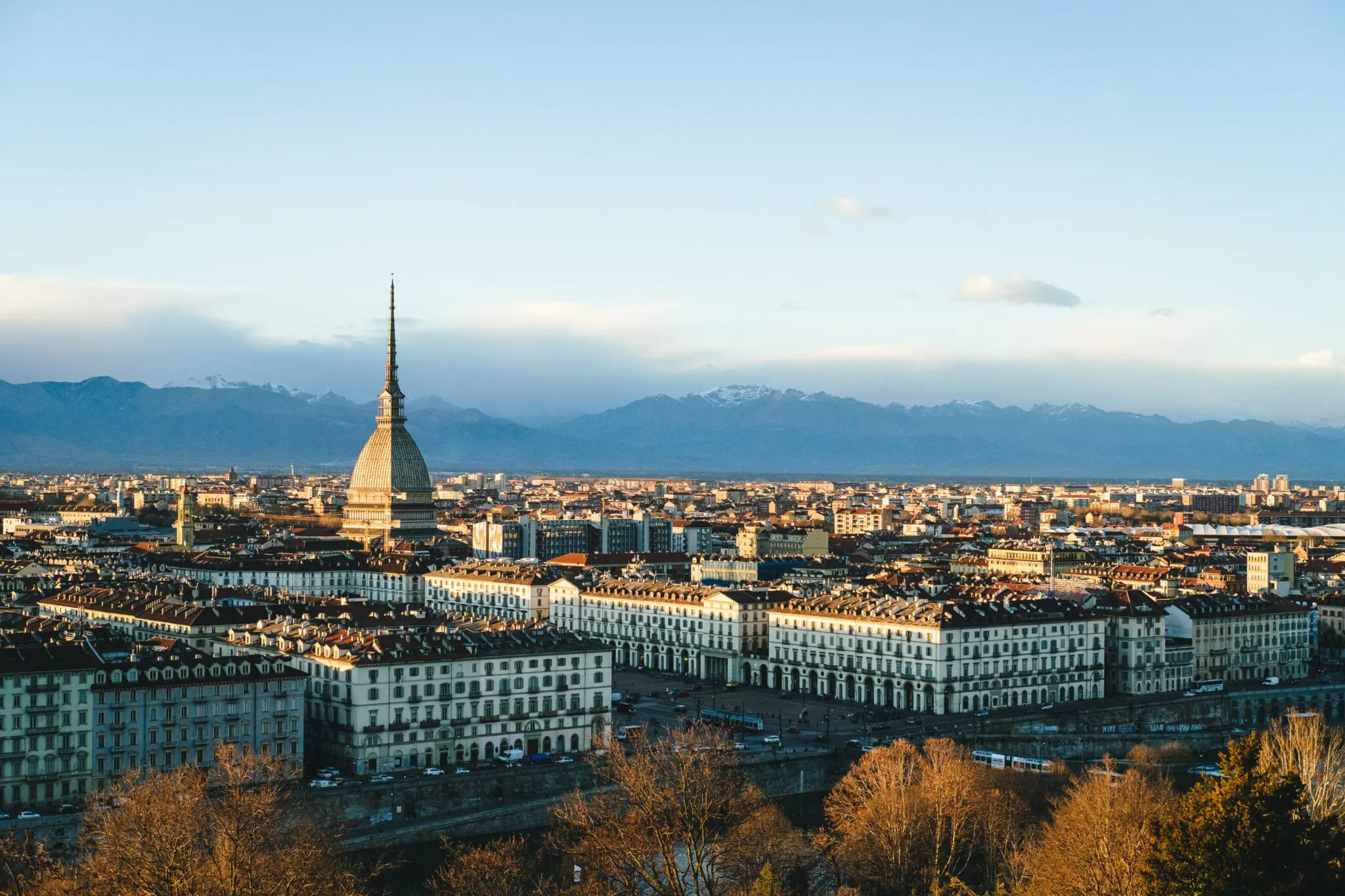
The first capital of the unified Italian state is a special destination. Surrounded by the Alps, the capital of the Piedmont region with its many and varied options, is one of Italy’s most interesting and modern destinations.
Unlike Rome, Milan, Florence or Venice, Turin is not one of the first cities that come to mind when we think of an Italian city break. Nevertheless, the first capital of the unified Italian state will charm you when you visit it.
They say that Turin is a city with two characters. One has to do with the heritage of the House of Savoy and the Art Nouveau tradition, elegance and history. In this compact guide to a 48-hour excursion you can see both sides of it while making the most of your time. You will see historical sights, the best museums, enjoy amazing local cuisine while still finding time to do some shopping.
- Architecture and chocolate for the morning
Start your day with a stroll through the historic city center. You will learn about Turin’s past through these important attractions and admire the baroque architecture that gives the Piedmontese capital a unique character among the urban centers of northern Italy. It is often said that Turin is the Paris of Italy and this is due to the -largely- French-influenced House of Savoy that historically had its headquarters here. The heads of the house collaborated with leading Baroque architects such as Guarino Guarini, Filippo Juvarra and Bernardo Vittone. Sharing typical Baroque principles they created important architectures such as the Palazzo Reale and Palazzo Madama in the large Piazza Castelo and the Chiesa di San Lorenzo.
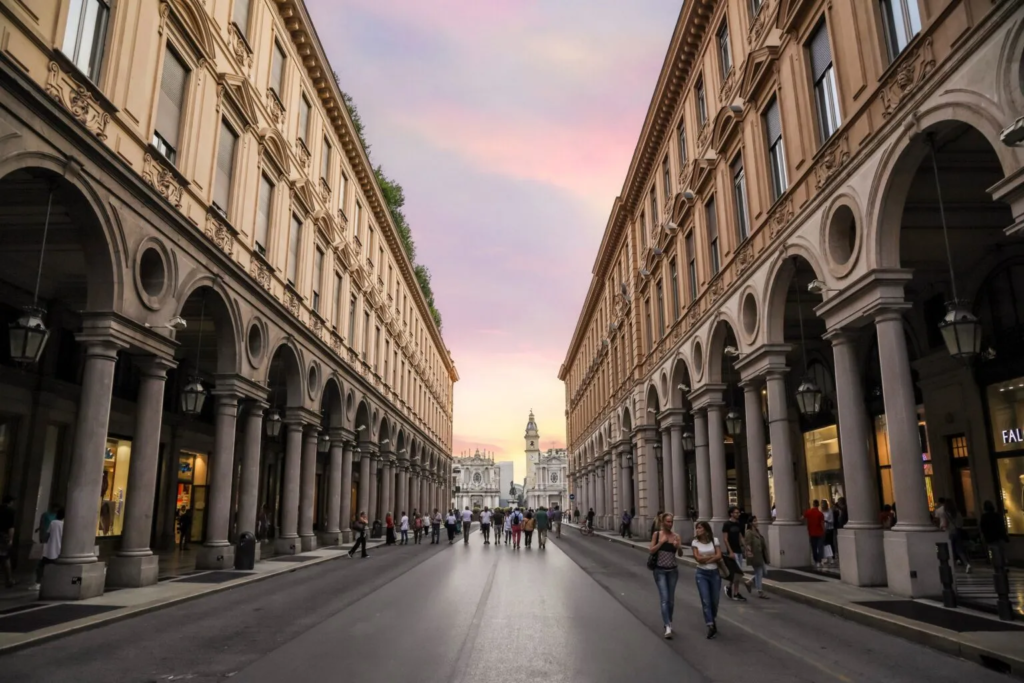
Also, in the elegant streets and boulevards of the city you can see excellent examples of art nouveau and rationalist architecture. For example, the Via Roma underwent a major renovation between 1931 and 1937 at the height of Fascist Italy. Its design, created by Marcello Piacentini, is a typical example of the rationalist architecture of the time, combining elements of the neoclassicist Novecento Italiano, with modernism and futurism.
Turin is one of the cities identified with chocolate and this is reflected in the many historic cafes that serve local chocolate delicacies, as well as various drinks with the same raw material. So it is a “must” to make a morning stop at one of the best of them. One such is Caffe Mulassano, an art nouveau gem in a portico in Piazza Castello. Its few elegant tables are placed in a room with huge mirrors in a space where the decoration includes wood carvings and marble. From the ceiling to the floor to the silver cake trays, everything is exquisite and sophisticated and will transport you mentally to the early years of the 20th century, when the cafe first opened. Mulaessano is also known for its small tramezzini sandwiches which it claims were invented there. Other good coffee and pastry options are Caffè San Carlo, Baratti & Milano, Caffè Torino, Caffè Fiore and Stratta.
- Lunch and vintage shopping
Then head to the up-and-coming and trendy Aurora area for dining and shopping. Via Borga Dora is a long pedestrian street in the heart of the neighborhood where you will find many shops selling antiques as well as vintage clothing boutiques. If your trip happens to include weekends you can visit the large outdoor market Balon. It operates every Saturday morning and every second Sunday of the month (on Sundays there are many more stalls) attracting visitors from many regions of Italy. Aurora also has many casual cafes, bistrots and trattorias where you can enjoy a delicious meal at reasonable prices.
- Dinner and entertainment in the evening
Time for dinner at a spot that has operated (under various names and styles) as a dining venue for around 500 years. Now at Tre Galline the atmosphere is quite upscale but the restaurant/winebar remains true to its local culinary references. We suggest you try the agnolotti, the local pasta stuffed with 3 different types of meat. Another dish that impressed us was the lamb with sherry sauce and seasonal vegetables. A big advantage of the restaurant in the summer and spring months is the outdoor tables.
A good solution to end your evening with a drink is the Mad Dog Social Club. Famous for its cocktails as well as for the jazz and blues nights it organizes while the Folk Club which has been operating since 1983, is now a musical institution in Turin. It often hosts acclaimed local and foreign blues, jazz and folk artists, such as American pianist Uri Craine.
- In a very important museum and a building with an amazing view
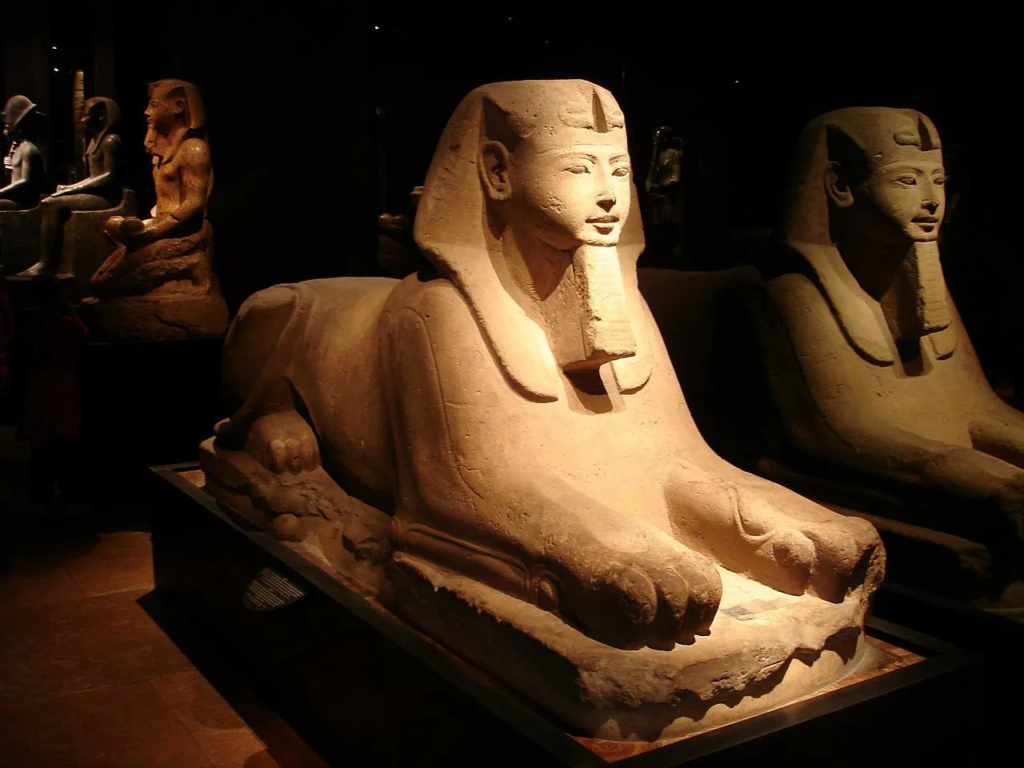
As strange as it may seem, perhaps the most important museum in Turin has nothing to do with Italian culture and the country’s history, at least not directly. The Egyptian Museum of Turin opened for the first time in 1824 and is considered to house the world’s second most important collection of Egyptian antiquities after the one in Cairo. Among the many highlights of the collection is a statue of Ramses II (one of the most important pieces of ancient Egyptian art) as well as a huge collection of papyri. There are also about 500 objects found in the tomb of the royal architect Kha and his wife Merit, a tomb dating to 1400 BC. and was discovered in 1906.
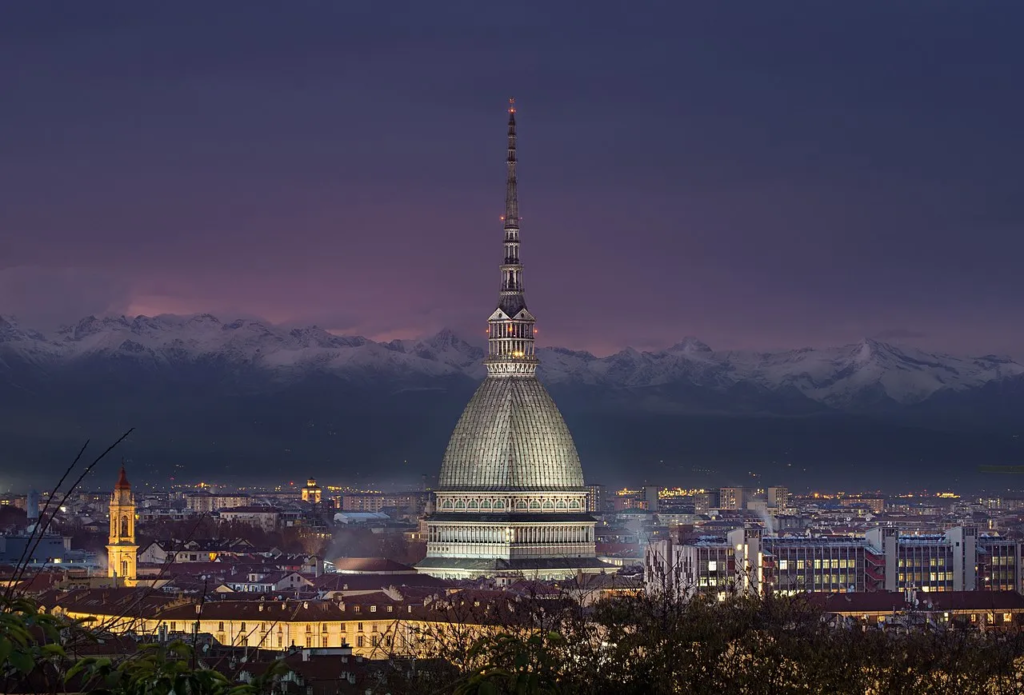
We recommend that you also visit the National Film Museum even if you are not particularly interested in cinema. The reason is the building on top of which it is housed. The Mole Antonelliana tower, which reaches a height of 167 meters and was named after the architect Alessandro Antonelli, was started to be built in order to house the synagogue of the powerful Jewish community that lived in the -then- Italian capital.
But the relationship between Antonelli and the community went through forty waves. The architect added height to his plans for the tower, costs were rising, and when the community shrank significantly with the transfer of the country’s capital to Florence, he withdrew from the ambitious construction project, which was in danger of being left unfinished.
Residents demanded the city complete construction. The Jewish community exchanged the building for a plot of land elsewhere, where a synagogue was quickly built, while Antonelli continued to build the tower until his death in 1888.
The building was finally completed a year later and is still today the tallest brick building in Europe. From the top of the hole where the museum is located you will enjoy an amazing view while it can be seen from almost any part of the city wherever you are.
- In the reborn “Fiat quarter”
In the afternoon, leave the center and visit the Lingotto district where once stood a factory (and today the headquarters) of a company symbol of the city and of Italy. Fiat’s. At the top of the former factory is the Pinacoteca Giovanni e Marella Agnelli, a special destination for art lovers in designs by Renzo Piano. The gallery has a not very large but beautiful collection of works dating from the 18th to the 20th century including paintings by Modigliani, Picasso and Matisse, and also hosts periodic exhibitions of modern art.
After enjoying these masterpieces and the stunning view, it’s time to spend some time on another Italian art form. The food. The first store of the now world-famous chain of food megastore Eataly is also located in the Fiat industrial complex. Here you can shop and take some local specialties with you to Greece, for example the famous red wines of Piedmont or the cheeses of the Aosta Valley.
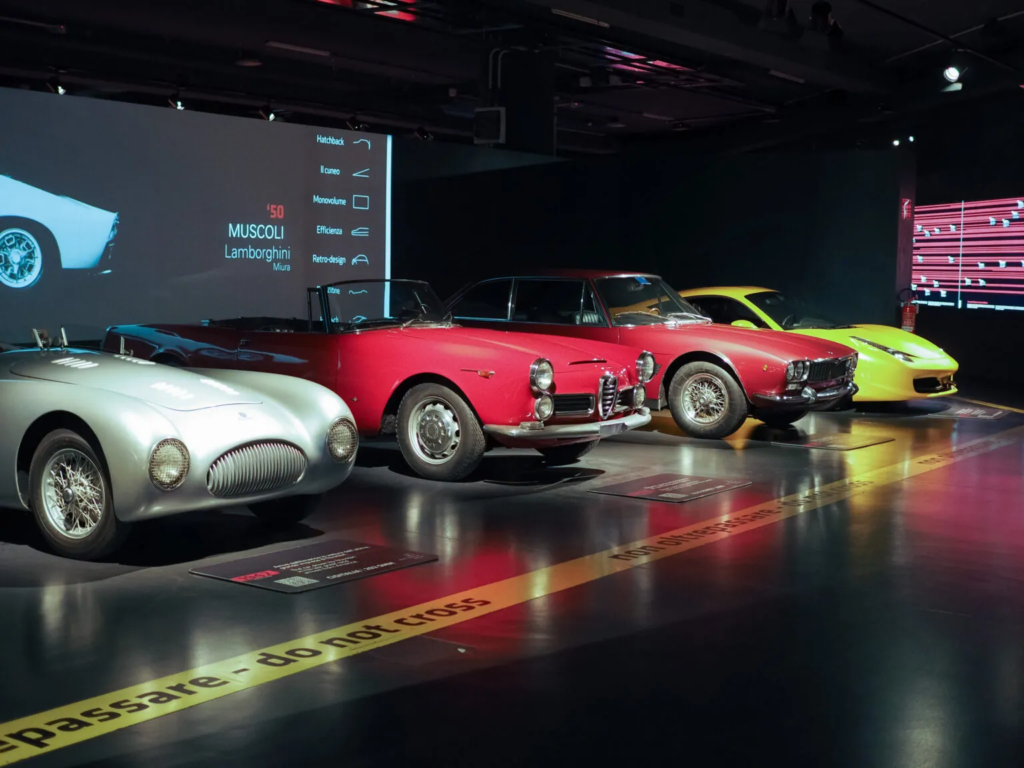
If you’re more interested in cars than painting an alternative option in Lingoto is the Museo Nazionale dell’Automobile, dedicated to the city’s great automotive heritage. Over 200 original vehicles from 80 brands tell us the story of motoring. While the museum also explores the future of industry and new technologies in an interactive way.
- Passeggiata, aperitivo, food, drink for the evening
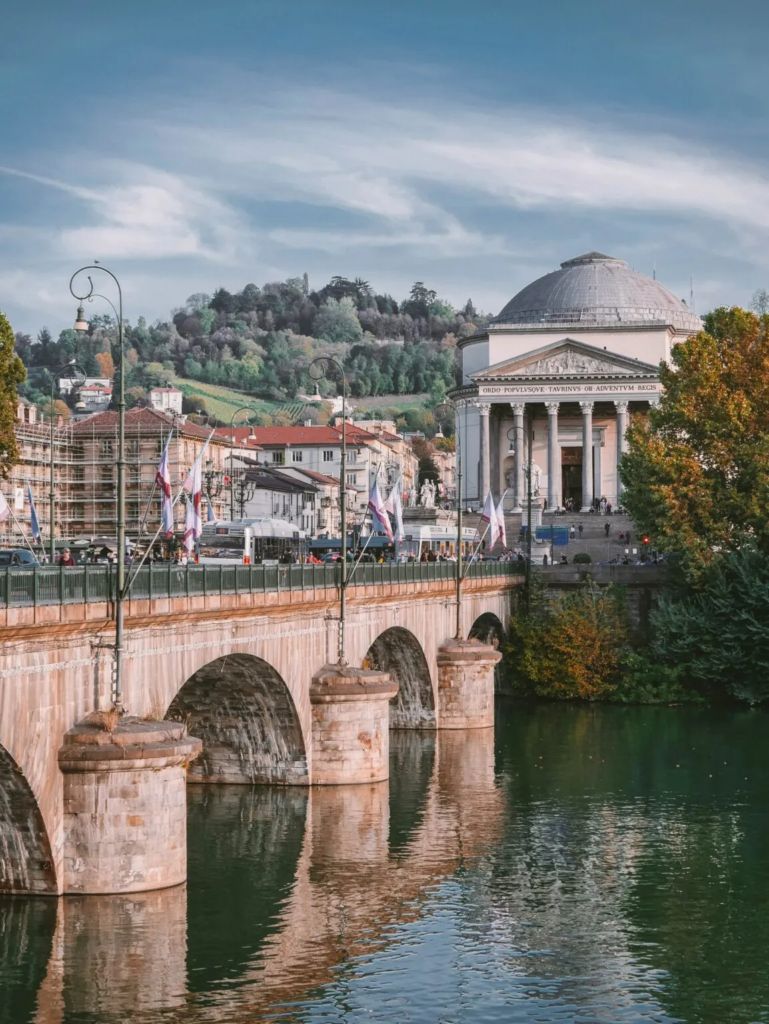
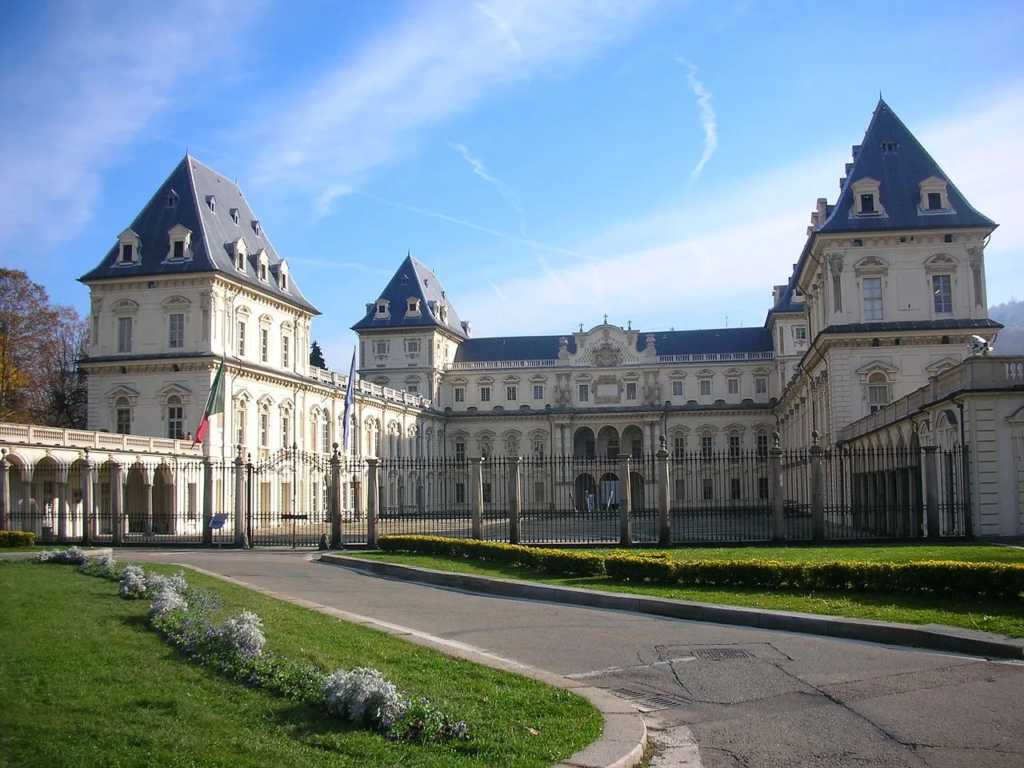
Along with the aperitivo, the passagiata—the late afternoon or early evening stroll—is another Italian tradition. We recommend walking on the west side of the Po River and through the Valentino Park. During the walk you will admire various villas and residences on the banks of the river while inside the park you will see the magnificent Castello del Valentino, one of the royal residences of the House of Savoy that has the status of a UNESCO World Heritage Site. If the weather is nice you will also find some places to enjoy your aperitivo inside the park.
For your last meal in town we recommend Al Gatto Nero which has been favored by locals and connoisseurs for decades. It is somewhat secluded on a quiet street but everyone seems to know about it. The restaurant’s heritage is reflected in the luxurious yet traditional menu. From there you can head to the neighboring district of San Salvario, which – as has happened in other cities in recent decades – has been transformed from a notorious crime-ridden neighborhood into a nightlife hub.
How are you going?
Turin is 1 to 1.5 hours by train from Milan which has an international airport.


