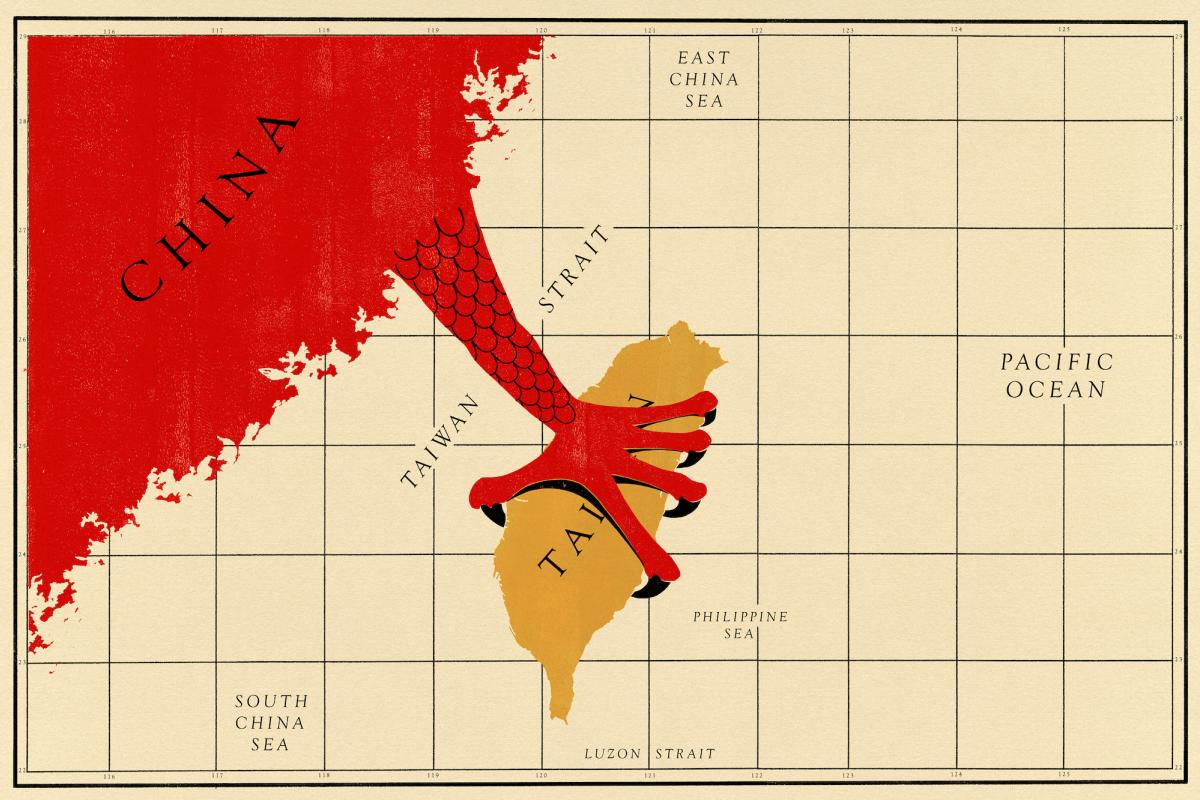
We often forget it, but for the People’s Republic of China, Taiwan is not an independent state. It is a breakaway region of China that at some point needs to be reunited with mainland China. In fact, to a certain extent this is also the position of the international community which recognizes only the People’s Republic of China as a representative of China and subscribes – with varying degrees of “strategic ambiguity” – to the “One China” policy.
On the other hand, for the West and especially for the USA, Taiwan is also an allied country that should not be forcibly integrated into China. Formally, of course, the US also subscribes to the “One China” policy, hence the reactions to visits to Taiwan by senior US political figures such as Nancy Pelosi last year, but it is clear that they do not want to see Taiwan taken over by the Chinese People’s Liberation Army.
All this is intertwined with the state of mind within Taiwan itself where the demand for reunification has support but as the years pass the tone is set by a younger generation that supports the goal of independence.
Of course, for the US in particular, the Taiwan issue is not so much about what the people of Taiwan want as it is about the fact that they see this issue as a front that, if exacerbated, could be part of a strategy to contain China .
Let’s not forget that right now the US is engaged in trying to shape an idiosyncratic encirclement of China, through a multitude of bases, the constant presence of US warships and agreements like this one with Britain and Australia, including the construction of nuclear submarines for use by Australia so that they can monitor China even more pressingly.
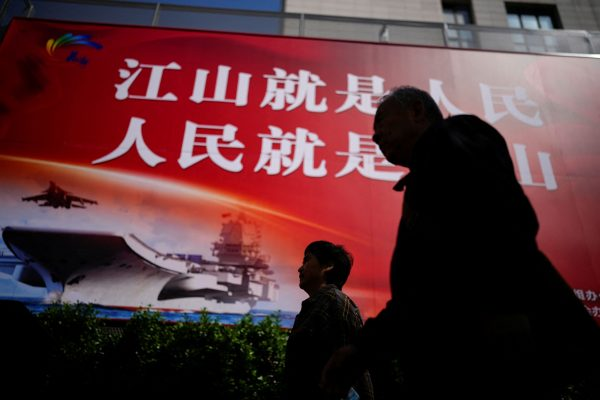
China roars and shows its “claws”
Faced with this reality, China is trying to build conditions so that it can force reunification. After all, it has long since made clear the framework within which it could proceed, which is analogous to that applied in the case of the reintegration of Hong Kong, that is, the principle of “one country, two systems”, which would mean that there would be no major upheavals in Taiwan’s economy.
However, such a thing could hardly be done with the consent of the Taiwanese government. So it should be done in terms of armed enforcement. China will soon form such an overwhelming military balance of power that there will be no choice on Taiwan’s part to accept integration.
This is also reflected in the way China appears to be building its military power against Taiwan and which it demonstrates in the occasional high schools it holds very close to Taiwan. On the one hand, China is trying to show that it has the ability, with its air force and missile systems, to deliver overwhelming blows to Taiwan, starting from its large urban centers, so that a landing of a large amount of military personnel is then possible forces necessary to control Taiwan. On the other hand, it wants to ensure that it can impose a long-term blockade of Taiwan by both sea and air, but also to prevent any attempt by third countries to try to offer assistance to Taiwan.
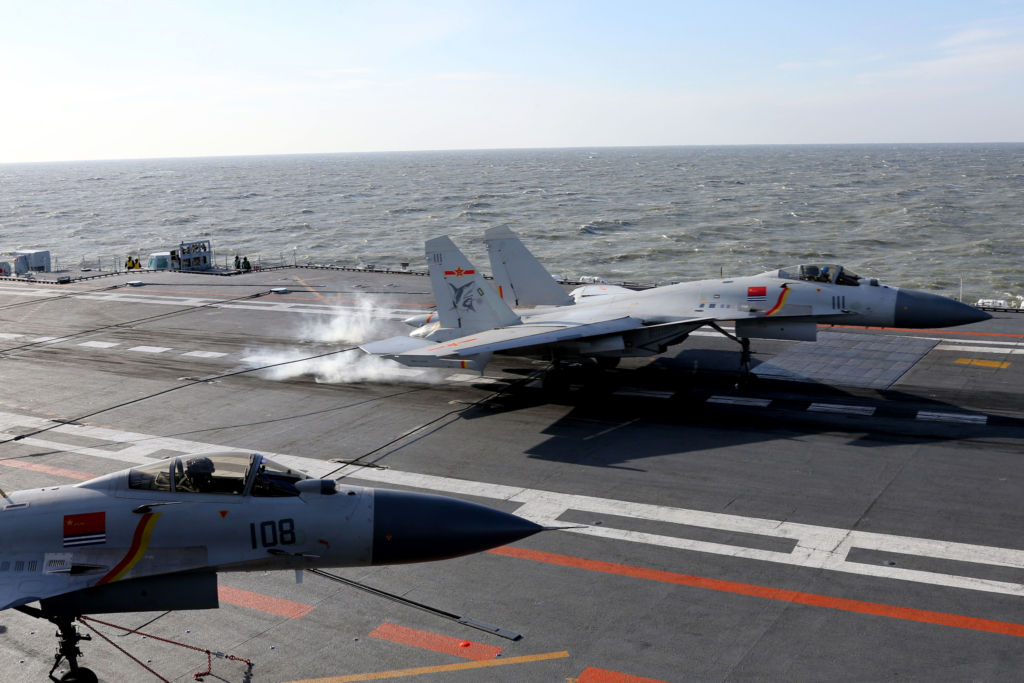
The strategy of military exercises
The Chinese military exercises are both military exercises and an attempt to show in advance which way it will move and to send the message that it is preferable for Taiwan to accept reunification.
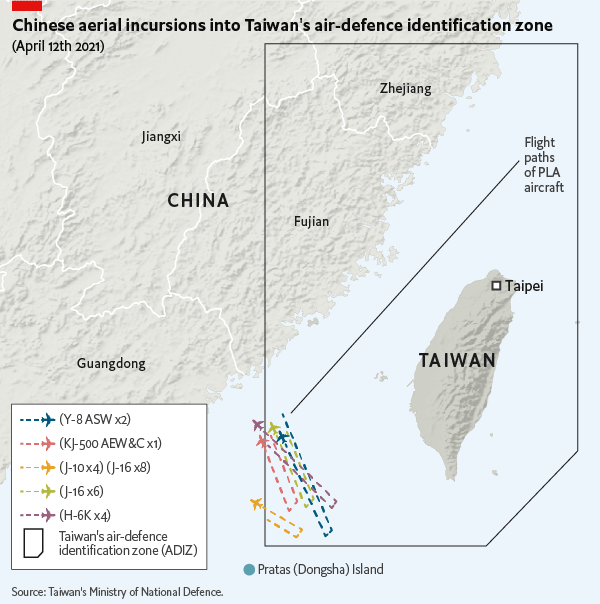
On April 9, Taiwan’s Ministry of Defense announced that it had spotted 70 Chinese aircraft around Taiwan, including Su-30 fighters, H-6 bombers and eleven ships including the aircraft carrier Sadong.
Meanwhile, China’s maritime security agency engaged in a three-day special operation involving inspections of merchant ships. In fact, the use of the Chinese coast guard (which has a fleet of 130 large patrol vessels, 70 fast patrol vessels and 400 smaller vessels) also points to the perception that it is not an invasion of a third country, but to deal with a breakaway region.
Of particular concern to Taiwan is China’s investment in hypersonic missiles, especially after last August’s show of force.
At the same time, there are indications that China is gradually increasing the scale of military exercises around Taiwan, which in turn constitutes a psychological war on the Taiwanese side, which does not know when what will start as an exercise will eventually end. as a full attack.
However, there are still several questions regarding the form of an eventual Chinese attack. That is, whether it will venture a full-scale amphibious assault, with all the risk of heavy casualties from Taiwan’s extremely dense overlapping defensive positions, whether it will attempt to deliver a decisive blow to Taiwan’s leadership that could be combined with crippling cyberattacks, or whether it will it started by seizing islands near Taiwan to demoralize the other side.
The lessons-suffering from Russia
However, what is certain is that the Chinese leadership is studying very carefully the experience of the war in Ukraine. Although there is the big difference that China can impose a complete blockade on Taiwan, unlike the situation in Ukraine where the ability to get munitions and other aid from the West has never been disrupted, China would still like to avoid the possibility of a prolonged and objectively corrosive collision. He knows he has a strong defense against her and so he wants to ensure he has an overwhelming superweapon first.
In addition, alongside the development of its own armament programs, it seeks to readjust its operational plans so that it can emerge victorious in such a conflict more quickly and with greater losses. At the same time, he would obviously want a quick victory but also to avoid a complete alienation of the local population, one that would also have to ensure reunification, which raises the big question of how he would deal with a possible hostility from the Taiwanese people themselves. And of course, China wants to make it clear to the US and other Western countries that when the time comes, any intervention of their own in favor of Taiwan will be futile and dangerous.
And all this with the ever-present concern that such a move should not compromise China’s overall economic presence on a global scale. Not coincidentally, the recognition of Chinese positions in relation to Taiwan is also a key pursuit of Chinese diplomacy.