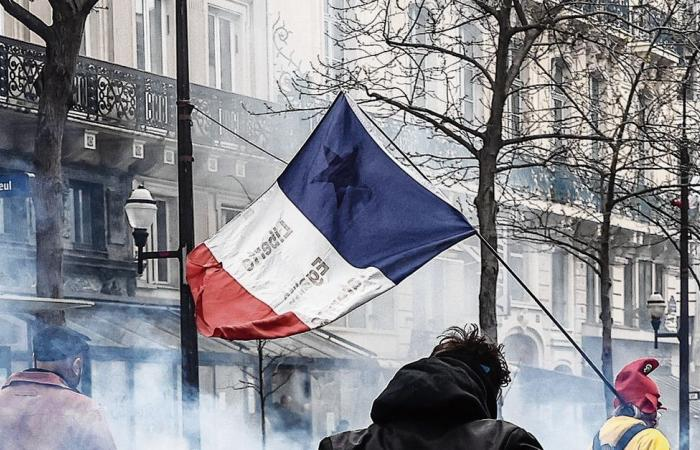
In an essay written in 1797, Immanuel Kant made the provocative view that the excitement that the French Revolution caused in the eyes of the people was a basic proof that humanity can progress. Caution: not the French Revolution itself or its development – Kant for example had a negative opinion of the Jacobin “Terror” and was a supporter of a representative rule of law – but the fact that a revolution carried out in the name of ideals of justice inspired and engaged the people was in itself a sign of historical progress.
This observation by Kant highlights a truth that we sometimes tend to overlook. The “age of revolutions”, to recall the historical period ushered in by historical events such as the French Revolution, was not an era of chaos, turmoil and dangerous desires, as all variants of conservatism would have it, nor did it indicate any inability of institutions to meet challenges , a type of systemic dysfunction that with appropriate preventive interventions could be avoided. It was also a moment in which an alternative version of catholicity was emerging, a catholicity emerging through the revolt itself.
And even if Kant thought with a conception of universality that could be considered “from above” and that corresponded to his conception of a fairly unifying history of human progress, an element that we also detect later, with an even stronger teleological charge , in Hegel, we cannot overlook that the revolutions that have since haunted the way we understand history and politics, capture the historicity of different paths to universality.
Insurgent Universality
This element is also emphasized by Massimiliano Tomba, in his book Insurgent Universality. An Alternative Legacy of Modernity, published by Oxford University Press in 2019. For Tomba, what the moments of the uprisings capture is the existence of alternative and competing temporalities that capture not the primacy of private property and the market but the emphasis in the commons and the collective. Timelines that both pervade European history but also represent all the often repressed stories that came from the peoples who became victims of colonialism and were not recognized in a version of rights that actually belonged to the “white man”.
Accordingly, for Tomba, insurrectionary moments such as the Paris Commune challenge us to think about politics beyond the state and private property, a thread he sees reflected in the first constitution of Soviet Russia of 1918, which among other things formed a political body not based on nation, but social class. On the other hand, in the Zapatista uprising in 1994 and their declarations, he finds a particularly interesting approach that is not limited only to the defense of the subjugated today, but claims to represent five centuries of resistance to colonialism and brutality, the “dead who speak through their own our voice”. These historical sequences as well as the different institutions they tried to highlight are for Tombas also forms of experimentation to highlight an overall project of justice and equality, an alternative universality that never ceases to be rebellious.
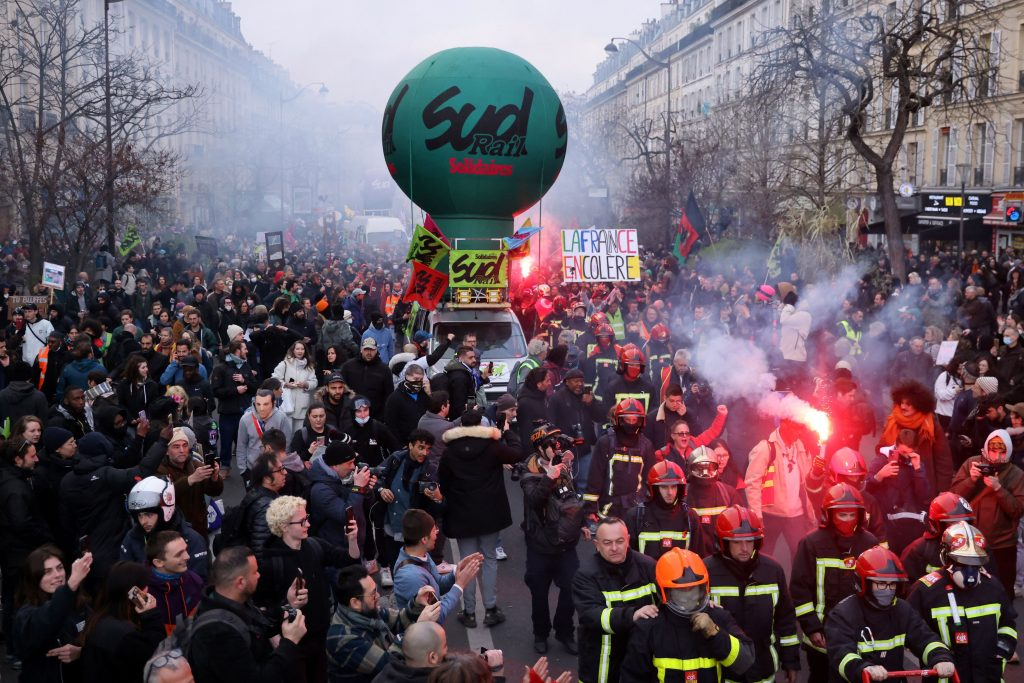
All this takes on particular significance if we look at a number of recent large movements, such as the particularly large mobilizations and protests in Greece following the tragedy of the train crash, or the very large social explosion underway in France, not simply as expressions of anger or as “emotional charges”. That is, let’s try to see these mass mobilizations as the moments that condense requests for justice, solidarity, social equality, that articulate today the demand for a universality that emerges from below.
Perhaps this is the most important element that such social eruptions recall. In spite of a decades-long effort to consider as anachronistic all the demands that pose equality, redistribution, social protection as inalienable human rights and to treat as almost transgressive this kind of demand to respect the agony of society, these mass demonstrations and mobilizations bring back to the fore strong and deep-rooted demands of a different social and political organization. They show that despite the defeats of major movements in previous decades, the action and thought of subordinate classes and groups, all those who feel that they are now treated as expendable material, has its own temporality, which insists on defending a different and competing version of social equality and democracy. Their own revolted Catholicism.
Inalienable expectations
What the major social upheavals of the last interval mainly bring out is that despite the attempt to entrench a condition of lowered expectations in the lower income social classes and to present as inescapable the current variant of “existential neoliberalism”, there is still an inalienable core of democratic and egalitarian of expectations that is just looking for the moment or the catalyst that will bring it explosively to the fore.