Few things can be worse than a natural disaster occurring in a country that still has an open civil war within it and is under sanctions at the same time. And yet this is precisely the situation prevailing in Syria. First, political unity and peace have not yet been restored to the country. Although the government forces with the support of Russia and the reinforcement of Iran have largely recovered the areas that were under the control of armed Islamist opposition organizations and although the Islamic State, which for a time controlled part of the Syrian territory, has been defeated, however and cores of the Islamic State are still operating, while the Idlib enclave remains under the control of Tahrir Hayat Al-Sham, the evolution of al-Qaeda in Syria, an organization still considered terrorist by the international community.
In addition, the Kurds maintain under their control areas, in which there is also an American presence. At the same time, Turkey has a de facto zone of Syrian territory under its own control or under the control of its financed and equipped “Syrian National Army”. And of course we should not forget that a large number of Syrians live outside the borders, most of them as refugees in Syria.
At the same time that the country does not escape the Civil War and in fact it remains open what will be done with Idlib, the country remains under sanctions, an element that still creates very serious problems in the country’s ability to have economic transactions as it cannot to export to many, but not to import from them necessary products. Indeed, these sanctions mean that it is very difficult for the country to fully rebuild when the war is over.
And of course, Syria remains a country for which several members of the international community not only do not recognize the government of Damascus, but are also of the opinion that it should be overthrown. Of course, on the other hand, Russia has provided particularly critical support to the Syrian government, support that was decisive for the formation of a favorable power relationship.
At the same time, there were no significant political and diplomatic developments, as the only political process is that of the Astana process, where Russia, Iran, and Turkey participate (the latter without officially having changed its initial position in favor of “change regime”). After all, within this agreement, Turkey also ensured that the armed organizations it supports will not be targeted. However, at the same time, both the US and the EU do not want to take big initiatives, especially since they also face the government of Damascus as a key ally of Russia.
The effects of the earthquake against the background of sanctions
Even before the earthquake, the United Nations insisted that the number of people in need of humanitarian assistance reached 70% of the population. The World Food Program warned that 2.9 million people in Syria faced the specter of starvation while 12 million did not know where their next meal would come from. According to the UN, 90% of the 18 million people living in Syria are in poverty. In any case, the UN is struggling to get all the aid it needs from donors and has received for 2022 less than half of the $4.4 billion it needed.
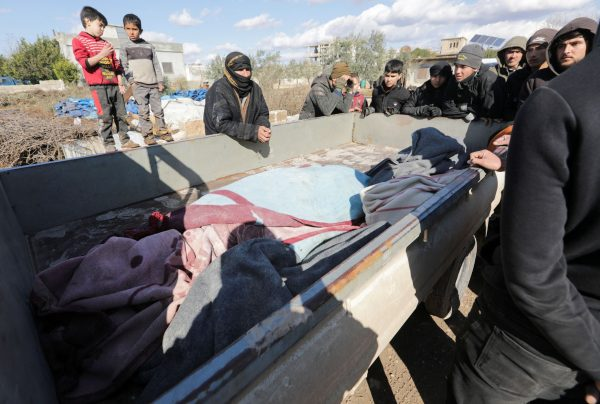
The two consecutive very strong earthquakes hit both areas of Syria controlled by the Damascus government and areas under the control of the opposition.
It is significant that the earthquake struck areas where there had been major war conflicts and where buildings had been heavily damaged and have not since been fully repaired. This is very intense e.g. in Aleppo.
Accordingly, in the area of Idlib, which is the largest area that remains under the control of an armed organization, in addition to the residents, there are essentially also people who were in other areas but in the gradual purges by the government forces chose to go to Idlib, which was the last pouch. The area has extensive damage to infrastructure and roads.
Aid to Syria arrives from Russia, Iran, Algeria, other countries in the region such as Egypt, the United Arab Emirates, Saudi Arabia, Kuwait and Jordan, as well as from humanitarian organizations. No aid goes to the Syrian government from the EU, the US. The Damascus government is responsible for the affected areas under its control. As for the areas in Idlib that are under rebel control, the Syrian government is only allowing aid to enter through one border crossing, as it considered regaining control of these areas to be the key anyway.
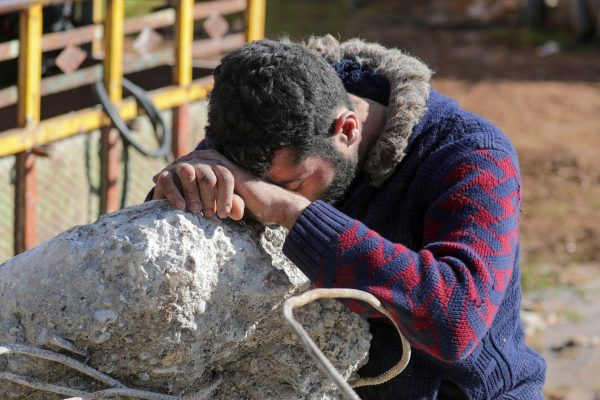
There are now areas under the control of Turkish-backed armed groups that were also hit hard by the earthquake. There, the aid will come mainly through Turkey itself, after all these areas were dependent on Turkey anyway, only just across the border are the areas in Turkey that have been hit the hardest.
And of course, to the wider drama of the people of Syria due to the earthquakes, let us add that there are also a large number of Syrian refugees in the Turkish areas that were hit.
But all this means that any aid reaches troubled areas, areas that are already heavily damaged by war and where in some cases there is no full and effective state function. Essentially a region with open wounds from a long, bloody and destructive war, it is now facing a very large-scale natural disaster.
The weight of the penalties
Against this background can be seen the demand that exists from various quarters for the lifting of sanctions against Syria, at a time when the country is in urgent need of reconstruction. But it is not at all certain that this will happen, if we consider that we are talking about a conflict with the main fronts “frozen”, without at the same time much willingness to agree on a political solution, especially since everything is now read in the light of of divisions at the global level brought about by the war in Ukraine.