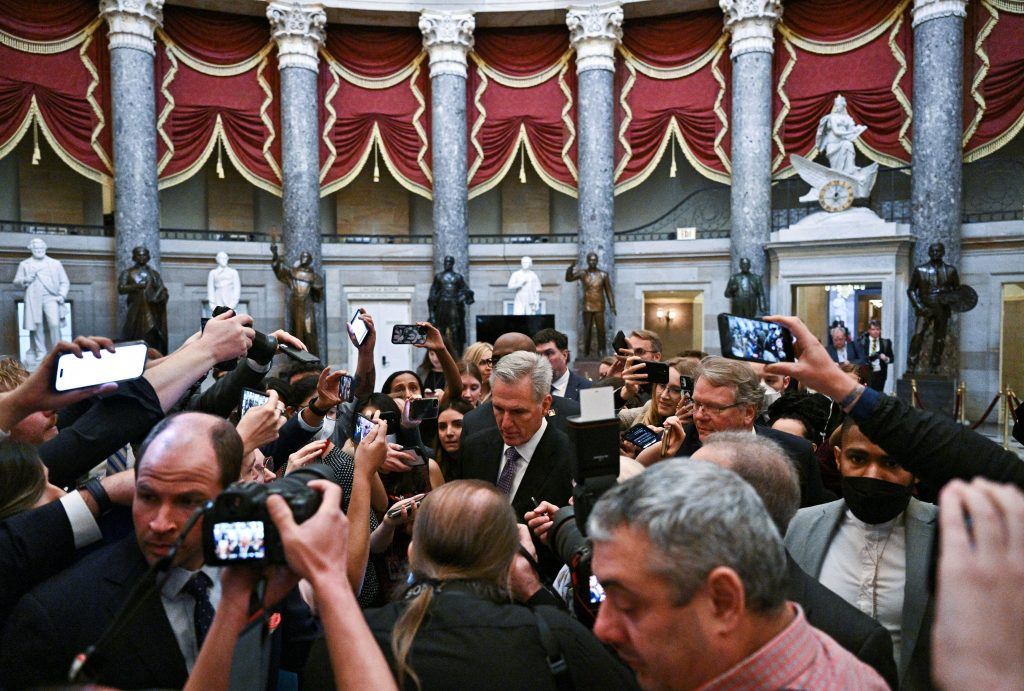
The midterm elections last November were supposed to be the big comeback for the Republicans. The purpose was to win the majority in both the Senate and the House and thus have the Democratic government under constant pressure in the horizon of the 2024 elections.
But instead they managed not to get a majority in the Senate, which makes it easier for the Biden administration in terms of critical decisions, that Donald Trump’s re-nomination for the White House has already been announced, in an effort to pre-empt any other and possibly more popular nominations than the Republican Party and now offer the spectacle of not being able to elect their own candidate for speaker of the House of Representatives, that is, not being able to elect the president in a body in which they have an absolute majority. For the first time in a century, there have been six votes in two days and no Speaker of the House of Representatives has yet been elected.
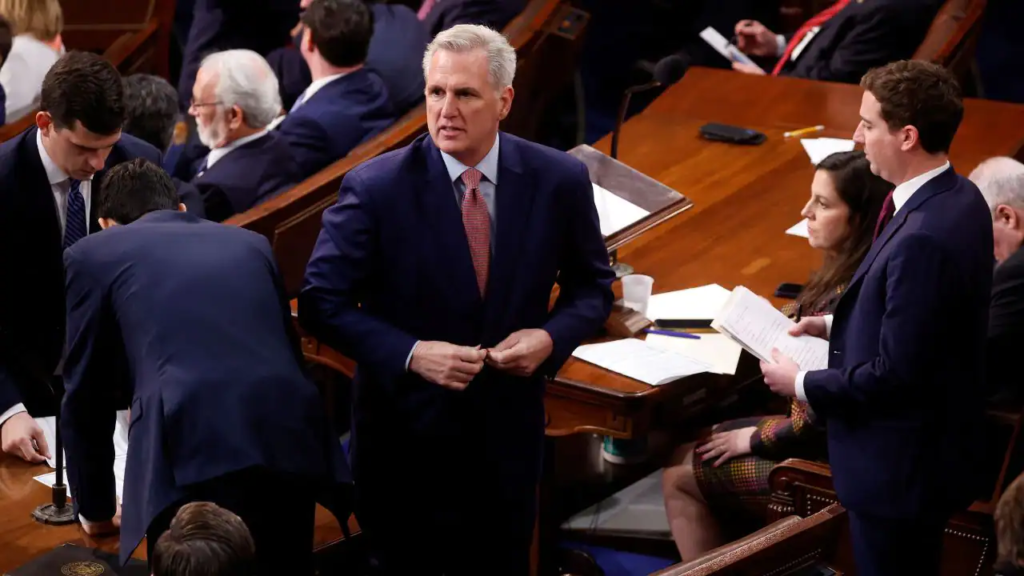
The rebellion against Kevin McCarthy
Kevin McCarthy has oriented almost his entire political career precisely towards conquering the position of Speaker of the House at some point. He has a lot of experience, first in the House of California and since 2007 in the House of Representatives, now serving his eighth term in the body. He has been participating in the leadership of the Republicans in the House since 2009, and in 2015 he tried unsuccessfully to be elected president of the House. But now he appears to be running into objections from a section of his own party, despite having the support of even Donald Trump himself.
The reason lies in the rebellion of a group of ultra-conservative MPs from the “Freedom Caucus” who traditionally demand even less state, question the weight of the federal government and call for even more privatization of even basic public infrastructure. This trend, which also echoes the views of the extreme neoliberal “Tea Party”, always tries to make life difficult for the Republican leadership.
The problem is that this time the Conservative MPs decided to make their presence felt, notably by not voting for McCarthy in his election, in three consecutive votes. In fact, because they did not abstain, nor did they simply declare that they were present, but they voted for other candidates, with the result that not only did McCarthy not have the required majority, either on the whole, or on those present, but that he was not even the first in votes, after the Democrats voted solidly for their party’s nominee.
That means McCarthy has a long way to go – and “rebellious” colleagues to convince – even if he aims not to have an absolute majority in the chamber, but a majority of MPs present, a possibility that is envisaged.
This failure, in addition to the problems it creates in the very functioning of the House with its new composition as it emerged from last November’s elections, creates a very negative image for the Republicans themselves who instead of showing a party united on the horizon of the new claim to power, show a party torn apart by internal strife and unable to coordinate around common goals. This actually offers critical political “breathers” to the Democrats.
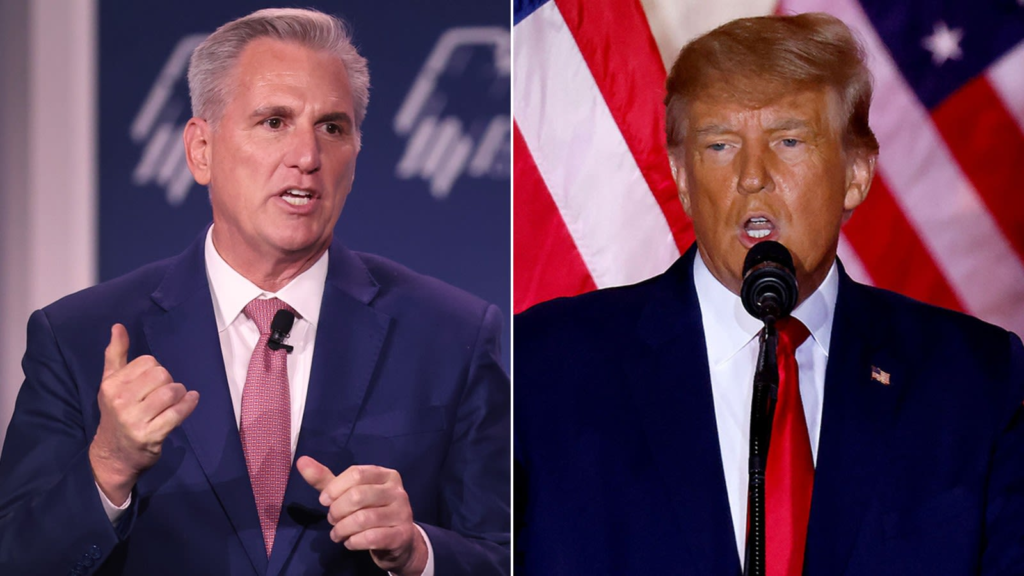
The Republican party in crisis
All this reflects a deeper crisis of the Republican Party. Let’s not forget that the evolution of the party of Lincoln into the right wing of American bipartisanship did not happen overnight and involved several historical shifts. This has led to it being the preeminent party of the American religious right, the party of less government and less taxation, the party of “States’ Rights” (and therefore the party that supports less discretion in the federal government’s legislative initiatives), the the party of even greater defense spending and mistrust of public health programs, and at one point the party of fossil fuel advocates and increasingly the party of those who deny women the right to choose abortion. But even by the time of the George W. Bush administrations, he could somehow find points of balance in the direction of the political center.
That began to shift both in terms of the confrontation with Obama and, more importantly, with the Trump administration. And this is because Trump “unleashed” all the conservative reflexes that existed within the party and gave new legitimacy to such views. Trump’s hegemony has made Republicans even more locked into a certain version of the American “right” that is not guaranteed to win elections.
The very fact that Trump is charged with the unprecedented events of January 6, 2021, one of the most traumatic moments in recent American history, but was nevertheless able to impose his own nominees (probably contributing to the defeat of the Republicans in elections in November 2022), is indicative of this party’s problems. The same is shown by the difficulty so far in announcing another candidate for the presidency despite the party having “worthy” figures such as Florida Governor Ron DeSandis.
Against this background, what is happening now with the McCarthy nomination is just one more symptom of this deeper Republican crisis.