




In the difficult period that the world community is going through, the defense strategy has become of great importance, especially in a state like the USA. Joe Biden and his staff have drawn up a new strategy for the National Defense of the United States.
This text is based on the doctrine set forth by the US President during his first speech at the State Department. Joe Biden had declared at the time that the US would oppose China’s absolutism and the threat posed by Russia to American democracy.
The term strategy has many meanings. One of these is the means available to the Commander-in-Chief of a nation to defeat his enemies at the front. The other indicates the development of a plan according to which all members develop their action in order to achieve the goals set by their hierarchy. The following document belongs to the second meaning of the term.
What does the national defense strategy contain?
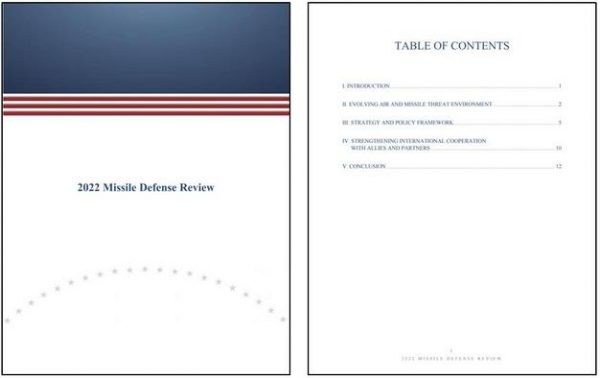
The US Department of Defense published, in October 2021, for the first time, three documents: the National Defense Strategy, the Nuclear Order Review and the Missile Defense Review. The union of these three provisions was made in order to ensure the unity of the actions of all departments of the Ministry.
The new strategy builds on the direction given by Joe Biden, stating that “we are living in a decisive decade that has been marked by dramatic changes in geopolitics, technology, the economy and the environment.” Another direction is that China is the main competitor of the USA, dealing with the Russian invasion of Ukraine is based on cooperation with allies and partners, but also that the Ministry’s usual way of acting is no longer acceptable.
The National Defense Strategy consists of 10 individual departments
I. In its first section, the vital interests of the US are defined, securing economic prosperity and opportunity.
II. The second section, entitled Security Environment, describes the strategic security challenges, citing as the first challenge the Strategic Competition with the People’s Republic of China. Within the text, Russia is characterized as an acute threat, due to its nuclear, missile, digital, information, and chemical-biological capabilities, and its cooperation with China. In terms of homeland security, it downplays the role of international terrorism, emphasizing China and Russia’s effort to bend the will of the American people and attack critical national infrastructure.

Persistent threats
North Korea, Iran, and Violent Extremist Organizations (VEOs) are characterized as “persistent” threats, while the rise of rapidly evolving technologies is highlighted, making the battlefield more complex than ever.
III. The third section, titled Defense Priorities (III. Defense Priorities) sets out the 4 US national defense priorities, which include:
1. the defense of American territory against the threat of China,
2. preventing strategic attacks against the US, its allies, and partners;
3. the deterrence of aggression combined with the dominance of the battle against China in the Indo-Pacific and Russia in Europe;
4. building a resilient Interbranch Force and a defense ecosystem.
IV. The fourth section, Unified Deterrence, addresses the means of achieving deterrence, which include;
1. the prohibition of action by opponents,
2. developing resilience,
3. the direct and collective imposition of costs by the development of a variety of means and the ability to conduct information operations;
4. tailored approaches to deterring attacks against US territory, strategic attacks, potential attacks by China, Russia, North Korea, and Iran.
5. the ability to judge and manage;
V. The fifth section, entitled Campaigning (V. Campaigning), refers to the contribution of campaigning forces in achieving deterrence and other strategic objectives, emphasizing, however, that it will use the available means sparingly.
VI. In the sixth section, “Linking the Strategy with Allies and Partners and Advancing Regional Goals” (VI. Anchoring our Strategy in Allies and Partners and Advancing Regional Goals), the National Defense Strategy focuses on 6 geographical areas of interest. Regarding the Indo-Pacific region, it says the US will work with Japan and Australia through the AUKUS partnership and the Indo-Pacific Quad, India, Taiwan, the Republic of Korea and the Association of Southeast Asian Nations [ Association of Southeast Asian Nations (ASEAN)].
VII. The seventh section, entitled Force Planning (VII. Force Planning) mentions the priorities for shaping the future interdisciplinary force, which will have intervention readiness to deal with small-scale and long-term crises.
VIII. The eighth section, entitled Building Enduring Advantages, analyzes ways to develop advantages, which include transforming the slow and unfocused defense industry.
VIIII. The ninth section, refers to Risk Management, since – as the text typically states – no Strategy perfectly predicts the threats that are going to emerge.
Critical changes in nuclear arrangement
After the war in Ukraine, it was considered important to change the security protocols mentioned in the texts of the American National Defense strategy. First and foremost, it remains the crown jewel of deterrence strategy for the Department of Defense and the American nation, and a building block of the National Defense Strategy.
Of course, it is clarified that this strategy alone cannot reduce the nuclear risk. The reason is that the Ukrainian War showed that the nuclear danger still exists and even has a tendency to increase.
On the other hand, it was decided to adopt a more rigorous policy and comprehensive approach that contains
- downgrading the role of nuclear,
- taking measures to enhance deterrence,
- arms control and non-proliferation,
- the replacement of modernization programs,
- the withdrawal of the B83-1 gravity bomb,
- the cancellation of the Sea-Launched Cruise Missile (SLCM-N) program;
- and the development of a more modern and adaptive nuclear security initiative.
The US is facing two nuclear rivals
China aims to have 1,000 nuclear warheads by the end of the decade, while Russia, on the other hand, continues to promote the use of nuclear weapons in its next Strategy, directly threatening NATO and its allies, as it possesses 1,550 motorized strategic nuclear warheads and another 2,000 of non-strategic use.
It is also pointed out that the US will face two nuclear rivals by 2030, which affects global security. Smaller but not insignificant concerns are also caused by the actions of North Korea and Iran, while the increasing importance of the use of nuclear weapons in the strategies of third countries such as Russia, China’s nuclear expansion, the need to use nuclear weapons in the event of conflict are also cited as critical challenges large-scale, and multi-domain military operations which affect the interaction of nuclear and non-nuclear capabilities.
The predictions for the New Start treaty
Although US strategy has taken into account the Ukrainian war, the text refers to the current President’s immediate renewal of the “New START” arms control agreement between the US and Russia immediately after taking office and the desire to further renew it in 2026, but also the US concern about China’s nuclear expansion.
At this point, however, the US President seems to have changed his strategy, as the US was the one that “froze” the talks with Russia on the New Start treaty, on the grounds that the war in Ukraine is in its tenth month.
The way to review missile defense
Issues raised in the text on missile defense are that China has developed ballistic and hypersonic technology, Russia has modernized its intercontinental ballistic missile systems, North Korea continues to develop its conventional and non-missile capabilities, Iran maintains regional systems, but also the appearance of non-state actors and Unmanned Aerial Systems.
Furthermore, the document focuses on the North American region and specifically on the successful cooperation of the US with Canada, the Indo-Pacific region, where they cooperate mainly with Japan, Australia, and the Republic of Korea, Europe in which they operate, both multilaterally and bilaterally and, finally, the Middle East, where the main partner is Israel and several members of the Gulf Cooperation Council.
The text ends by concluding that the development of missile capabilities is a strategic imperative for the US in order to maintain the deterrence on which the entire Biden policy is based.
