



The World Bank report from 1994, entitled “Averting the Old Age Crisis. Policies to Protect the Old and Promote Growth”, was essentially the starting point for a large wave of reforms in the insurance system in various countries.
If you look at it, you will find all the ingredients of the pension discourse that has dominated at least in developed economies: the population is getting older and the weight of pensioners in the general population is increasing; this means that fewer workers have to meet the needs of more contract holders; insurance systems must acquire characteristics of “multi-pillars” and alternative forms of financing; early retirements must be avoided.
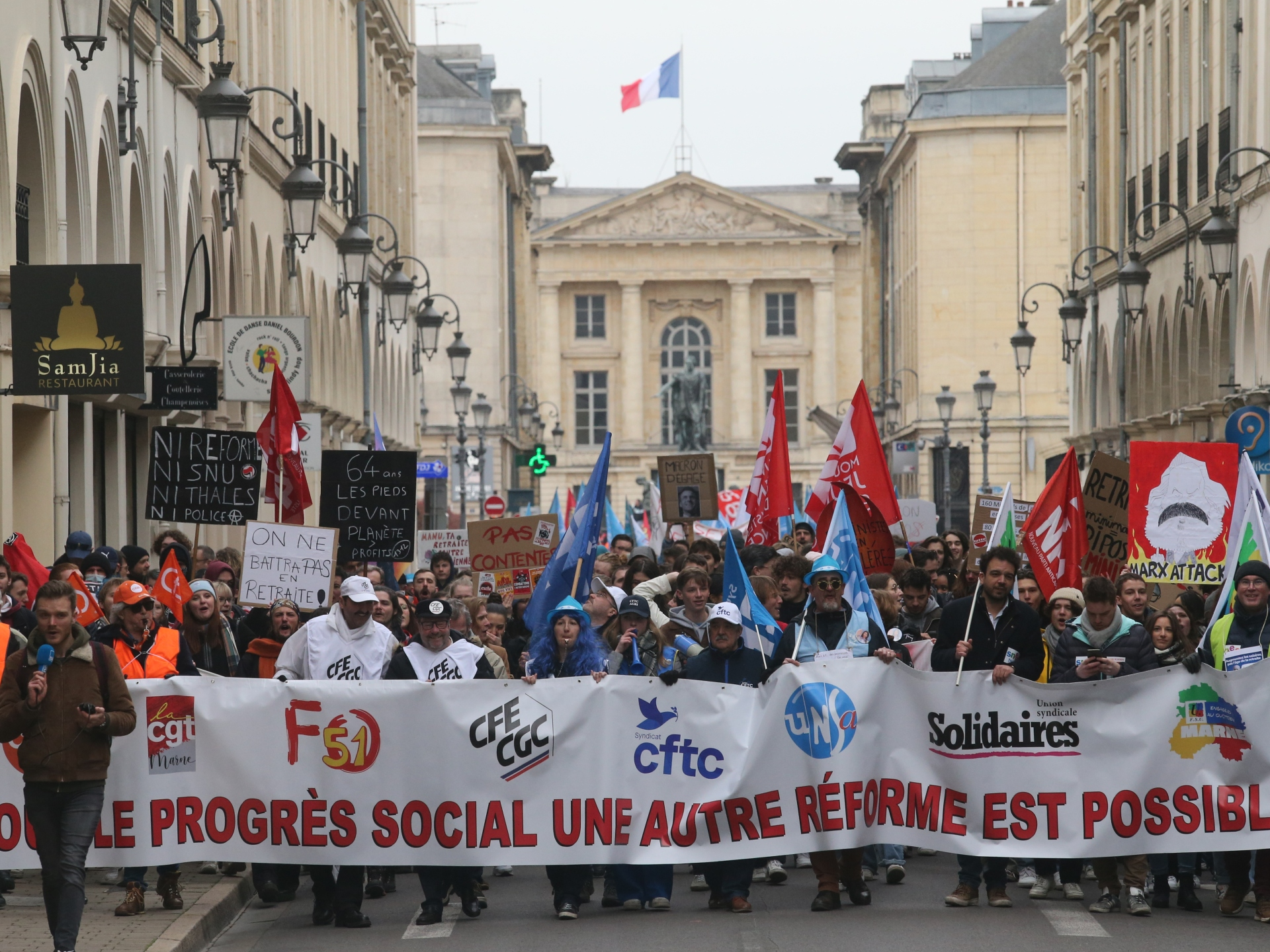
This is also indicative of the fact that the debate on reforms, such as those that led to an unprecedented mobilization in France, did not start yesterday. Rather, it is an “agenda” active for decades.
And more recently in various countries there have been reforms in this direction. Not only were the retirement thresholds increased, which in practice mean that a large number of current workers are preparing for retirement at 67, but also in practice the redistributive nature of the system was significantly reduced, as strong elements of a capitalistic logic were introduced.
In any case, as early as the 1990s it had become clear that the problem was not narrowly limited to the fiscal problems of the need to cover a larger volume of pensions with proportionally smaller contributions, but also took the form of the question of whether the overall redistributive character of the insurance system. Redistributive not only in the “technical” sense that current workers pay for current retirees, but also in the more strategic sense that essentially the state undertakes through taxation and the guarantee of the insurance system to ensure that when someone stops working he will enjoy a standard of living commensurate with what he had when he was employed.
Against this redistributive logic – which was a cornerstone of the “welfare state” – a logic gradually began to be counter-proposed, which considered that the pension should largely be a matter of individual savings choices and not guarantees from the state. This logic essentially transferred the responsibility to the worker himself, limited the role and responsibility of the state, and was embedded in the logic of individual investment that was anyway a key aspect of the emergence of what we usually call “neoliberalism”.

Are demographic dynamics so threatening?
A large part of the justification for increases in retirement thresholds is that life expectancy and thus the number of years one will be retired increases, which, combined with the decline in births, means worse demographic conditions. For example, today there are three people of active working age for every pensioner. In 2070 the ratio will be 1.7 to one.
At the same time, the increase in life expectancy, which is supposed to mean that more and more years pass between the end of working life and death, is actually slowing down in developed economies.
In fact, in recent years, especially after the pandemic, a decline in life expectancy has been recorded in several countries. And even if one considers that this was also the result of an extraordinary condition, at the same time the correlation between mortality from Covid-1 and age proves that the vulnerability that comes with increased age.
Furthermore, life expectancy today records significant discrepancies related to one’s position in the social and economic hierarchy. For example a pensioner in an affluent area of London such as Kensington or Chelsea has eight years longer life expectancy than a pensioner in Glasgow. The former at 60 has 27 years of life expectancy ahead of him, the latter 19.
At the same time, it still appears that the rate at which life expectancy is increasing is slowing anyway. This is already reflected in the change in some forecasts. For example in Britain a report by the competent ministry found that while in 2017 the predictions made based on the data of 2017 were that in 2060 life expectancy at age 60 would be 27.3 years, in 2023 the new estimate based on the data of 2020 was that it would be 24.4 years. This would obviously be an improvement over the corresponding 20.0-year estimate for 2020, but reflects that the rate of improvement will slow.

The fiscal problem is so suffocating
Of course, there are also the questions regarding the fiscal burden from the cost of pensions. However, it is interesting that this cost is not proportional to the volume of pensions. That is, the countries that give the largest pensions or have higher retirement limits do not pay more. For example, in the EU, the champions are Greece and Italy, which in 2019 spent 16% of GDP on pensions, a percentage that was greater than that of France (which has clearly lower retirement limits than Greece) and at the same time has the highest income replacement rate relative to other European countries, measured as the ratio of the average disposable income of a pensioner to that of a worker.
Accordingly, even in countries such as France the observed pension deficit is far less than the huge sums allocated within the measures for the pandemic or to deal with increased labor costs.
In fact, the pension becomes a serious fiscal problem only on the basis of two parameters, which concern the moment without being “self-explanatory”. The first and perhaps the most basic has to do with the slowing down of growth rates. It has been estimated that even +1% in real GDP could ensure that the necessary resources would be there. The second is precisely that this whole discussion is taking for granted a very limited degree of overall redistribution through taxation.
And perhaps this last parameter is the most important: because it is clear that insurance is not a “technical” issue, but a deeply political one: it has to do with the collective choice that societies make in terms of how they want to distribute the total wealth produced within them and whether they consider that people live to work or work to live.

