The EU and the G7 have invested in a ceiling on the price of Russian oil, but it is not certain that the measure will be as effective (for more information please read the analysis titled “Why the EU’s Proposal to Impose a Cap Only on Russian Natural Gas is Wrong?“).
It took persistent negotiations in the EU and finally the decision is to put the ceiling on the price of Russian oil lower than the original proposal, i.e. to go to 60 dollars a barrel.
The reasoning behind the cap, which was essentially a US proposal, was to find a “middle ground” between hitting Russia’s ability to finance the war in Ukraine through oil and gas exports while avoiding a sharp cutting off access for many countries to Russian oil, which would cause an even greater energy crisis, and therefore a spike in fuel prices, which would also affect developed economies.
In any case, this was a contradiction that the countries of the West had to face from the beginning: the most effective form of sanctions against Russia would be to prevent it from exporting oil and natural gas, but this would only exacerbate the energy crisis affecting the world economy.
Hence the talk of an oil price that is below reference prices (in this case Brent) but allows Russia to continue to have an incentive to sell. It is certainly telling that the price range initially discussed, ie $60-70 per barrel, was roughly what Russia is currently selling at a discount.
In fact, the ceiling has often been presented as a measure favorable to developing countries since it leads to a reduction in energy costs for them if they purchase Russian oil.
Note here that Russian oil is currently selling for around $70 per barrel and its production costs are considerably lower. Russian government documents put it at $44, but there are estimates that it is lower. The Russian government’s own budget, however, is based on the assumption of an average price of $70 per barrel for 2023. Of course, Russia itself has refused to proceed with any compliance with this ceiling.
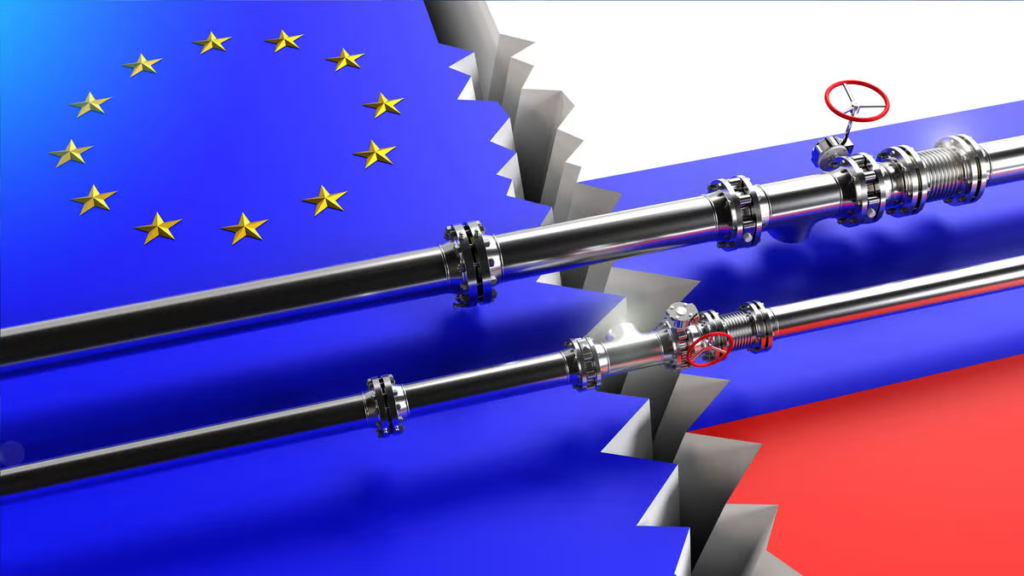
The attempt to extend sanctions based on the issue of ship insurance
By itself, a ceiling on oil prices from countries that already have a strict sanctions regime against Russia would not be very effective. The EU, for example, has already decided that from December 5th the purchase, transport and sale of crude oil and other petroleum products from Russia is prohibited, while from February 5th this will also be extended to refinery products.
But very early on the countries of the West (G7, EU and Oceania countries) found that a very large part of the planet was not willing to follow the path of sanctions and continued to trade normally with Russia, buying oil and natural gas from it.
For this reason and together with the ceiling, an attempt will be made to implement a “secondary mechanism” of sanctions which aims to ensure the application of the ceiling worldwide, as the ceiling mainly concerns markets outside the EE and G7.
This mechanism is the ban on insurance of ships carrying Russian oil if it is not priced within the limits of the ceiling, a ceiling that Russia apparently does not accept. Normally a ship cannot travel without insurance and the vast majority of companies that insure ships and their cargoes are within the G7 and EU borders.
This, indeed, could create a problem as at the moment, despite the steps taken to be able to insure ships outside the borders of Western countries, the relevant companies do not have the volume and capital adequacy to do so. However, Russia has also formed a mechanism for the insurance of Russian ships, but India has also formed a similar mechanism.
We note that Turkey has announced that it will examine whether tankers passing through the Straits will carry the required insurance certificates.
The alternatives
- Of course there is currently a significant volume of ships that violate the sanctions anyway. These are the ships used to transport oil from Venezuela and Iran. To these can be added the ships that in any case belong to Russia. Of course, these are often ships that are subject to sanctions, while in winter cargo transportation there is also the parameter of whether the ships are certified to travel in seas with ice, a very important point for the transport of Russian oil, since many of Russia’s oil exports are from the Baltic, or follow the Arctic routes.
- To these can be added ships whose insurance is outside the countries applying the sanctions and which are not themselves subject to sanctions. These could carry Russian oil with less risk, although they are likely to command higher fares.
- Another issue that will be important will be the extent to which there can be easy ship-to-ship transfers, meaning similar OPL (Off Port Limit) locations in international waters as well.
- However, in 2022 Russia engaged in an intensive effort to buy tankers to bypass sanctions, usually 12-15-year-old ships that have a few years left in service. In particular, it is estimated that companies linked to Russia have bought 29 super-tankers, so-called VLCCs that can carry more than two million barrels of oil each, 31 Suezmaxes that can carry about one million barrels each and 49 Aframaxes that can carry about 700,000 barrels each. However, even so it is estimated that initially there will probably be a shortage of ships when the sanctions are fully implemented.
But will the rest of the countries comply?
However, the bigger problem is that even so a large number of countries, including really big buyers of Russian oil such as China and India, have shown no inclination to comply with Western demands and the sanctions mechanism, without of course underestimating any possibility to buy Russian oil at a discount. Moreover, it is reasonable to estimate that in the medium term the problems in relation to the insurance of the ships and more generally ensuring that there are enough ships that can not be directly subject to the sanctions can be overcome.
Therefore, the costs that will be incurred for Russia, from one point forward, will hardly be of a scale that could actually bring it to its knees. Something that brings back the difficult question of a political exit from the impasses of the war.