
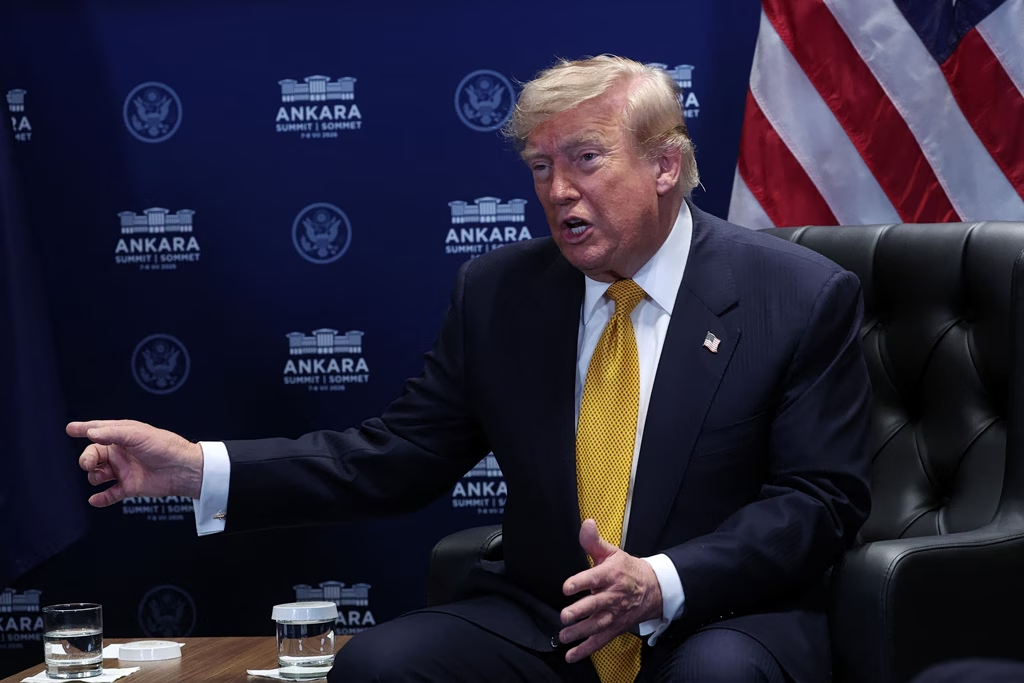
There were gasps in Brussels and European capitals as the results of the US mid-term elections were announced, as Europeans expected the worst, namely a triumphant Republican victory that would bolster the arrogance and dynamism of Donald Trump.
Despite the substantial difference between Biden and Trump, the US has some systemic features that maintain uncertainty and should make the Europeans take on additional obligations and reduce their strategic dependence on the US.
The crucial question is whether the E.U. will it use the window of time provided by the pleasant surprise of the US mid-term elections to take on additional obligations and balance its relations with the superpower, or will it continue to postpone critical decisions.
In the E.U. the opinion prevails that qualitative leaps have been made in the direction of strengthening European defense and the so-called strategic autonomy vis-à-vis the USA.
As such examples are presented:
- Germany’s decision to increase its armaments programs by 100 billion euros and finally catch the NATO target of annual defense spending by member states of at least 2% of GDP.
- Denmark decided, after a referendum, to take part in the effort for a common European defense.
- Finland and Sweden have decided to abandon their traditional policy of neutrality and push for fast-track NATO membership in order to more effectively counter the Russian threat.
- The creation of a small Euro-army of the order of 5,000 soldiers who will be immediately available from the EU member states is also progressing in case of emergency.
All of the above has its importance, but it does not remove the fact that the Europeans are deliberately lagging behind in terms of defense and military support for Ukraine, making them too dependent on the US for their security.
According to the Kiel Institute for the World Economy, the US has already released 25 billion euros for military aid to Ukraine, the United Kingdom 4 billion, Poland 1.8 billion, Germany 1.2 billion and France only 233 million euros.
The military victories of the Ukrainians are mainly based on the contribution of the Americans and the British, while from the EU countries Poland and the three Baltic Republics have taken on the biggest obligations in relation to their financial capabilities.
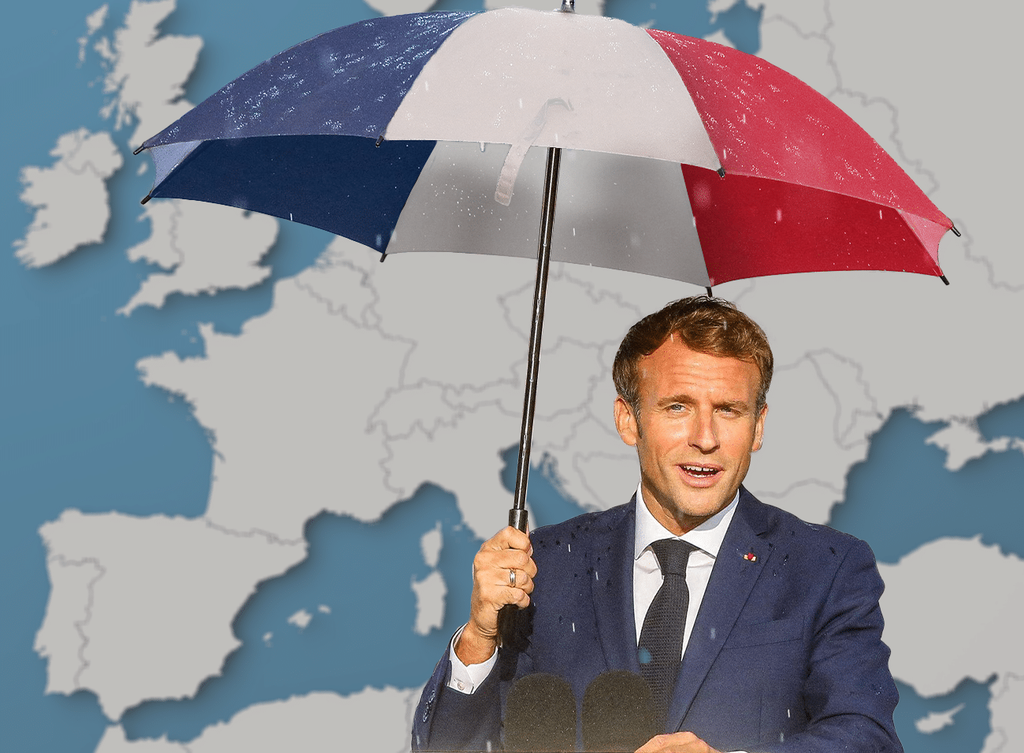
France, which usually argues in favor of the strategic autonomy of the E.U. compared to the USA, it has a minimal contribution to the military support of Ukraine, while Italy and Spain appear extremely sparing.
The result of this situation is that Poland, Estonia and Lithuania – member states of the E.U. who see themselves as directly threatened by Russia – conclude that the main guarantor of their security is the US and NATO. In their opinion, there is no reliable European defense, nor the prospect of obtaining one since, at the time of great danger, “old Europe” avoids assuming its obligations and strongly supporting Ukraine. It is obvious that if the European military aid to Ukraine was comparable to that of the USA and the UK, the Russians would have been forced to leave except Kherson and other areas of strategic importance.
With most European countries shirking their obligations to Ukraine and becoming comfortable with over-reliance on US strategy, backlash against the US is intensifying, particularly among Republicans.
To date, the US government has pledged military and economic aid to Ukraine in the order of 52 billion euros. The Republican base has begun to react negatively to this situation. According to a recent poll, 48 percent of Republicans think the U.S. is doing too much for Ukraine, while that number drops, among Americans as a whole, to 30 percent.
With high inflation and a large budget deficit, the US may at some point find it necessary to limit its support to Ukraine.
The Europeans are setting a bad example for them by contributing much less to Ukraine’s defense and economy. They also offer with their stance a strong argument to Republicans who may ask to limit American aid to Ukraine to… European levels.
The war in Ukraine is a war in the heart of Europe that can threaten the security and even the integrity of EU member states. It also has dire consequences, such as the creation of millions of Ukrainian refugees fleeing to EU countries. or the long-lasting and intense energy crisis affecting the European economies.
The more European military and financial support for Ukraine increases, the more the cost of continuing the aggressive war will rise for Putin. Also, a more balanced strategic relationship with the US will be formed with more incentives for the Americans to continue the good effort and strengthen European defense and security and European strategic autonomy.
For now, the Europeans – with some honorable exceptions – are unable to rise to the occasion, thus providing opportunities for Putin and increasing difficulties and risk for the EU.


