




After the results from the midterm elections, the Republicans are looking for a new party “savior”. The “civil war” was raging in the Republican ranks before the US midterm election polls even opened. Once they closed, however, it took on other dimensions.
As Donald Trump prepares – unexpectedly – to announce in a few hours his candidacy for the party’s presidential nomination for 2024, his internal party critics are now openly “pointing” to him as the main culprit for the meager electoral gains.
Despite the problems in the economy and President Biden’s low popularity ratings, the Democrats managed to maintain control of the Senate and minimize losses in the House of Representatives, where the balance of power has not yet been decided.
“This is the third election in a row that we’re paying the Trump price,” Maryland Republican Gov. Larry Hogan publicly complained, referring to the 2018 midterm elections (in the middle of Trump’s presidency), the 2020 presidential election and the last week.
In the party, the debate about the post-Trump era is now well and truly open.
But the “shadow” of the former president has remained heavy for six years on the Republicans and it seems that it will continue in the future, if one takes into account that even the alternative “saviors” that are being discussed are essentially his political “children”, despite late differentiation from their “mentor”.
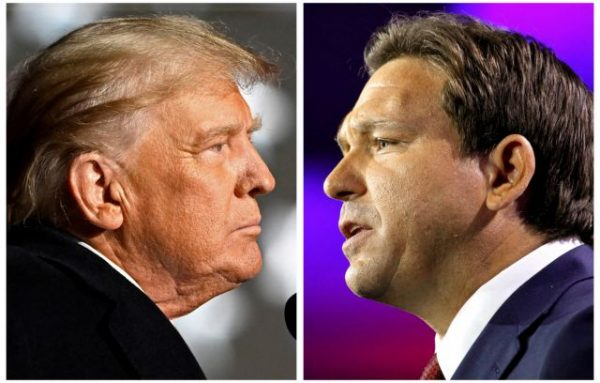
Looking for a… Political “Messiah”
As usual, Trump denies the accusations. The day after the mid-term elections he admitted that the mid-term elections “were somewhat disappointing in some ways”.
He insisted, however, that “from a personal point of view it was a great victory.” To be precise, “219 WINS and 16 defeats in total,” he emphasized, referring to the performance of the hard-line Republican candidates he personally supported.
“Who did better?” Trump asked. The answer given by many to his party today is “DeSandis”.
Florida’s Republican governor did pull off a triumphant re-election, with a margin of nearly 20 percentage points over his Democratic opponent, Charlie Crist, making the critical (as has been proven in a series of presidential contests) Republican bastion state.
Many party officials and donors have already turned to DeSandis: a politician who is essentially as ultraconservative as the former president on critical issues, including immigration, abortion and the rights of the LGBTI+ community.
Despite all this, American media present him as “Trump with brains”, mainly because he avoided adopting his “teacher’s” narrative of “stolen vote” in the 2020 presidential election.
The fear is that the internal party civil war will take open proportions, amid an allegedly tough negotiation by Trump with the moderate wing of the party for the next day, even regarding his open legal cases.
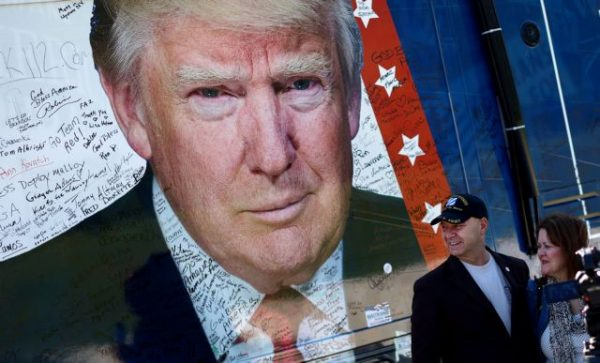
Republican Party: Party without a “compass”
The ongoing Republican introspection is self-indulgently belated and scathingly Pharisaical.
It comes nearly two years after far-right supporters of Donald Trump stormed Capitol Hill, with the party raising the issue of discipline over its members’ participation in a special investigative committee of the outgoing House of Representatives.
It comes against the backdrop of the former president and his co-conspirators’ persistent refusal to recognize the outcome of the 2020 presidential election, thereby openly challenging the very constitutional order in the US.
It is taking place while the party is going through a leadership crisis and its cohesion is mainly based on hostility towards the agenda – political, economic and social – of the Democrats. Now aware that Trump’s extreme rhetoric is scaring his moderate base and alienating undecided voters.
According to Republican pollster Whit Ears of North Star Opinion Research, the Republican electorate is now split into three categories.
Only about 10% are outright anti-Trump, it says. A much larger group, around 40%, are “bitten” Trumpites: a hardline base that will never abandon him, making the prospect of an independent electoral descent for the former president a nightmare for his party.
The other 50 percent are vacillating between those two extremes, with Republican voters who have supported Trump with their ballots, generally like his policies, but now say they’re willing to turn the page.
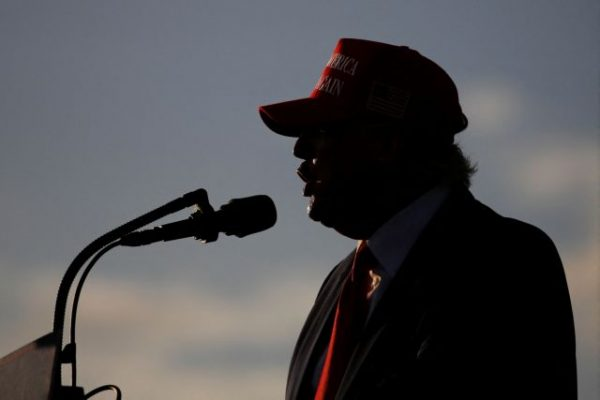
The day of judgment is approaching
The list of would-be “alternative” Republican presidential candidates, meanwhile, remains long. In addition to DeSandis, former Republican House Speaker Newt Gingrich also mentioned Virginia Governor Glenn Youngin, also a former “protégé” of Trump.
As for the 76-year-old billionaire former president? He is reportedly deaf to calls to delay his plans until at least the Georgia runoff for the Senate (which won’t overturn the Democrats’ victory in the chamber, but will determine the extent of their marginal majority).
Instead, he is preparing to make what he has heralded as “the most important announcement in US history” from his Florida mansion.
Event, to which a number of executives and distinguished supporters of the Republicans have been invited. “Betting” on mass attendance, as his colleagues emphasize, the former president will note who attended and who did not…
