




Russia and China express concern over US efforts to deploy weapons systems in space “designed for the threat or use of force”.
Russian engineers have found weaknesses in the Starlink satellite communications system, according to a vulnerability analysis published on the blog of the New York-based Association for Computing Machinery, as Moscow recently threatened to target Western satellites used by the military in Ukraine.
The Starlink system includes three main parts: satellites in low orbit, a network of ground stations and a network of end users. Spaceships play the role of simple repeaters. The signal is fed to them from ground stations and redirected to the users’ terminals.
The orbital constellation includes about 3.5 thousand satellites, which are located at an altitude of 550 km. A large number of satellites and their distance from the Earth, make this component of Starlink the most protected from external influences, Russian engineers are sure.
The recently unveiled SLC-18 radar seeks to blunt America’s space intelligence advantage and could soon be exported to America’s adversaries.
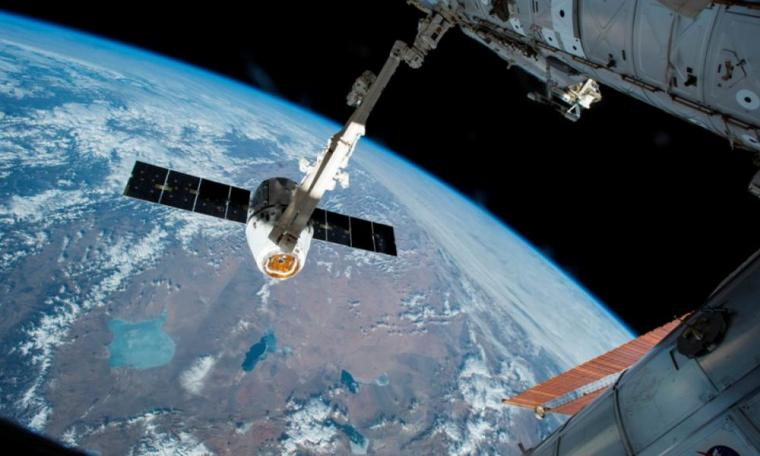
China’s new electronically scanned array radar aims to blunt the military advantage satellite information has long provided, raising proliferation concerns in Washington and other Western capitals.
The 10-meter-tall SLC-1 radar unveiled at this year’s Zhuhai Airshow can detect and track low-orbit satellites and predict their paths, manufacturer China Electronics Technology Group Corporation (CETC) claimed.
He also revealed that with the right geographic location, an SLC-18 radar network can track all satellites traveling in a certain area and predict the arrival of others, allowing commanders on the ground to respond.
CETC deputy director Sun Rui says the US is currently deploying constellations of low-orbit surveillance satellites, which means a detection system must be able to detect, identify and react quickly. He said the use of satellite surveillance in modern warfare makes it imperative for militaries to have satellite tracking capabilities in a specific area to avoid detection, engage in deception maneuvers or jam enemy satellites.
From a proliferation perspective, the SLC-18 may be available for export, with Pakistan, Iran, North Korea as well as other potential allied customers.
Space reconnaissance provides enormous advantages to military operations, including at the strategic and tactical levels. Prominent examples of these advantages were seen in the Iran-Iraq war of 1980-89 and the ongoing war in Ukraine.
Russia has threatened the Pentagon to turn its satellites into orbiting pieces of metal. “American commercial satellites become legitimate targets if used during hostilities in Ukraine,” warns Konstantin Vorontsov, deputy director of the Russian Foreign Ministry’s Non-Proliferation and Arms Control Department. Similarly, commercial satellites have been instrumental in the Russia-Ukraine conflict.
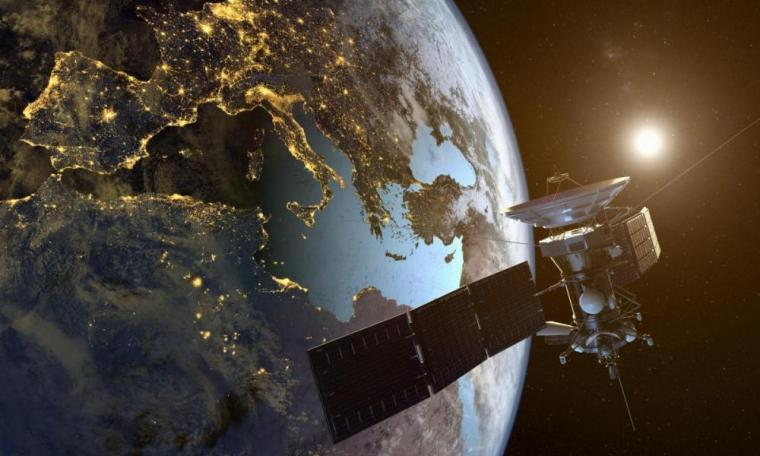
The use of commercial satellites for military purposes can be seen as a “grey zone” move by the US, and underscores the need for anti-satellite capabilities by China and other US adversaries.
Although Russia has threatened to attack private commercial satellites that provide information to Ukraine, the consequences of such a move are unclear and would likely signal a major escalation in the Ukraine war.
China is not the only country making recent advances in tactical-level ground-based satellite tracking technology. Australia-based Silentium Defense had built a “space observatory in a box”, a passive satellite tracking radar that could fit in a container along with all the necessary components, such as power supplies and computers.
The report said users could deploy the system to fill coverage gaps left by existing space-based tracking systems, and Australia could choose to export the system to countries that no longer have space-based tracking capabilities. Silentium Defense’s system is said to have been developed entirely in Australia, meaning Canberra can export it to any country it chooses without US permission.
The emergence of small, mobile and affordable ground tracking satellites, such as China’s SLC-18 and Silentium Defense’s passive radar, may lead to the proliferation of such capabilities, blunting the future advantage of satellite information gathering in space.

