



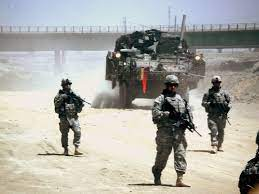
The US Army is considering equipping the infantry with new weapons systems, including a new type of grenade launcher (Precision Grenadier System), a medium machine gun and a new mortar for the airborne force.
The war in Ukraine highlighted the importance of infantry
When Russian forces invaded neighboring Ukraine on February 24, one of the first places they passed was the northeastern Sumy region. Thirty-nine days later, after heavy fighting throughout the province, the governor of Sumi announced that all Russian forces had withdrawn. Ukraine had won the battle.
The Ukrainian army had mounted a discontinuous strongpoint defense of the Sumy region. While static defense forces held strongpoints centered on urban and other key terrain, light infantry roamed the gaps between these strongpoints. This effort denied the consolidation, supply, and massing for Russia’s main effort to encircle Kyiv. Russia’s inability to secure its lines of communication through eastern Ukraine with its forward forces around Kyiv has forced Russian commanders to divert their troops and expose their vulnerable road logistics to threat. Ultimately, this led to an operational shift of Russia’s focus from Kyiv to the eastern and southern theaters of the conflict, abandoning large swaths of territory tentatively captured by Russian forces in their push toward Kyiv.
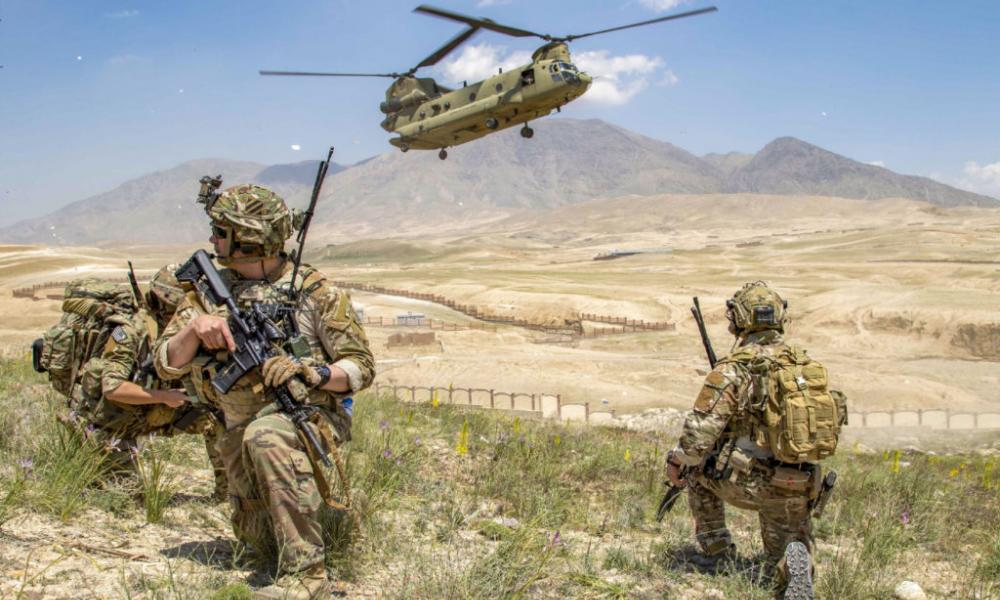
Sumi’s defense highlights an important lesson. It shows how mobile light infantry – armed with anti-tank guided munitions, supported by roving and unmanned aerial vehicles, and with a robust communications infrastructure – is the key to a successful strongpoint defense against a combined arms attack on the modern battlefield.
The new doctrine
Light infantry formations should be trained using adapted defenses at Army combat training centers, focusing on light, mobile infantry force operations outside of conventional defensive positions. This will likely also require a change in balance during each training rotation between light and heavy formations.
Mobility, survivability and lethality are foundations for successful close combat operations and cannot be taken for granted on the future battlefield. Likewise, combat in defense on a linear front against an enemy force cannot be considered a continuous, high-intensity, large-scale combat operation. This is a loophole in current US doctrine.
The U.S. military may find itself in a particular section of a theater or line facing an adversary that has mass, fire, and combined arms superiority, a situation that Germany faced on the Eastern Front and Ukraine faced in Sumy.
In a major conventional war, somewhere, even if only on a secondary front for the US Army, an infantry brigade combat team may find itself overexposed, unable to effectively exercise elastic defense and face a locally superior opponent. In this case, these infantry forces should be capable of adopting the defensive practice so effectively applied by the Ukraine in the defense of Sumy.
The developments and protracted nature of the war in Ukraine bring, as it does in these cases, rapid changes, with new methods of combat and equipment in the armed forces of many countries.
The new doctrine in Ukraine calls for “infantrymen” to operate in small groups along the lines of tank destroyers, command posts, supply lines and missile arrays.
Leaders in this new doctrine they are preparing are the Israelis, who are creating a new type of (let us use the expression) infantry-“terminator”, who, acting in small groups equipped with modern weapons, will be able to cause irreparable damage.
It is about the creation of small groups of infantry, (4-6 people) which equipped with floating ammunition-drones-communication systems-portable anti-aircraft systems, and reinforced rifles, will not only be able to inflict blows on any attempt to land enemy forces, but will they also guide helicopter-aircraft attacks to the target, timely and above all deadly effectively.


