The agricultural production is characterized as the industry with the least percentage of digitalisation at all stages of its production in relation to all other sectors of the economy at both national and global level. In addition to this the Agro-food industry also presents the lowest rate of establishment of newly established-startups-enterprises from all other industries.
by Thanos S. Chonthrogiannis
(Prohibited by intellectual property law or in any way unlawful use/appropriation of this article, with heavy civil and criminal penalties for the offender.)

Photo by Author: Susan Maran, Landsat 7 Science Team USDA Agricultural Research Service, licensed Public domain
The Agro-food industry and its future challenges
The Agro-food industry has a high degree of heterogeneity in terms of its structure and geographical location. It consists of many sectors, such as agricultural production, food safety, transport and distribution, marketing and consumption.
Each of these sectors presents distinct technological, financial and managerial characteristics and requires the implementation of corresponding distinct applied strategies in these disciplines.
In addition, the Agro-food industry presents due to geography different face and characteristics due to any constraints that exist at climate level, market size and consumer purchasing power respectively which differ from country to country.
But this whole scene tends to change based on the Sustainable Development Goals (SDG) set by the United Nations (UN) as part of its agenda (https://sustainabledevelopment.un.org, the 2030 Agenda for Sustainable Development) for all sustainable development to be achieved by 2030.
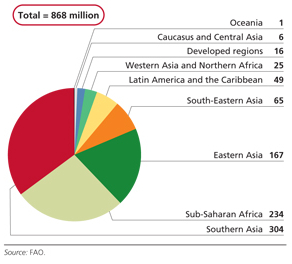
Photo by Author: UN Food and Agricultural Organization (FAO)
To achieve all these goals, large-scale funds should be invested in innovative technology in the Agro-food industry. The Agro-food industry in both the immediate and the distant future, both nationally and globally, will face great challenges that to conquer them need innovative technology in all areas that make it. The main challenges could be summarized in:
1. The growing world population is expected to reach and surpass 9 billion people in 2050.
2. Increasing climate change, which in turn creates increasing environmental change.
3. Changes in the dietary habits of an ever-growing population (worldwide) should make each time the Agro-food industry to adjust in these changes.
4. Replacing where it is necessary and modernizing the old ways of production, distribution, marketing and consumption.
5. The lack of necessary funds and resources.
6. The strict hygiene rules for even greater consumer protection.
Agro-food technology and nutritional technology
All these challenges to be conquered need a continuous technological modernization in all areas of the Agro-food industry and in all the individual stages that follows each sector that constitutes the Agro-food industry.
At the same time, however, all these above challenges create the anticipated high-in most cases-returns of all these investments that will take part in all the sectors of the Agro-food industry.
The Agro-food sector mainly includes the agricultural production and the food industry and all related industrial sectors. Agro-food technology and its application include all those technologically innovative solutions that find application in the primary agricultural sector i.e. sowing, cultivation and harvesting.
On the other hand, the innovative technology in the food/nutrition industry includes all those innovative technological solutions that apply to processing, distribution, food safety, marketing and food consumption.
Essentially, these innovative technologies optimize the traceability of the produced product from the sowing, cultivation, production, distribution and consumption phases and always within a transparency framework in order to maximize and ensure optimum quality for consumers and the optimum profit margin of companies operating in this industry.
Given that the overall current economic value of the Agro-food industry at a global level is approaching the size of $8 trillion, while employing 48% of the world’s workforce will have to make its importance extremely valuable in the eyes of investors.
The fact that the world’s largest companies in the Agro-food sector, e.g. Cargill (USA), recently adopted a program to modernize and adopt innovative technologies in all areas of Agro-food industry proves the “virgin” soil that the application of innovative technology will find in this industry.
Investments in the Agro-food industry
Biotechnology, digital management and the application of robotic technology at all stages of sowing, cultivation and harvesting, the implementation of bioenergy as well as the management of data in all areas of the Agro-food chain, it is these innovative technologies that will absorb and most funds.
But despite the magnitude of the value of this industry, the percentage of funds that have so far been invested, and always in relation to its economic size, is very small.
The food safety sector should be the one to absorb a significant proportion of these investment funds because behind food safety there is the reputation and goodwill of companies operating in the industry.
For this reason, the companies themselves should invest large sums of money in this sector by adopting the strictest measures and regulations without waiting for the state, which, following pressure from consumers and their respective NG organizations to enforce them.
We believe that the investors worldwide must invest more funds in this growing Agro-food industry because they are hiding higher future returns.

Photo by Author: Anna Frodestak, Source: Own work
licensed public domain
The objectives of the innovative technology applied to the Agro-food industry
The objective of developing and implementing new innovative technologies in companies operating in the sectors that constitute the Agro-food industry should be the gradual strengthening of all sectors of these enterprises in order to grow a constant empowerment with aim to acquire more and more competitive advantages.
The continued strengthening of these competitive advantages of these companies will lead them to increasingly increasing export sizes to international markets, and even more to the conquest increasing proportion of the domestic market in the countries which they locate their headquarters.
The developing competition in this industry both domestically and globally will reduce the product prices in even higher safety food standards skyrocketing the consumption. This result will be seen both in their annual corporate earnings and in the increasing value of the companies’ shares.
On the other hand, the industry of the Agro-food industry should, for its better economic adequacy and efficiency, consist of both large enterprises but even more in number of small enterprises that will be highly specialized in more than two sectors of the Agro-food industry, which together will be able to act in combination and complementary between them while working in parallel within a common geographic network.
The USA remains the world’s largest country in the development and implementation of new innovative technologies in the sectors that constitute the Agro-food industry. While Canada, Ireland and Israel are countries that follow it in this action, increasingly consolidating their positions in world consumer markets.
Countries such as the EU (Germany, France), Japan, follow while countries like China, Russia, Brazil, India have covered important ground in this type of application of new innovative technologies in Agro-food technology intensifying even more global competition claiming an even higher percentage of what they already possess in the world pie of the Agro-food industry.