After the strong resistance of the Ukrainian army that surprised many, there was a wave of enthusiasm on the part of the international community, who believed that the supposedly powerful Russian army could be defeated and President Vladimir Putin could emerge humiliated from the invasion. The reality of the last days on the Battlefield has come to refute any maximalist claim.
The raids in the east are intensifying, only 5% of the territory in Lugansk is now controlled by the Ukrainians (a week ago it was only 10%), while the day before yesterday, after almost 14 days of calm, the attacks in Kharkov, the second largest city, resumed. of the country with a population of over 1.4 million – near the border with Russia – implying that the city has not been permanently removed from the Russian agenda.
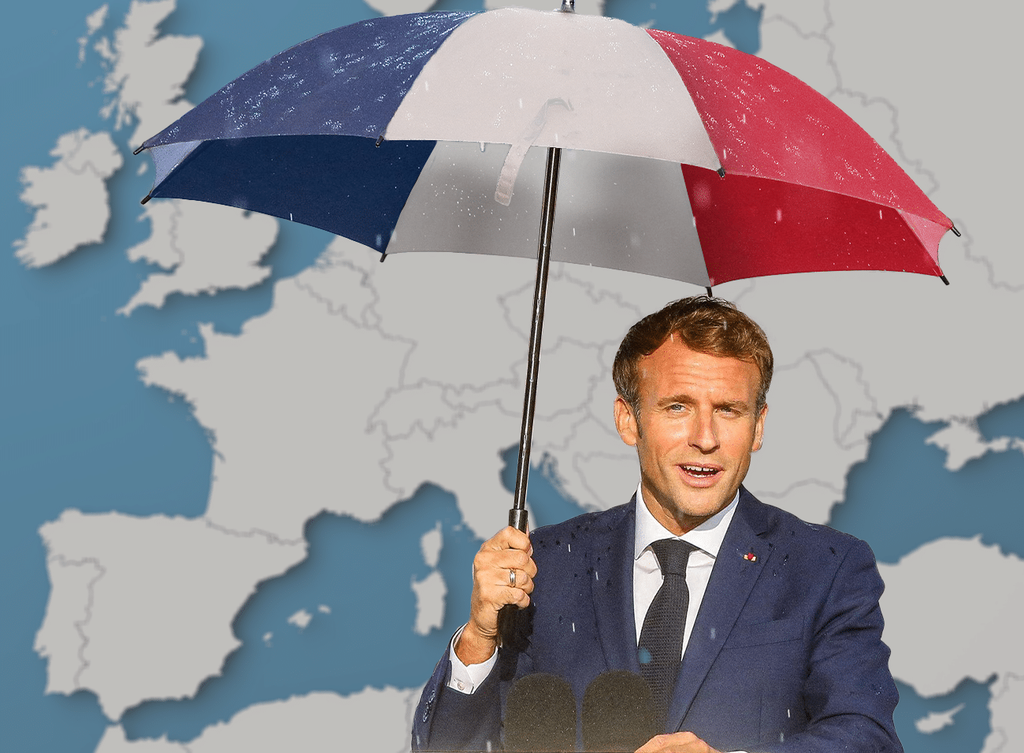
The tone of the debate that wanted Kyiv capable of even claiming the return of Crimea annexed by Russia in 2014 has changed completely. France, and in part Germany, is now openly pushing for a compromise, given the concessions made by Ukraine. French President Emmanuel Macron and Chancellor Olaf Solz have repeatedly said that Kyiv is the one that should dictate the terms of a ceasefire, but it is clear that they are in favor of a ceasefire that requires concessions.
Italy, for its part, has drawn up a four-point proposal, which Russia is currently rejecting. “You can not supply arms to Ukraine with one hand and ask for a peace plan to resolve the crisis with the other,” Russian Foreign Ministry spokeswoman Maria Zakharova said of the Italian plan. The plan calls for a ceasefire and demilitarization of the Line of Contact, a neutral status for Ukraine, broad autonomy of Crimea and Donbass within Ukraine, and an EU-Russia agreement to ease sanctions against Russia in exchange for the withdrawal of Russian troops.

The resistance of the Baltic states and Poland to the end of the war was strong
The division in Europe is high, as on the opposite bank are the Baltic states and Poland, who believe that the continuation of a policy of appeasement of Vladimir Putin, like the one followed by the major European capitals in terms of invasion of Ukraine, will further encourages its geopolitical ambitions and enhances its aggression. The aim, in their opinion, should be to defeat the Russian army, which at this stage seems utopian.
At the same time the civilian death toll in Ukraine has exceeded 4,000 since the beginning of the war, the Russian blockade of Ukrainian grain in the Black Sea port warehouses threatens the world with a global food crisis, which adds to the energy crisis and inflation.
Even the United States, which at first believed in a protracted war in Ukraine and has spent tens of billions of dollars on aid, seems to be rethinking it, with a portion of the US establishment considering a compromise inevitable.
Ukrainian President Volodymyr Zelensky himself said on Friday that he no longer looked forward to talking to Russian President Vladimir Putin, but that he would have to face the reality that this was necessary to end the war. The question is what Putin would accept because an end to the war or at least a temporary truce should be negotiated with him. The Russian President himself has not explained what would be an acceptable compromise point and Russia. Russia has already begun to build in Donbas, as Vladimir Putin signed a presidential decree simplifying the process of granting Russian citizenship and a passport to residents of the newly occupied territories. The hasty Russification of Donbass allows Russia to build a continuous land bridge from Belgorod to Russia to Crimea and Kherson, cutting off the Sea of Azov from Ukraine.