The withdrawal of the US-NATO Armed Forces from Afghanistan and the acquisition of executive power by the Taliban, which after the terrorist attack of 9/11/2001 were the world ‘s fiercest terrorists, among other things, raises questions that require answers as to account for both human lives and financial costs for the ongoing effort to eradicate terrorism from the planet.
by Thanos S. Chonthrogiannis
©The law of intellectual property is prohibited in any way unlawful use/appropriation of this article, with heavy civil and criminal penalties for the infringer.

The United States may have left large amounts of military equipment in the hands of the Taliban – even if the United States believed it would be owned by the Afghan Armed Forces – e.g. state-of-the-art weapons systems, rifles, helicopters, aircraft, combat vehicles, state-of-the-art anti-tank weapons systems, etc., and although the Taliban are currently unable to use them, with the help of Pakistan, Turkey and Qatar are able to do so in the future.
Only the air force acquired by the Taliban with 58 aircraft and helicopters exceeds the respective airports of seven NATO member countries.
The cost of terrorism to human losses
Twenty years of war on terror have ended in Afghanistan after the withdrawal of the Western Armed Forces from it. According to the “Cost of War” report of the Watson Institute for International & Public Affairs of Brown University (https://watson.brown.edu/costsofwar/) it is shown that the total cost of the wars that took place after 9/11/2001, in Afghanistan, Iraq, Syria, Yemen, Somalia etc. cost the lives of about 897000-929000 casualties.
The financial cost
Continuing this report-study shows that the corresponding economic costs in each of the regions of the world cost the US in
• $ 2.3 trillion for Afghanistan/Pakistan battlefields
• $ 2.1 trillion on the Iraq/Syria battlefields.
• $ 355 billion for the battlefields of Libya, Somalia, Yemen, etc.
• $ 1.1 trillion in internal security programs.
• $ 2.2 trillion in the cost of caring for U.S. veterans who served in all these wars.
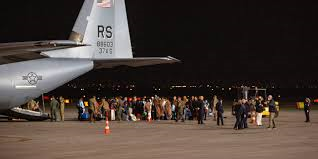
At the same time, the report states that about 15,000 members of the US Armed Forces and members of mercenaries have been killed in these wars. The same number of casualties apply to US Allied troops taking part in these wars.
Another report by the National Priorities Project as the Institute of Policy Studies (https://www.nationalpriorities.org/) shows that total spending on increased military operations, internal surveillance, and U.S. border security over the past twenty years has cost about $21tris.
The above figures give rise to a strong general concern in the United States about why there was no strong reaction from American public opinion about the withdrawal of US troops from Afghanistan and about the “less dead” Afghan civilians who collaborated with the US and stayed behind. (Please read the analysis entitled “Afghan Western Partners: “The Less Dead”).
This intense general concern, combined with China’s continued rise, led to a change in US foreign policy and the substantial withdrawal of the United States from the Middle East, the Mediterranean, and Afghanistan, replacing them with allies.