Mark Rutte, the more than ten-year in his position Dutch Prime Minister and Leader of the Liberals, once again repeated his victory in national elections in the Netherlands and won his fourth consecutive term.
With the momentum presented by Mark Rutte, he is certain to take the place of the EU’s longest-term stateman and political leader if Angela Merkel makes her departure from the German political scene in September 2021.
by Thanos S. Chonthrogiannis
©The law of intellectual property is prohibited in any way unlawful use/appropriation of this article, with heavy civil and criminal penalties for the infringer.

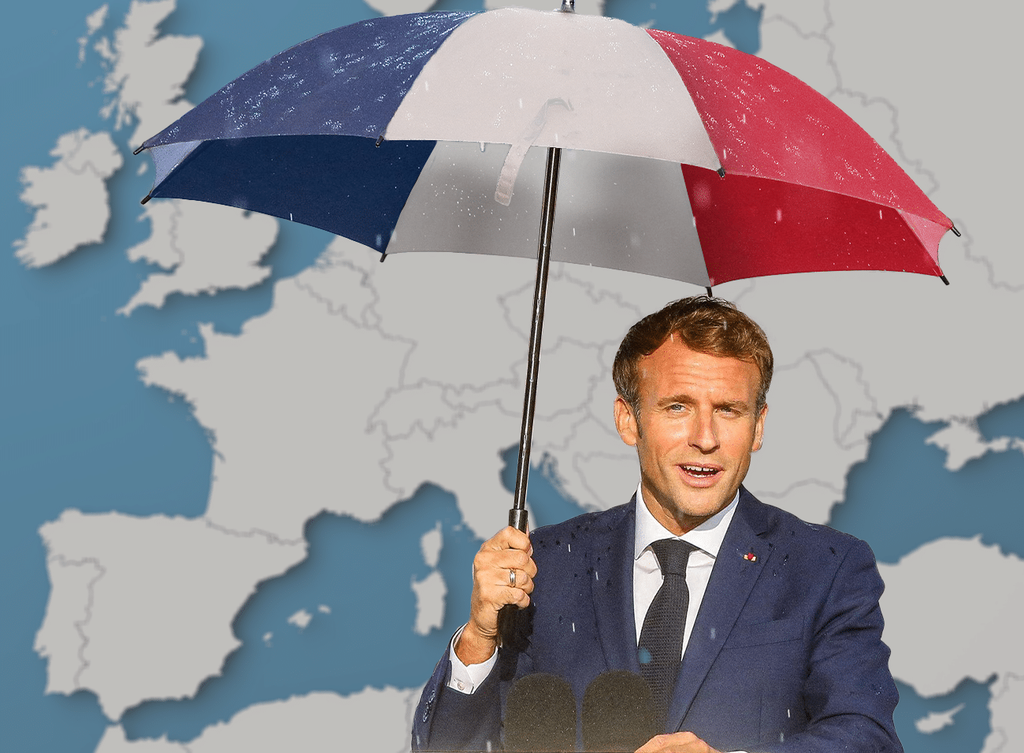
Photo by the website www.newmoney.gr
What is certain is that the Covid-19 pandemic and the way it was managed did not affect the political fortunes of the Dutch Prime Minister in the recent national elections, despite the reactions of some of the population to the restrictive measures imposed.
What gave points to the conscience of the Dutch people regarding Mark Rutte was the reduction of taxation on employees and the support of the national health system (NHS). In addition, the management of the economy was the trump card in Mark Rutte’s election battle.
More specifically, the Netherlands’ GDP fell by 3.8% in 2020, when the fall in its GDP respectively during the 2008 global financial crisis was 3,7% for 2009.
The performance of the Dutch economy is extremely good. In 2019, the Netherlands had a budget surplus of 1.7% of GDP, while in 2020 – due to the health crisis – it had a budget deficit of 6.2% of GDP.
The Mark Rutte government spent €34bn (4.2% of GDP) to support the economy in 2020, while offering a significant deferral in tax payments, tax-relief, and significant government guarantees.
€28bn (3.4% of GDP) is projected to be spent in 2021 to support the economy. The great advantage of the Dutch economy, which for the last ten years will have to be credited to Mark Rutte and the Liberals, is that it entered the crisis with general government debt (public debt) at 48.7% of GDP below the GDP threshold set by the Maastricht Agreement.
In this way, the Dutch Government could fearlessly enter lending to support the economy.
In addition, the Dutch financial system appears to be taking a significant chunk of turnover from the City of London, while trade routes appear to be heading for Dutch ports and logistics businesses due to Brexit.
The Dutch people participated in the elections with 82.6% in 2021. In the Netherlands, the electoral system of simple proportionality applies without any restrictions. The number of votes is divided by the number of seats in Parliament (150).
Three main parties in the outgoing governing coalition (VVD, D66, CDA) control 74 of the 150 seats. They will certainly continue to work together but will seek additional support to pass the 75-seat threshold to secure a parliamentary majority. They will also have to achieve a majority in the Senate, which is to be expected.
The far-right has secured 29 seats. The left was the big loser in the parliamentary elections where overall it secures PvdA 9 seats, the Left Socialist Party 9 seats, and the Green Left 7 seats, respectively. Fourteen parties have secured two seats.
One of Mark Rutte’s political and managerial qualities is that he has a high degree of adaptability depending on the situations he faces, showing a high degree of political flexibility.
But Mark Rutte’s success is based also on his style and attitude. He is simple in his behavior, a workaholism, a competent and effective administrator and respects all the rules set by his government to deal with the health crisis.