The undermining and fragmentation of Russia is an old, perennial plan. For the sake of brevity, let us begin the list of attacks against Russia with:
- The Crimean War (1853–1856). Russia was not ultimately defeated, but it lost its right to a Black Sea fleet and had to wait until 1871 to regain it.
- The Russo-Japanese War (1905)—an endeavor financed by the City of London—was the next assault on Russia’s military power.
- The First World War, combined with the October Revolution (1914–1917)—which led to the collapse of the Tsarist Empire—followed shortly thereafter. However, with the victory of the Bolsheviks, the British lost control over the course of political events.
- The Second World War elevated the Soviet Union—of which Russia constituted the major part—to the status of the world’s most powerful land force. The collapse of the Soviet Union (1991) led to the sell-off of its most valuable industries through oligarchs who were financed by the Rothschilds and other Anglo-American bankers.
This brought the City of London closer than ever to achieving its ultimate goal. In addition to the funds provided by their patrons, the oligarchs under Yeltsin wielded political influence that could be described as significant, if not total.
It was only after the election of President Vladimir Putin that the reins of power were wrested from the oligarchs—and, by extension, from the City of London.
This is one reason why the British loathe Putin—much as the devil loathes holy water.
Today
Today, Britain and the EU continue to pursue the objective of weakening Russia—to the point of its eventual collapse or fragmentation—in order to gain access to its natural resources. (The objective of the US, under its current leadership, remains somewhat nebulous thus far.)
The blueprint for this strategy was published in 2019 by the think tank RAND Corporation, under the title “Extending Russia.” We also note that the EU High Representative for Foreign Affairs and Security Policy, Kaja Kallas, has stated that “Russia comprises many different peoples and ethnicities, and a smaller, less centralized Russia would not be a negative development for the geopolitical balance.”
Wars have caused Russia to bleed, suffer, and weaken, yet they have never succeeded in heralding its collapse.
The events of 1917 and 1991 confirmed the (paraphrased) assertion by Clausewitz that Russia cannot be defeated from the outside—it can only be destroyed from within. Efforts made after the year 2000 to install figures such as Navalny or Khodorkovsky were inconsequential; they failed from the outset due to these individuals’ lack of standing within Russia.
The proxy war on Ukrainian soil represents yet another assault by the West—waged through every available means, whether military, political, or economic—and it continues to fail spectacularly.
Never has Russia been stronger—militarily, economically (Russia holds the lowest debt in the world, with the exception of a few small states), or socially. It should be noted that the overwhelming majority of the population fully supports Russia’s geopolitical direction.
The Middle East as an out-of-control problem for the US
Unlike other political actors, it appears that the US has begun to realize this with increasing clarity—especially now that, in addition to the war against Russia in Ukraine, a problem has emerged in the Middle East that also seems to be spiraling out of their control.
The consequence would be the total loss of US influence in a region where they had held sway since the Second World War. First, they displaced the British in Saudi Arabia, and subsequently—following the “Ajax” coup (1953)—they sidelined the British in Iran as well.
In 1979, they lost one of their two major partners: Iran. The Iran-Iraq War (1980–1988)—which they later instigated—may have benefited the American defense industry and, initially, US oil interests in Iraq; ultimately, however, it failed, owing to the resilience of the Iranians. The subsequent conflicts that began in 1991 (Iraq in 1991, Afghanistan starting in 2001, Iraq in 2003, Libya in 2011) were, in turn, a bonanza for the military-industrial complex; yet, they left behind nothing but destruction and death, and yielded no viable business outcome for the United States.
After spending a quarter of a century trying to persuade every U.S. president to launch an attack on Iran, Netanyahu finally succeeded with Trump in February 2026.
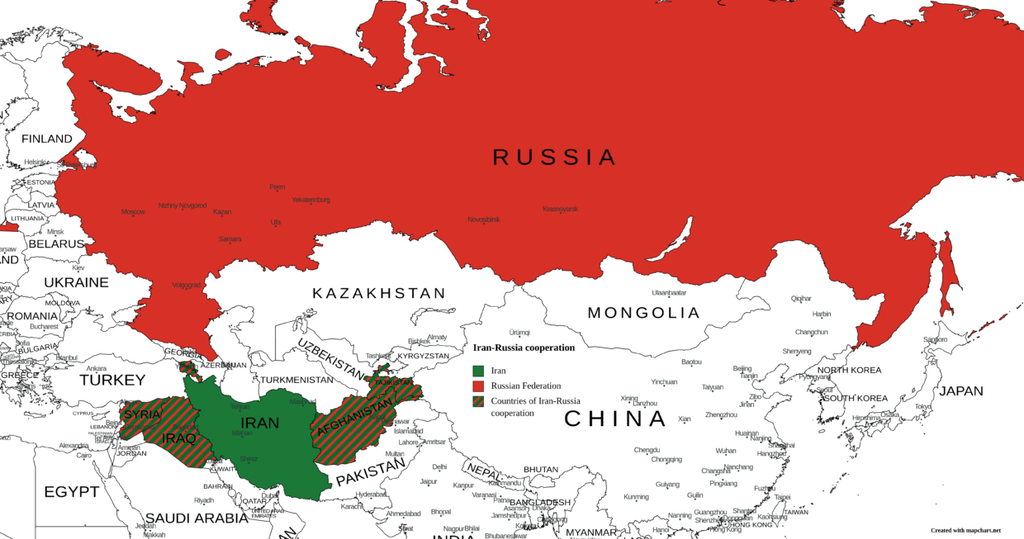
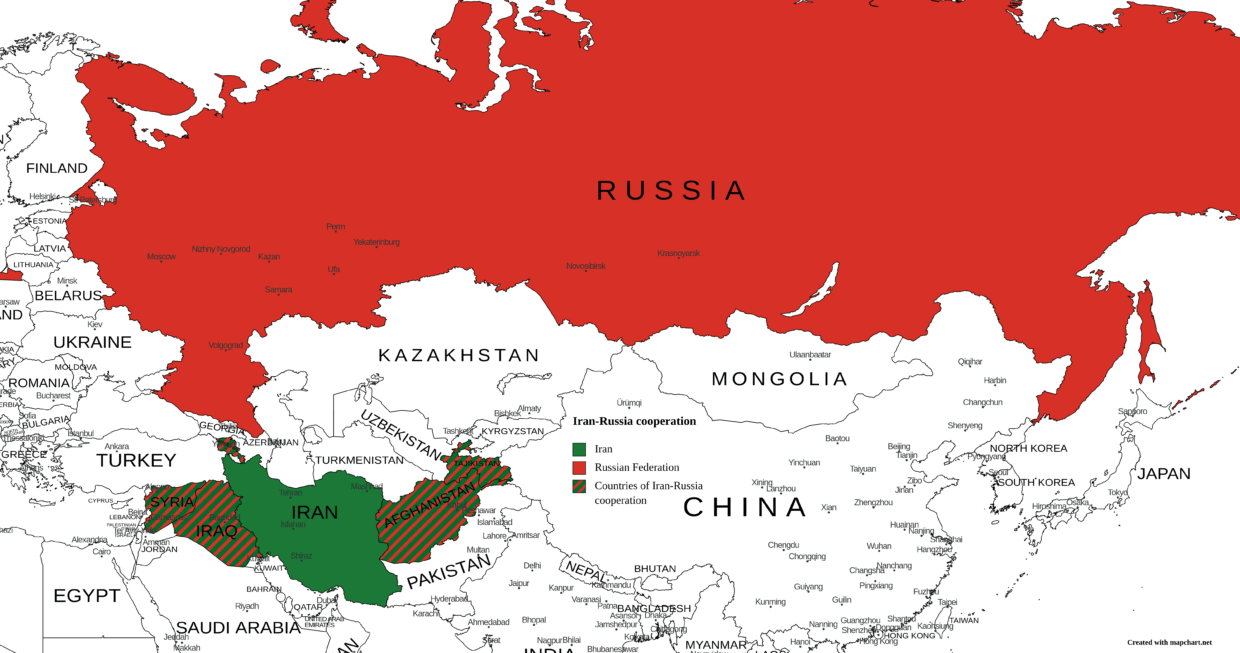
The result was—and remains—not only a military fiasco for the United States and Israel, but it also led to the strengthening of the “Axis of Resistance” on a scale that neither Israel nor the U.S. had ever anticipated.
- The Strait of Hormuz is controlled by the Iranians, in conjunction with Oman.
- The Bab el-Mandeb is controlled by the Houthis (Ansar Allah), who appear to have the best chance of toppling the House of Saud. The assistance the House of Saud receives from the French and the British is limited to the personal security of the sprawling royal family, while Saudi Arabia’s armed forces consist of well-paid mercenaries who are growing rich but certainly have no desire to sacrifice their lives fighting the Houthi rebels.
- The situation is similar regarding the “official” armed forces of Yemen.
- Furthermore, the regime in Iraq could be toppled, and the situation in Syria is likewise unstable.
- The Mecca Agreement has yielded no results thus far, because no one is willing to invest blood.
The domino effect in the Middle East if the House of Saud falls
If the House of Saud falls, the other Gulf monarchies will inevitably follow. The result would be a complete territorial and political restructuring of the entire region—a region originally mapped out by the British and the French under the Sykes-Picot Agreement.
Through this agreement and the subsequent British influence, the following countries were “established” by the 1970s to secure Anglo-Saxon dominance: Syria, Lebanon, Iraq, Palestine, and Transjordan (which later became Jordan), as well as—subsequently—Saudi Arabia, Kuwait, Bahrain, Qatar, the United Arab Emirates, and Oman.
All these countries are at risk of collapse. They are not organically developed nation-states, as they lack a shared national identity.
They are artificial constructs—corporate entities whose leaders have been endowed with wealth and power to represent the interests of their founders.
These constructs survive only as long as they are not under pressure; in the event of a crisis, their populations prove entirely incapable of recognizing for whom—or for what—they are actually fighting.
Why have the US lost their influence in the Middle East?
Although the US, together with Israel, is currently making extensive preparations for war, another bombing campaign against Iran is unlikely to yield any progress for the US-Israeli front.
The “Mother of All Bombs” (GBU-43/B MOAB)—currently a subject of discussion—is indeed the largest conventional American bomb, weighing approximately 10 metric tons; yet, it would do little more than stir up some dust around Iran’s key military infrastructure, which lies buried beneath at least a thousand meters of granite.
Even nuclear weapons would achieve nothing, serving only to cause radioactive contamination. Furthermore, the Iranians have already warned that, in the event of an attack, they would reduce the Gulf states and Israel to ruins and ashes—a scenario that experts believe is genuinely plausible.
A ground invasion of Iran can be ruled out, as it would require several million troops—at the very least—to stand a chance against an Iranian military that currently numbers at least 3 million armed personnel. The US simply does not have such an army at its disposal—neither with nor without NATO support. As a marketing ploy, the US might conceivably seize a small island in the Gulf, but the rationale for such an attack defies all military logic.
The same applies to the Houthis. Bringing the rebels under control would also require significant ground forces. Yet, in this case too, nothing is likely to happen that would actually weaken the Houthis’ position.
We estimate that the chances of the US being able to maintain its position in the Middle East are minimal. The US has completely underestimated the Iranians, the Houthis, Hamas, and Hezbollah, while overestimating the Israelis.
Life and history have shown, time and again, that underestimating an adversary can lead to disaster. Germany’s invasion of the Soviet Union serves as one such example.
Sun Tzu’s The Art of War—a classic, 2,500-year-old treatise—is taught at American military academies; yet, evidently, it is neither truly understood nor put into practice. Knowing one’s enemy, one’s own forces, and—above all—one’s own weaknesses is, without a doubt, the most important prerequisite for winning a military conflict.