



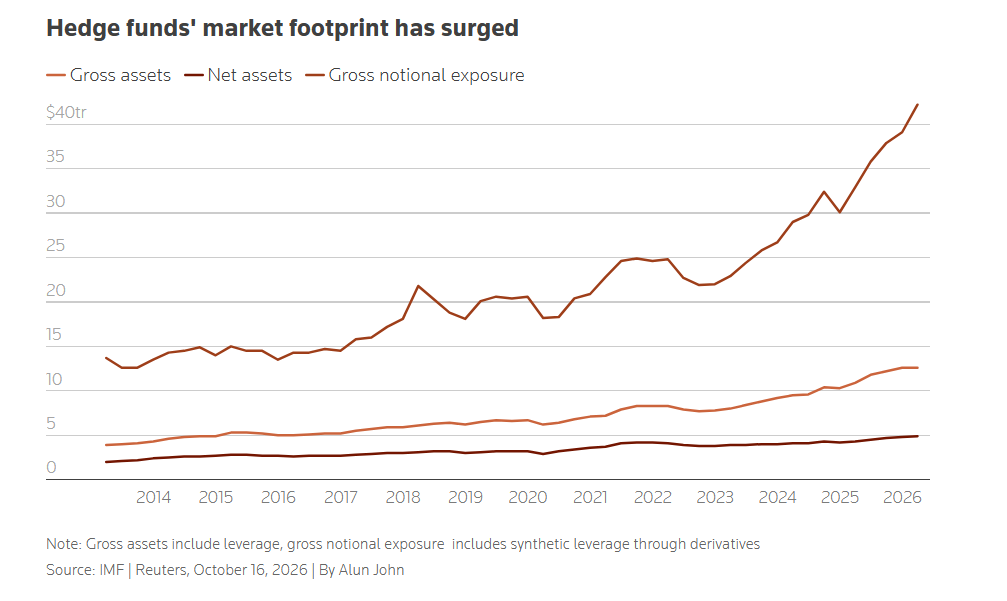
The Eurozone faces a source of instability that originates not within finance ministries, but in international financial markets. Hedge funds are steadily expanding their presence in Europe’s sovereign bond market—a market valued at approximately $13 trillion—thereby gaining increasing influence over the transactions that determine yields and, consequently, the borrowing costs for governments.
Hedge funds now account for more than 50% of market transactions, up from approximately 30% in 2020; this underscores the significant weight they have come to hold in shaping daily market activity and liquidity.
The $13 Trillion and the Actual Holders of Debt
The critical question is who finances European states and who influences the prices of their bonds. The market does not consist of a single category of investors.
Holders of sovereign securities include banks, insurance companies, pension funds, investment funds, foreign institutional investors, official entities, and hedge funds.
The distribution varies by country and by the maturity of the bonds. The European Central Bank has noted that banks and foreign investors hold significant market shares, while non-bank investors within the Eurozone have a particularly strong presence in long-term securities.
The distinct nature of hedge funds, therefore, lies not only in the volume of securities they may hold, but also in the way they conduct their transactions.
They are able to rapidly adjust their positions, utilize leverage and derivatives, and seek profits from minor fluctuations in prices or yields.
When Trading Activity Exacerbates Turmoil
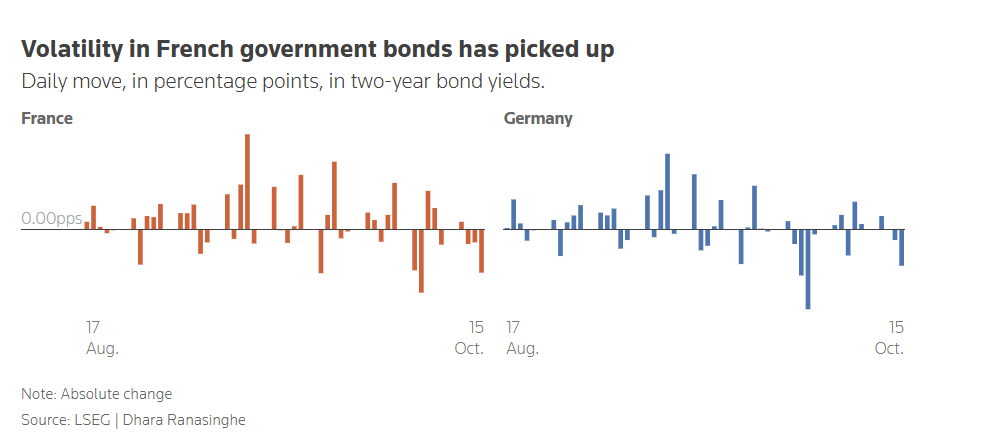
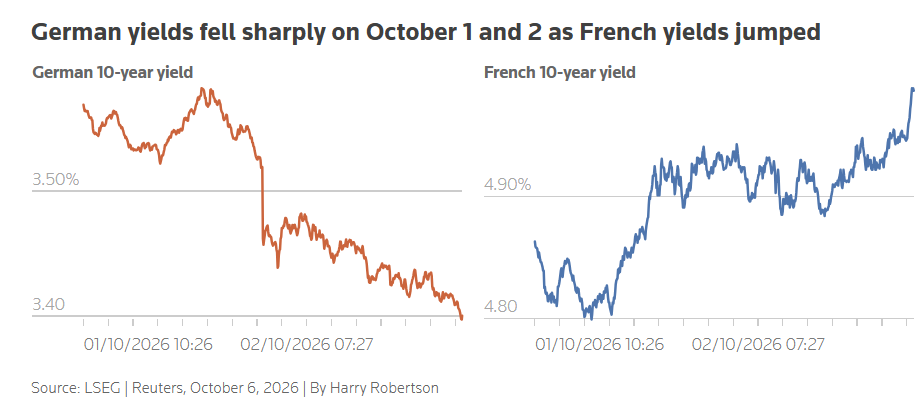
Recent turbulence in French government bonds has brought the risks of this model to the fore. In early October, yields on ten-year French securities reached 24-year highs, while the yield spread against comparable German bonds widened sharply.
The pressure did not stem from a single factor. Elevated public debt, the fiscal deficit, inflationary pressures, and political uncertainty all weighed on investor sentiment.
At the same time, the rapid unwinding of positions by hedge funds amplified market volatility. This risk becomes particularly acute when many investors pursue similar strategies.
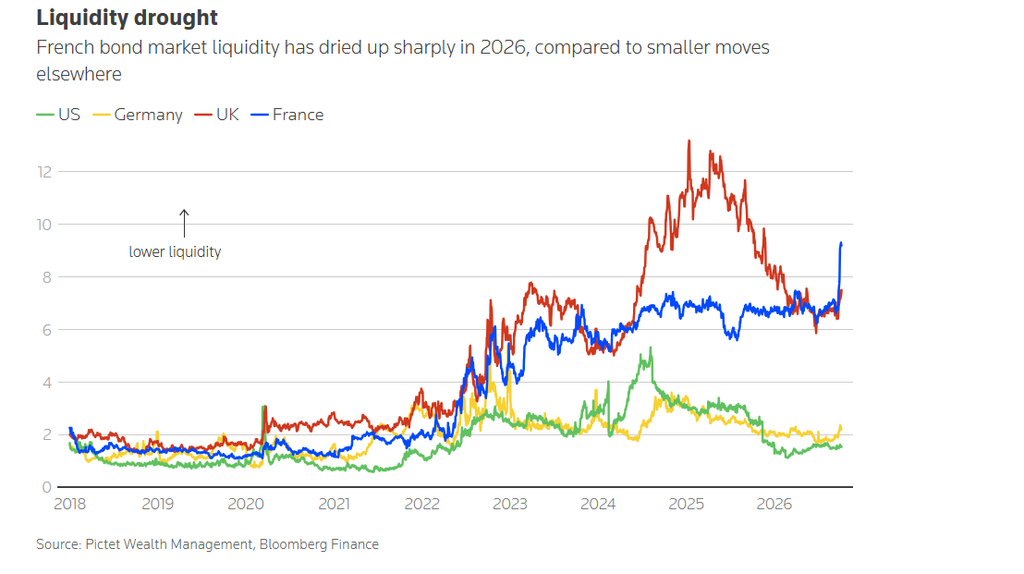
If prices move counter to their expectations, investors may be forced to scale back their positions simultaneously—intensifying sell-offs and making it difficult for the market to absorb the resulting volume.
Leverage and the Cost to Countries
The use of borrowing and complex trading strategies allows hedge funds to gain exposure far exceeding their own capital.
While this can boost returns when markets move in a favorable direction, it can also accelerate losses when conditions turn against them.
During periods of high volatility, forced liquidations can intensify pressure on bond prices and drive up yields. For sovereign states, higher yields translate into more expensive refinancing and potentially a greater burden on public finances.
These effects can subsequently spill over into the broader economy through the financing costs faced by businesses and households—essentially a tightening of credit conditions, which invariably has a negative impact on economic growth. This is not to say that hedge funds are the sole cause of every crisis.
Their activity can, in fact, provide liquidity and facilitate market rebalancing. The problem arises when leverage, the concentration of similar positions, and the abrupt withdrawal of capital exacerbate existing market turmoil.
The Challenge for the ECB and Supervisory Authorities
The growing presence of hedge funds poses a difficult question for European regulators: how can it be ensured that a market—vital for sovereign financing—remains functional even during periods of intense stress?
The issue is not merely who holds the bonds, but who has the power to influence their prices, the extent of the leverage employed, and what happens when many investors attempt to exit simultaneously.
Improving the monitoring of positions, credit exposures, and the interconnections between banks and investment funds is a key component of this challenge.
In an era of heightened financing needs and fierce competition for “fresh” capital, the stability of the sovereign bond market is not just a concern for investors. It directly affects governments, taxpayers, and the cost of financing for the entire economy.
The conclusion is clear: while hedge funds may not necessarily hold the largest share of European sovereign debt, their increasing participation in trading means that their actions can exert a disproportionately large impact on the markets.
And this is particularly significant when the sovereign debt market reaches €13 trillion. dollars—even a sudden shift in investment strategy can have broader economic consequences; it is akin to a butterfly flapping its wings in Beijing, which, according to chaos theory, could potentially trigger a storm in New York.