
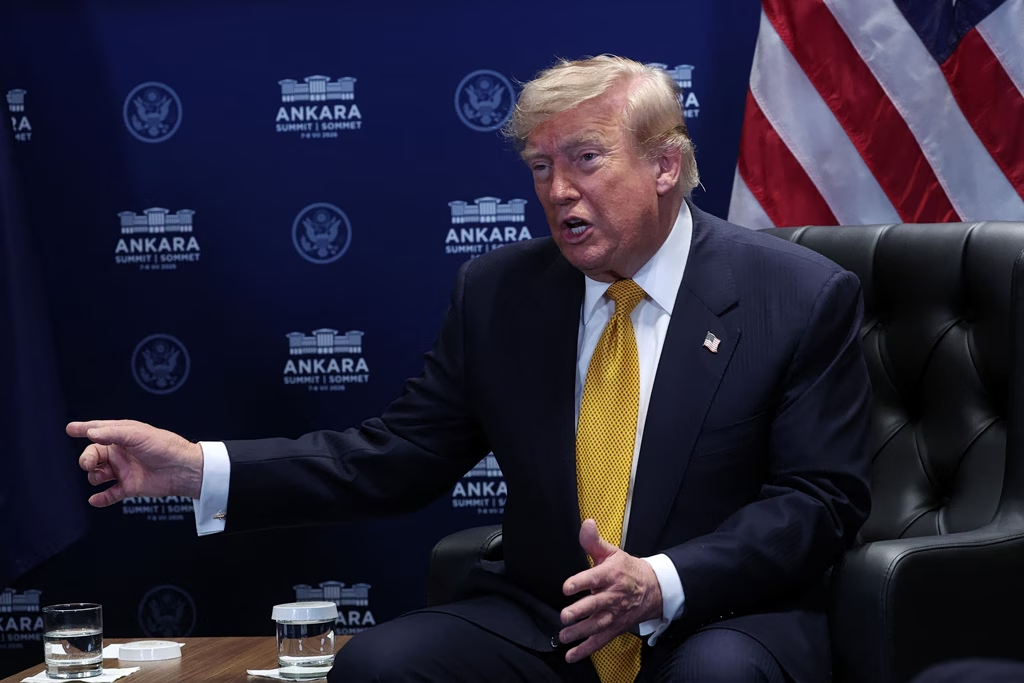

The Donald Trump administration is excluding several key allies from a NATO meeting scheduled for next month in Poland, raising questions among the nations that did not receive an invitation. This move follows earlier threats by the US administration to compile a “list of good and bad” governments based on whether they have clashed with the US president’s priorities.
The planned meeting, coordinated by Pentagon policy chief Elbridge Colby, is essentially a working group focused on the future of NATO, according to six diplomats familiar with the planning. However, many of the countries left off the invitation list—including the UK, France, and the Baltic states—spend significant amounts on defense and play a pivotal role in the Alliance. Consequently, diplomats from these countries are questioning why they are being excluded from the process. At the same time, concerns are being raised that the US government is discriminating among allies in a way that could further fracture an alliance already facing challenges due to rising Russian aggression and depleted weapons stockpiles.
Trump’s criticism of NATO
Donald Trump and his top aides have repeatedly criticized NATO since returning to power, targeting a range of issues—from the refusal of certain members to support the war against Iran to the failure of some countries to spend 5% of their GDP on defense.
Last month, Donald Trump snubbed another ally, South Korea, by abruptly canceling a scheduled joint military exercise while simultaneously complaining about Seoul’s refusal to participate in the war against Iran.
The “Bergen Group” and the new addition
Elbridge Colby has already held two similar meetings, hosting officials from Norway, Sweden, Finland, Poland, Germany, and the Netherlands. The countries participating in the meeting—known as the “Bergen Group”—insist that the initiative is not intended to fracture the Alliance, according to a diplomat from one of the invited nations. Like other diplomats who spoke on the matter, he commented on condition of anonymity to discuss internal deliberations.
Instead, he maintains, the group’s goal is to formulate ideas that can subsequently be presented to the Alliance as a whole for further evaluation. “This could serve as a driving force for the transformation” of the entire Alliance, the diplomat noted. However, he acknowledged that some allies feel frustrated by their exclusion, particularly given that many of them have met or exceeded the defense spending targets set by the Donald Trump administration.
The US might, however, subsequently add Denmark to this select group, given the agreement reached between the two countries to expand the American military presence in Greenland, according to another source familiar with the planning.
Colby’s Role
Elbridge Colby, the driving force behind the initiative, hosted the first meeting of this kind in Bergen, Norway, in June, inviting the six allies favored by the U.S. side.
The Pentagon’s policy chief has long shown interest in smaller-scale discussions among NATO nations. In recent years, he has focused on revitalizing Germany as a military power to contain Russia, as well as on deploying U.S. troops to counter the rise of China. However, even the invited allies question why Colby and other U.S. Defense Department officials selectively chose the participants, leaving out some of Europe’s major military powers, such as Britain.


