


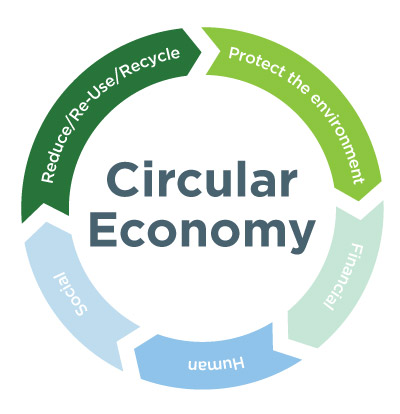
The European Union stands at a pivotal moment regarding its environmental and industrial policy. The need for a more circular economy—one that reduces natural resource consumption, limits waste, and enhances capabilities for reuse, repair, and recycling—is now indisputable.
Such a strategy can secure access to critical raw materials, curb Europe’s strategic dependencies, and bolster the competitiveness of European industry, while simultaneously contributing to its environmental goals.
However, the ongoing debate surrounding the planned Circular Economy Act reveals a dangerous omission: the central role of the workers themselves.
A circular economy does not emerge automatically
It relies daily on the people who design products, maintain equipment, collect and sort waste, recover materials, and staff public services.
If European policy focuses exclusively on secondary raw material markets and competitiveness indicators, it runs the immediate risk of turning the recycling and repair sectors into Europe’s new market for low wages, job insecurity, and high occupational risk.
Quality jobs and safety in practice
The transition to a circular production model must be accompanied by the creation of quality, safe jobs throughout the value chain. Workers’ experience and knowledge are essential for developing processes that are both efficient and safe.
Consequently, new EU legislation must make it a fundamental objective to ensure regulated employment featuring fair wages, collective agreements, social protection, and access to continuous training. New “green” jobs must not rely on precarious forms of employment, such as bogus self-employment or low-paid contracts.
The success of the Circular Economy Act should not be measured solely by the tonnage of recycled materials, but also by indicators relating to wages, working conditions, collective bargaining, and equality.
At the same time, occupational health and safety must be integrated into product design from the very outset. Workers involved in waste management, recycling, and dismantling are frequently exposed to hazardous chemicals, biological agents, fire hazards, dangerous machinery, and heavy physical strain.
The proliferation of new technologies—such as those involving batteries and electronic waste—creates additional threats that require comprehensive information and protection measures. The simplification of procedures must under no circumstances serve as a pretext for deregulating standards designed to protect workers, the environment, and public health.
Strict legislation and regular inspections protect both the workforce and society as a whole. Furthermore, extended producer responsibility must account for the true social, environmental, and health costs of products, thereby encouraging the design of goods that can be safely repaired and recycled.

Public funds subject to social conditions
One of the most critical aspects of the intervention concerns the allocation of public resources. Any form of public funding, state aid, tax incentive, or public contract related to circular economy activities must be accompanied by binding environmental, social, and tax clauses.
Enterprises receiving public support must respect labor and trade union rights, implement applicable collective labor agreements, meet their tax obligations, and invest in staff development. In the event of a breach of these conditions, the funding should be suspended or reclaimed.
At the same time, public authorities at national, regional, and local levels require adequate resources to effectively implement the legislation. Staffing inspection bodies, developing public infrastructure for collection, repair, and recycling, and providing quality public services all require funding. Austerity policies, understaffing, and cuts to public services will effectively undermine any ambitious legislative framework. At the same time, legislation must address excessive subcontracting chains, undeclared work, and bogus self-employment. Principal contracting companies must retain responsibility for wages, social security contributions, and safety across all levels of subcontracting, ensuring equal treatment for all workers.
Just transition and social dialogue
The transformation of industrial production processes will radically alter the skills and professions required. These changes must be anticipated and managed in a timely manner through social dialogue and collective bargaining.
All workers must have a statutory and meaningful right to quality training during working hours—without loss of income—accompanied by employment protection.
Finally, Europe must not achieve circularity “on paper” by exporting its waste, pollution, and occupational hazards to other parts of the world. The export of waste to countries where equivalent standards regarding labor rights, working conditions, safety, and environmental protection are not guaranteed or enforced must cease. Conversely, Europe must invest in its own internal infrastructure for the repair, reuse, recycling, and recovery of high-quality materials, thereby boosting industrial employment, public services, and regional development.
The European Commission and European institutions are called upon to establish a permanent mechanism for the meaningful participation of social partners in the governance of the Circular Economy Act.
The choices made today will determine whether Europe’s circular economy becomes a source of quality employment and industrial resilience or merely another fragmented market of precarious work.