



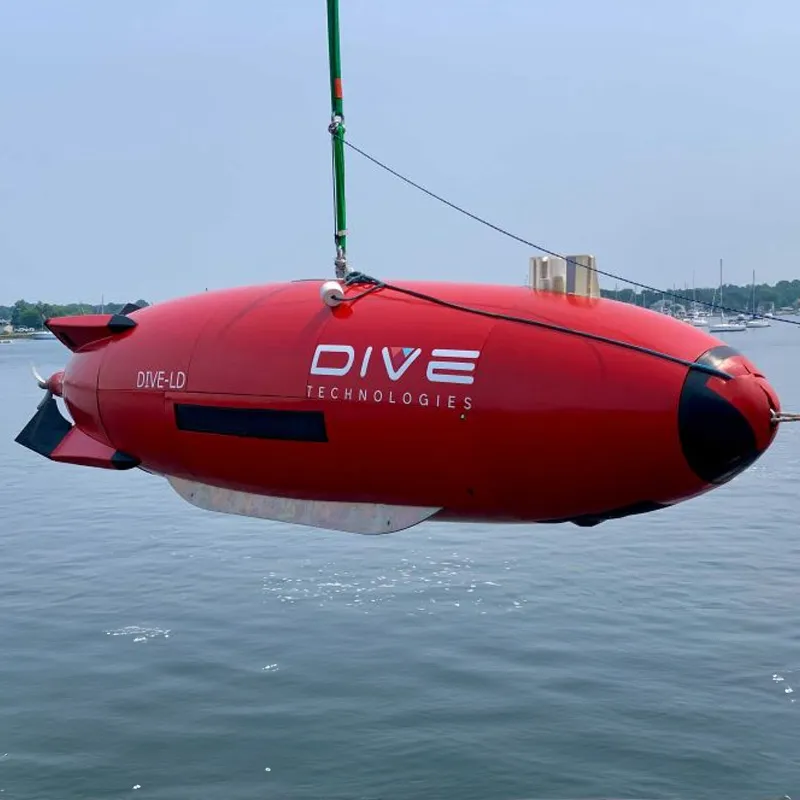
The seizure of an American Dive-LD autonomous underwater vehicle by forces of the Islamic Revolutionary Guard Corps (IRGC) is not merely another incident in the long list of US-Iran confrontations.
For Tehran, the real stakes lie much deeper: in gaining access to one of the fastest-growing fields of modern military technology—that of autonomous underwater systems.
The Islamic Revolutionary Guard Corps announced that it had seized control of an American unmanned underwater vehicle at the entrance to the Strait of Hormuz.
US officials confirmed the loss of a Dive-LD, claiming the vehicle had malfunctioned and carried no sensitive data or classified systems. The manufacturer, Anduril Industries, also downplayed the significance of the loss, noting that such systems are built for high-risk operations.
The Iranian side, however, views the incident from a different perspective—and for what it truly is. On September 22, General Hossein Mohebbi stated that the reverse engineering of the vehicle was set to begin, noting that advanced American technology had now fallen into the hands of Iranian forces.
A technologically significant prize in Iran’s hands
The crucial point is not whether Iran can manufacture an exact replica of the Dive-LD by tomorrow morning. The true value of such a system lies in the fact that it constitutes an integrated technological package, combining hull design, propulsion, power management, navigation systems, sensors, communications, mission computers, and interfaces for various payloads.
Anduril itself presents the Dive-LD as a large autonomous underwater vehicle capable of being reconfigured for different missions and carrying various payloads.
The platform is designed for missions such as seabed mapping, surveillance, reconnaissance, mine countermeasures, and the inspection of underwater infrastructure.
Published specifications indicate a length of approximately 5.8 meters, a weight of about 2.7 tons, an endurance of up to ten days, and an operational depth of approximately 6,000 meters. It is precisely this that makes its acquisition of interest to Iran. The Strait of Hormuz is a maritime area where distance, depth, underwater infrastructure, mines, naval movements, and the capability for covert surveillance can take on disproportionate strategic importance.
A reliable autonomous underwater vehicle need not be an offensive weapon to shift the operational balance. It can conduct surveillance, map terrain, gather data, and reduce the costs associated with a continuous human presence at sea.
Reverse engineering
Reverse engineering would allow Iranian engineers—at least in theory—to examine how the Americans address one of the most difficult challenges of underwater autonomy: navigation without continuous GPS access.
Beneath the sea’s surface, satellite navigation signals are not available in the same way they are in the air or on land.
A long-endurance system must therefore rely on a combination of inertial navigation, acoustic sensors, mapping, and other positioning methods.
Studying an actual system can reveal not only how it was designed but also the trade-offs made by its manufacturers: where they sacrificed speed for endurance, where they prioritized durability over low cost, how they manage energy consumption, and how the vehicle’s internal architecture is organized.
Iranian engineers could “certainly” copy or study the Dive-LD’s mechanical systems. Protected software systems, however, pose a much greater challenge, limiting the likelihood of a full replication of the platform.
History of leveraging foreign technology
This distinction is crucial. Reverse engineering does not necessarily equate to cloning. A state can acquire significant know-how even if it cannot replicate every line of code or every electronic subsystem.
Hull geometry, materials, propellers, control surfaces, sealing mechanisms, cooling systems, weight distribution, and assembly methods can all provide valuable insights.
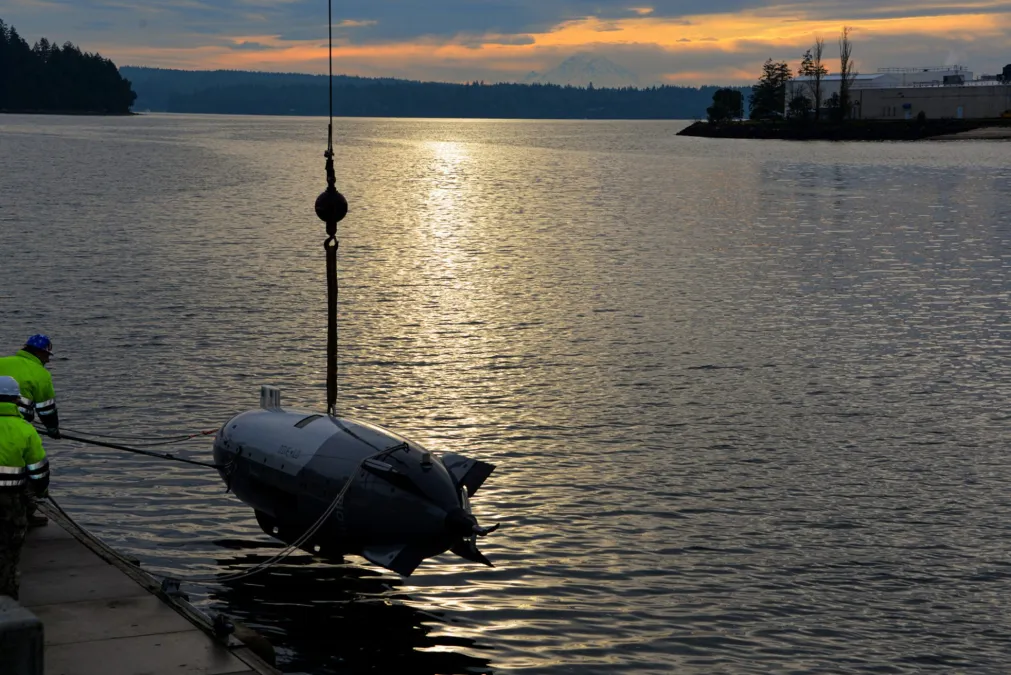
Iran has a track record of leveraging foreign military technology in this manner. The most well-known precedent is the RQ-170 Sentinel, which came into the country’s possession in 2011.
Tehran claimed at the time that electronic warfare units had managed to interfere with the aircraft’s operation. The United States confirmed the loss of the drone but did not endorse the Iranian account regarding exactly how it ended up on Iranian soil.
Subsequently, Iran unveiled domestically produced unmanned aerial vehicles that bore clear design similarities to the RQ-170. The extent to which all their systems actually originated from reverse engineering remains a subject of debate, yet the foregoing explains why the current Dive-LD project is being viewed with interest.
The Submersible in the Lab
That is why the true significance of the incident lies not in the image of an American drone in the hands of the Islamic Revolutionary Guard Corps.
It lies in the laboratory that follows. For Tehran, the Dive-LD represents a rare window into the architecture of the next generation of American underwater systems.
Whether Iran will succeed in turning this access into a reliable domestic product remains an open question. Yet, from a technological and operational standpoint, possessing a nearly complete system offers something that no theoretical manual or photograph can replace: the ability to dismantle, measure, test, and understand it firsthand.
And in the Strait of Hormuz—where technology, geography, and strategy converge in one of the world’s most sensitive maritime corridors—this knowledge may prove more significant than the vehicle itself.
