



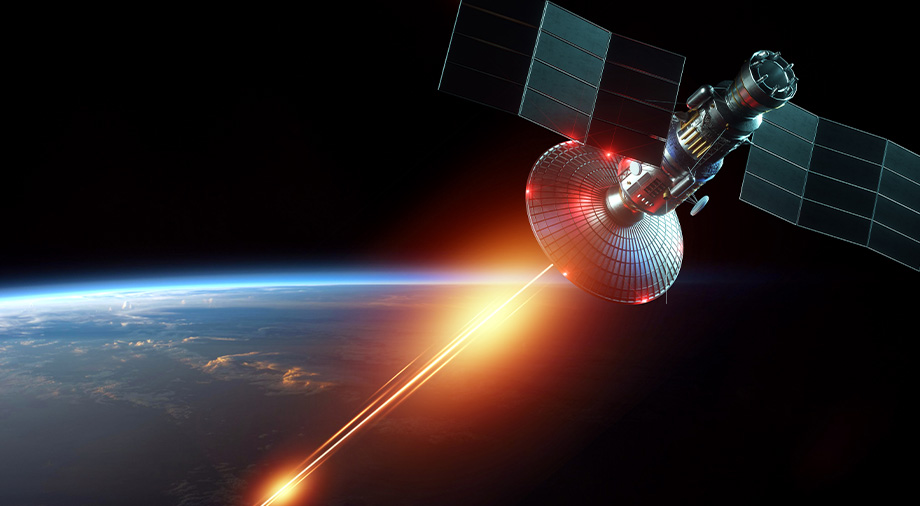
Humanity has always been fascinated by space. We have sought to explore and conquer it. Now, we are turning it into a battlefield.
“We are increasing our readiness against existing threats, and the United States possesses space-control weapons in orbit capable of defending the Joint Force against hostile adversary action,” stated U.S. Under Secretary of the Air Force Dr. Troy E. Meink at a conference in Maryland.
This brief, unelaborated public admission by a high-ranking U.S. official marks a historic turning point in international security. It is the first time the United States has acknowledged possessing “space-control weapons” deployed in orbit.
The announcement confirmed that space is no longer merely a domain for observation and communications, but an active theater of military operations.
The statement was made deliberately to serve as a deterrent against the growing anti-satellite capabilities being developed by China and Russia.
International reactions
The reaction from other major powers was immediate. Kremlin spokesman Dmitry Peskov stated that Russia would seek international consensus on the demilitarization of space, notably emphasizing: “We believe that space must be free of any weapons.”
For its part, the Chinese Foreign Ministry spokesman expressed Beijing’s strong opposition to an arms race in space and called on Washington to halt the expansion of its military power.
However, both Russia and China have been developing and testing dangerous space technologies for years. These include “hunter” satellites that maneuver dangerously close to Western satellites, orbital bombardment systems, and anti-satellite missile tests.
What does “weapons in orbit” mean, and how do they differ from those of the past?
Until now, the militarization of space relied primarily on systems launched from Earth or the air into space—such as anti-aircraft or ballistic missiles—to destroy satellites.
The crucial difference now is that the weapons are already deployed in orbit around Earth. This development is directly linked to initiatives such as the US “Golden Dome” missile defense program, which envisions the deployment of space-based interceptors to protect against advanced threats, such as hypersonic missiles.
How do these weapons work?
When we hear the term “space weapons,” our minds often turn to science fiction movies. In actual military technology, however, these systems fall into two main categories: kinetic and non-kinetic.
The former refers to systems that utilize physical force or impact. Specifically, these involve either projectiles that collide directly with an enemy satellite, destroying it, or specialized “tug” satellites that approach the target, “grab” it with mechanical arms, and knock it out of orbit.
The latter category involves methods that do not physically destroy the target but render it inoperable. These include laser systems that “blind” satellite optical sensors, high-power microwaves, radio-frequency jammers that disrupt communications, and cyberattacks. Such systems are preferable because they generate little to no debris.
Why is this development significant?
Placing weapons in orbit brings about pivotal changes on the international stage.
From a military perspective, it bolsters defense and deterrence against missiles that travel at immense speeds and maneuver outside the range of traditional radar. At the same time, it protects the critical military satellites that guide ground forces.
However, the major danger lies in the creation of space debris. A physical collision in space generates thousands of uncontrolled fragments moving at tremendous speeds. These can trigger a chain reaction of destruction, rendering entire orbits completely unusable.
Furthermore, a conflict in space could affect satellites, potentially paralyzing daily life on Earth. Consider the state of our planet if systems such as GPS navigation, global telecommunications, weather forecasting, financial transactions, and the internet—everything that relies on satellites—were to stop functioning.
From Sputnik to the new era
The military space race began in 1957 with the launch of the Soviet satellite Sputnik. During the Cold War, superpowers developed reconnaissance satellites, while concepts such as the Soviet Fractional Orbital Bombardment System (FOBS) and Ronald Reagan’s Strategic Defense Initiative (SDI) emerged.
Today, technology has advanced at breakneck speed. The rapid growth of the private space industry—exemplified by companies like SpaceX and Blue Origin—has significantly reduced launch costs.
This has enabled the deployment of massive constellations of commercial satellites into orbit, while simultaneously making the militarization of space more economically feasible than ever before.
The need for rules of coexistence in space
Just as we strive to establish rules of coexistence and law on Earth, there is a pressing need to manage outer space.
The first historic step was taken in 1967 with the Outer Space Treaty, which prohibited the deployment of nuclear weapons and weapons of mass destruction in orbit. However, this treaty leaves gaps regarding conventional weapons, lasers, and digital attacks.
In this new digital era, it is essential for the international community to update these rules. Otherwise, space risks becoming an arena for “star wars.” It sounds terrifying.

