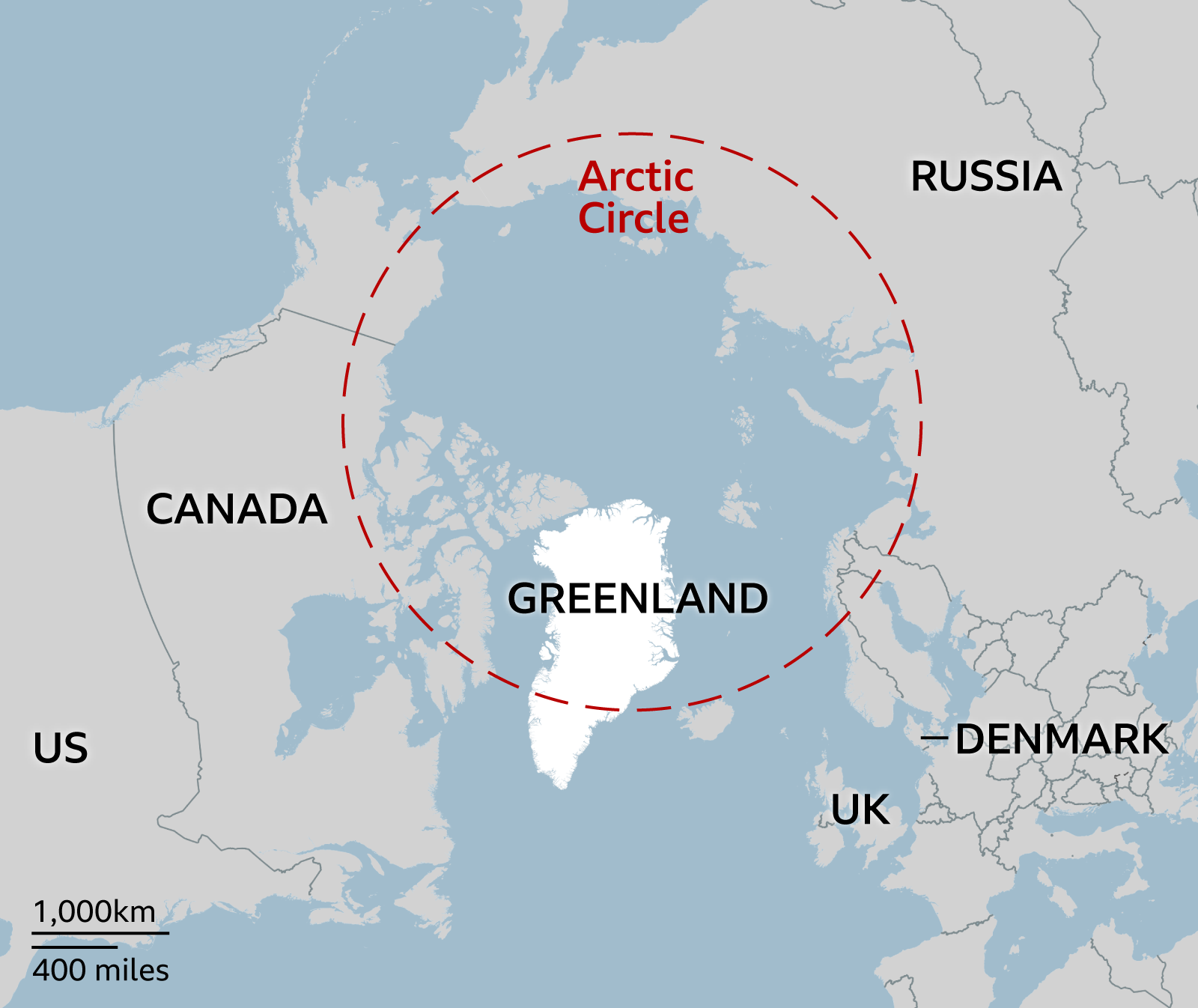
Denmark and Greenland have reached an agreement with the US that provides for a significant US military presence in this strategically important Arctic territory, while ensuring that the sovereignty and territorial integrity of the Kingdom of Denmark are not compromised.
This agreement, expected to be formally signed during the UN General Assembly in New York, follows a prolonged period of tension, negotiations, and diplomatic friction sparked by demands from Washington.
Content and terms of the agreement
The full details of the agreement have not been disclosed, including the exact scale of the US military presence on the autonomous Danish territory and whether Washington will be granted any formal authority over foreign policy or resource matters. However, according to US officials, the agreement will remain in effect even in the event of Greenland potentially gaining independence in the future.
At the same time, mechanisms are being established to prohibit US geopolitical rivals—such as China and Russia—from constructing bases, deploying troops, or making investments in sensitive sectors of the island. It is noted that, while the previous 1951 defense agreement (as revised in 2004) already allowed Washington to increase its troop and facility presence subject to prior notification, the United States is now seeking to open three new military bases in southern Greenland, in addition to the existing Pituffik (formerly Thule) space base in the north.
Geostrategic Motives and Economic Interests
Washington’s geostrategic rationale and motives are rooted in critical factors of national security and economic competition. On one hand, the geographical location of the world’s largest island—situated between North America and the Arctic—makes it vital for early-warning and defense systems, as it lies along the shortest trajectory for ballistic missiles traveling between Russia and the United States.
On the other hand, Greenland possesses vast, untapped deposits of rare-earth minerals essential for the manufacture of advanced technology and military equipment; access to these resources would enable the U.S. to challenge China’s dominance in the global market for critical minerals.
Furthermore, this control has gained particular significance now that China has launched the first regular commercial container shipping service via the Arctic, turning these emerging maritime routes into a strategic arena of contention.
Political stances and reactions
A few hours after Donald Trump’s announcement, Danish Prime Minister Mette Frederiksen and Greenlandic Prime Minister Jens-Frederik Nielsen expressed their satisfaction, emphasizing that the agreement recognizes the sovereignty and territorial integrity of the Kingdom, as well as the right of the people of Greenland to self-determination.
Danish Foreign Minister Lars Løkke Rasmussen noted that this development puts an end to a period of uncertainty and strengthens security within the framework of NATO and Europe, while respecting the Danish Kingdom’s “red lines.”
For his part, US President Donald Trump stated that the US would maintain permanent control over security and all other requirements in Greenland, underscoring that the agreement guarantees the ability to deter foreign interference.
Meanwhile, a NATO spokesperson welcomed the agreement, noting that it contributes to security, stability, and cooperation in this vital region.
Reservations and long-term prospects
However, there are reservations regarding the long-term consequences. The agreement likely does not mark the end of President Trump’s strategic ambitions regarding the territory and its resources.
He warned that if Copenhagen were to cede any official authority to Washington, it could raise questions among Greenlanders as to whether the traditional colonial relationship with Denmark was simply being replaced by a new colonial relationship with the United States—noting that U.S. ambitions had already strained NATO relations, prompting European member states to deploy military personnel to Greenland last January to demonstrate readiness.