

The war in Ukraine has produced millions of hours of footage. Drones flying a few meters above trenches, thermal cameras searching for human silhouettes in the night, Russian tanks hidden under camouflage nets, artillery among trees, Shahed in the sky, and soldiers appearing for just a few seconds on a pilot’s screen.
For more than four years, all of this has been primarily images of war. Now it is something else: training material for the algorithms that may fight in the wars of tomorrow.
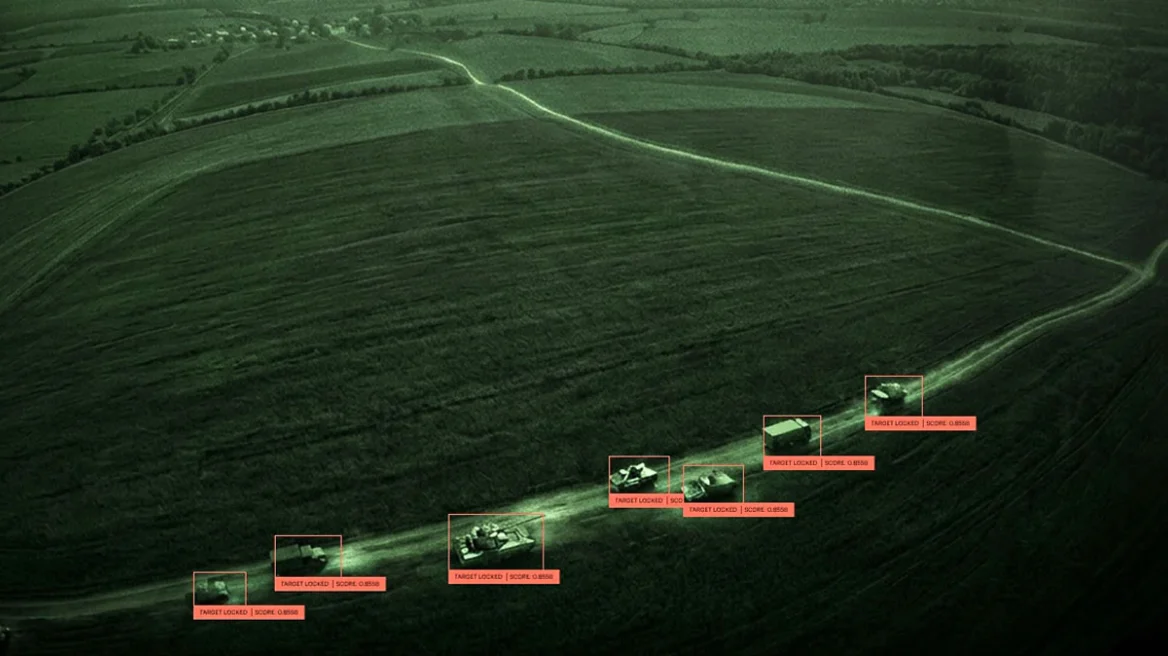
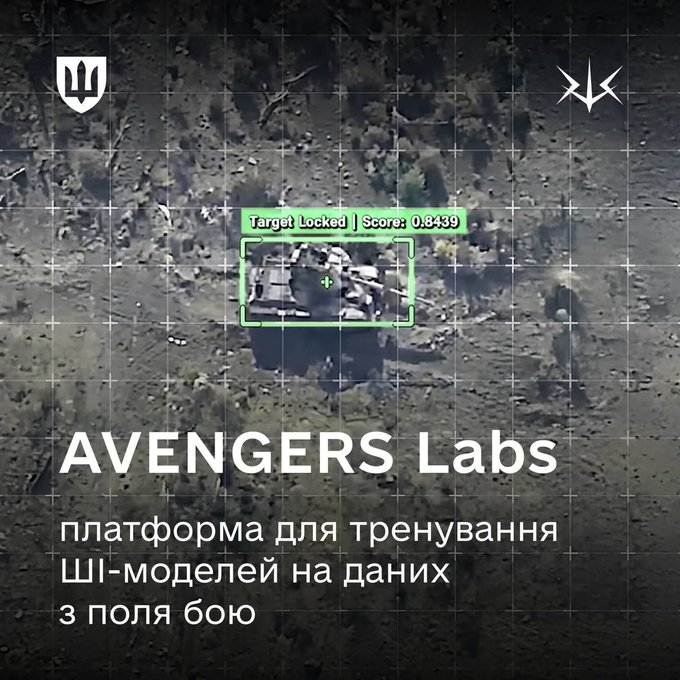
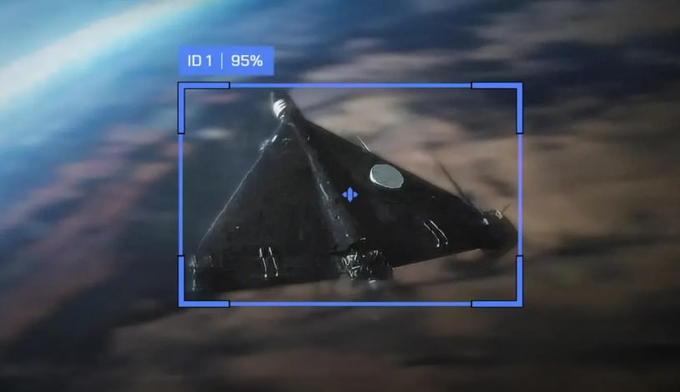
That is the true meaning of Avengers Labs, the Ukrainian military artificial intelligence platform that collects millions of labeled images from real operations. A vast digital archive in which AI learns to distinguish a tank from a truck, an air defense system from its surroundings, or a potential target in the chaos of a real battle.
Britain’s decision to become the first foreign partner to gain access to this infrastructure now gives the program a different dimension. Because Kiev is not just sharing another technology. It is starting to share war data with its allies.
Five million images that you can’t buy
Here lies perhaps the most important strategic advantage that Ukraine has gained. The world’s largest defense industries can invest billions in artificial intelligence. They can build better sensors, more powerful processors and advanced drones.
But there is one thing that even money can’t buy: four years of real-world, large-scale warfare. That’s the asset Kiev has today.
According to the Ukrainian Defense Ministry, the system analyzes more than 100,000 video streams from UAVs every month, and AI can identify about 70 percent of enemy targets in real time. A piece of equipment can be identified in about 2.2 seconds. Numbers that don’t tell the whole story.
The crucial point is that the operator no longer has to be the only pair of eyes on the battlefield. The algorithm watches with him. And it doesn’t get tired.
The 2.2 seconds that change the battle
In today’s war, the time between spotting a target and striking it has become one of the most important areas of competition. Whoever sees first, shoots first. And whoever can convert the image into information faster gains an advantage. AI can reduce exactly that time.
A drone transmits an image. The algorithm recognizes a potential vehicle. It classifies it. It marks its location. The operator does not have to search the entire image to perceive what is in front of him.
Artificial intelligence thus becomes a second observer. The next step, however, is much more important. To cease being just an observer.
When the operator lets the drone continue on its own
The Ukrainians themselves are already describing applications in which AI is not limited to recognition. In one scenario, the human locates and selects the target, and then the drone can autonomously correct its final course towards it.
In a second and clearly more advanced model, an unmanned system can head to a specific area, search for a target there, identify it and act according to the predetermined logic of its mission.
The difference is fundamental. The human does not necessarily disappear from the chain. But he changes position within it. From the operator of each individual movement, he can gradually turn into a supervisor of a system that carries out more and more stages of the mission on its own.
And somewhere there lies the real discussion about the future of war.
London is buying something that is not for sale
Britain’s agreement with Ukraine takes on much greater significance in this light.
London becomes the first international partner to gain access to Avengers Labs, allowing British companies, universities and researchers to work with the Ukrainian side on data generated in real operations.
The cooperation is set to expand beyond simple target recognition. These include using fiber optic cables as extended sensors to protect military installations, with AI analyzing their data, and developing low-power AI processors for drones and autonomous systems.
But there is a broader shift behind the deal. Since 2022, the West has been sending weapons and technology to Ukraine. Abrams, Leopard, Patriot, HIMARS, Storm Shadow and dozens of other systems have followed this path.
Now a different kind of military know-how is starting to move in the opposite direction. From the Ukrainian front to the West.
London, in addition to data, buys the process that produces the definition of the threat in real time, and this process is political before it becomes technical. Every label written on a picture of a Russian tank passes through hands that have lost relatives, through eyes that have seen Mariupol, through brains that have learned to hate with historical consistency.
When this definition is transferred to the British arsenal and from there to the Greek units, not only the technology is transferred but also the geometry of the hatred that produced it, which means that a Greek drone will recognize the enemy with criteria designed for the Donbass and not for the Aegean.
Athens is setting up a center for tactical unmanned systems with teachers who teach attrition warfare against an adversary that moves at the speed of Soviet mechanization, while in the Aegean the Turk moves at NATO speed, with our own logistics, with our own IFF and with a visual signature that no Ukrainian machine has ever seen. The system will therefore learn to kill Russians and will deploy against Turks, and this discrepancy is not corrected by fine-tuning.
Only a new war will produce new labels. The trap lies in the homogeneity of cognitive capital, because if Poland, Britain, France and gradually all of Europe train their autonomous weapons on the same Ukrainian body, they inherit not only the same capability but also the same vulnerability.
A single contradictory pattern that blinds the Ukrainian model blinds the entire alliance at the same time, and Moscow already knows what DELTA is looking at because it looks at it every day from the other side. China is certainly watching this flow with interest that is not academic, because any battle in the Pacific will involve American drones trained on the same European ecosystem, and every Greek, Polish or Baltic mistake in target recognition becomes a free lesson for Beijing.
This is where the systemic trap is born, because if London, Kiev and gradually the rest of the allies train their weapons systems on the same body of data, they all inherit the same blind spots, and a possible successful Russian pattern could simultaneously disable the target recognition of the entire alliance.
The Russian response
Russia is developing optical illusions that blind the Ukrainian drone AI, meaning that each labeled image ages by the time the adversary learns what the classifier saw.
The Russian response starts by recognizing that the classifier is a statistical object with finite memory, and is therefore beaten by the input, not the code. Shading nets with broken contours, thermal blankets that distort the infrared signature, wooden and inflatable dummies with the correct geometry and the wrong mass, all act as a poison to the nascent training set.
Every time a Ukrainian drone records a dummy and the archive labels it as a tank, the machine learns a lie with certainty, and the lie then travels to London paid for.
The second layer is the decoupling of the Russian weapon from the radio spectrum, because the fiber-optic drone does not emit anything and is not blocked by any electronic warfare system. Moscow solved the problem of interference with copper and glass instead of software, and this choice is more profoundly wise than it seems, because it transfers the competition from the field in which the West excels to the field of industrial cable production.
Rubicon has concentrated this knowledge in a structure that trains operators at the pace of a military academy, and the death of Ukrainian supply lines fifteen kilometers behind the line is the direct product of this structure.
The third layer reverses the logic of the agreement, Russia constructs the same archive from the opposite side of the lens, with images of Bradley, Leopard, HIMARS and Patriot that no Western army has ever seen destroyed in nature. The warheads of the Lancet and the new Shahed now carry machine vision with terminal recognition, i.e. the same trick, and the controlled pattern antennas on the Russian drones neutralize Ukrainian satellite navigation interference.
The advantage here is mathematical, because Russia trains on real NATO equipment and NATO trains on Soviet-designed equipment that Russia is gradually withdrawing.
The fourth layer is the loop time, and that is where everything is judged. The Russian chain from the operator to the Rubicon unit and from there to the modification of the material is measured in weeks, the Western chain from the Ukrainian label to the British contract and from there to the European production line is measured in quarters at least.
After drones, the war of algorithms
Avengers Labs is not in itself the “weapon of the future”. But it is something that may be more important. The school where the weapons of the future are trained.
Ukraine now has one of the largest and most unique repositories of real-world data on modern warfare in the world. And for the first time, it is beginning to open up some of that experience to a major Western ally.
The significance of the development will not necessarily be seen in the next Ukrainian strike. It may be seen years later in a British drone, a European sensor, or an autonomous system that has yet to be built.
Because the great legacy of the war in Ukraine for Western armed forces may not be just what they learned about drones. It may be the millions of real-world seconds of war that taught machines to see.


